Vibration Analysis in Machinery: Causes and Control
Introduction
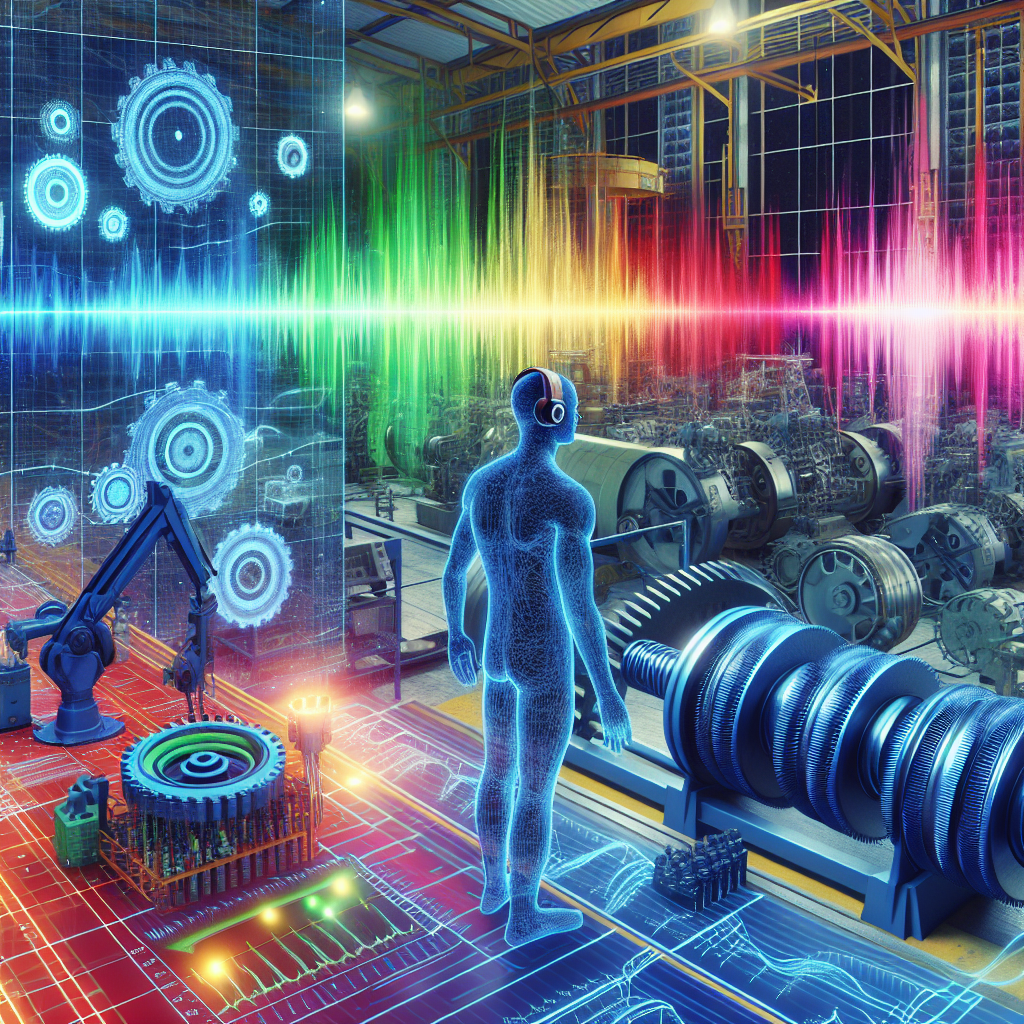
Vibration analysis in machinery is a critical aspect of the field of Mechanics of Machines in Engineering. It involves the study of oscillatory motions in mechanical systems and their effects on machine performance, reliability, and safety. Vibration analysis is essential for diagnosing and preventing mechanical failures, optimizing machine performance, and extending the lifespan of equipment. This article delves into the importance and relevance of vibration analysis, exploring its fundamental principles, historical development, practical applications, advanced topics, challenges, and considerations.
Fundamentals
Basic Principles and Concepts
Vibration is defined as the periodic motion of a mechanical system about an equilibrium position. It can be characterized by parameters such as amplitude, frequency, and phase. The study of vibration involves understanding the forces that cause oscillations and the response of the system to these forces.
Key Terms
- Amplitude: The maximum displacement of a vibrating system from its equilibrium position.
- Frequency: The number of oscillations per unit time, typically measured in Hertz (Hz).
- Phase: The relative position of the oscillating system at a given point in time.
- Resonance: A condition where the frequency of external forces matches the natural frequency of the system, leading to large amplitude oscillations.
- Damping: The dissipation of energy in a vibrating system, which reduces the amplitude of oscillations over time.
Theories
Several theories underpin the study of vibration analysis, including:
- Newton’s Laws of Motion: These laws describe the relationship between the forces acting on a body and its motion.
- Hooke’s Law: This law states that the force exerted by a spring is proportional to its displacement, which is fundamental in modeling mechanical vibrations.
- Fourier Analysis: A mathematical method used to decompose complex vibrations into simpler sinusoidal components.
Historical Development
The study of vibration dates back to ancient times, with early contributions from Greek philosophers such as Pythagoras and Aristotle. However, significant advancements in vibration analysis occurred during the Renaissance and the Industrial Revolution.
Key Milestones
- 17th Century: Galileo Galilei and Robert Hooke made foundational contributions to the understanding of oscillatory motion and elasticity.
- 18th Century: Sir Isaac Newton’s laws of motion provided a theoretical framework for studying vibrations.
- 19th Century: Jean-Baptiste Fourier developed Fourier analysis, enabling the decomposition of complex vibrations into simpler components.
- 20th Century: The advent of digital computers revolutionized vibration analysis, allowing for more precise modeling and simulation.
Notable Figures
- Galileo Galilei: Pioneered the study of pendulum motion and oscillatory systems.
- Robert Hooke: Formulated Hooke’s Law, which is fundamental in understanding elastic vibrations.
- Jean-Baptiste Fourier: Developed Fourier analysis, a critical tool in vibration analysis.
- Stephen Timoshenko: Made significant contributions to the theory of vibrations and structural dynamics.
Applications
Vibration analysis has a wide range of practical applications across various industries. It is used to monitor and diagnose the health of machinery, optimize performance, and prevent failures.
Industrial Applications
- Manufacturing: Vibration analysis is used to monitor the condition of rotating machinery such as motors, pumps, and compressors. It helps in identifying imbalances, misalignments, and bearing faults.
- Automotive: In the automotive industry, vibration analysis is employed to ensure the smooth operation of engines, transmissions, and suspension systems. It helps in detecting issues such as engine misfires and drivetrain imbalances.
- Aerospace: Vibration analysis is critical in the aerospace industry for monitoring the health of aircraft engines, turbines, and structural components. It ensures the safety and reliability of aircraft operations.
- Energy: In the energy sector, vibration analysis is used to monitor the condition of wind turbines, hydroelectric generators, and nuclear reactors. It helps in preventing catastrophic failures and optimizing energy production.
Case Studies
One notable case study involves the use of vibration analysis in a manufacturing plant to diagnose a recurring issue with a critical pump. By analyzing the vibration data, engineers identified an imbalance in the pump’s impeller. Corrective actions were taken, resulting in improved performance and reduced downtime.
Advanced Topics
Recent Research and Innovations
Recent advancements in vibration analysis have focused on the integration of artificial intelligence (AI) and machine learning (ML) techniques. These technologies enable more accurate and automated diagnosis of machinery faults.
- AI and ML: AI and ML algorithms can analyze large volumes of vibration data to identify patterns and anomalies. This allows for predictive maintenance, where potential issues are detected before they lead to failures.
- Wireless Sensor Networks: The development of wireless sensor networks has made it easier to monitor vibrations in remote or inaccessible locations. These sensors can transmit real-time data to centralized monitoring systems.
- Advanced Signal Processing: Techniques such as wavelet analysis and Hilbert-Huang transform are being used to extract more detailed information from vibration signals.
Future Trends
The future of vibration analysis is likely to see further integration with IoT (Internet of Things) technologies, enabling more comprehensive and real-time monitoring of machinery. Additionally, advancements in sensor technology and data analytics will continue to enhance the accuracy and reliability of vibration analysis.
Challenges and Considerations
Challenges
Despite its benefits, vibration analysis faces several challenges:
- Data Interpretation: Analyzing and interpreting vibration data requires specialized knowledge and expertise. Misinterpretation can lead to incorrect diagnoses and actions.
- Environmental Factors: External factors such as temperature, humidity, and electromagnetic interference can affect vibration measurements and lead to inaccurate results.
- Cost: Implementing vibration analysis systems can be costly, particularly for small and medium-sized enterprises.
Potential Solutions
To address these challenges, several solutions can be considered:
- Training and Education: Providing training and education to engineers and technicians can improve their ability to interpret vibration data accurately.
- Environmental Control: Implementing measures to control environmental factors can enhance the accuracy of vibration measurements.
- Cost-Effective Solutions: Developing cost-effective vibration analysis systems and leveraging cloud-based platforms can make the technology more accessible to smaller enterprises.
Areas for Further Research
Further research is needed to develop more robust and accurate vibration analysis techniques. Areas of interest include the integration of AI and ML, the development of advanced sensor technologies, and the exploration of new signal processing methods.
Conclusion
Vibration analysis in machinery is a vital aspect of the field of Mechanics of Machines in Engineering. It plays a crucial role in ensuring the reliability, performance, and safety of mechanical systems across various industries. By understanding the fundamental principles, historical development, practical applications, advanced topics, and challenges associated with vibration analysis, engineers can better diagnose and prevent mechanical failures, optimize machine performance, and extend the lifespan of equipment. As technology continues to advance, the future of vibration analysis holds great promise, with innovations in AI, IoT, and sensor technologies paving the way for more accurate and comprehensive monitoring solutions.