Mechanics of Machines in Agricultural Engineering
Introduction
The field of agricultural engineering has undergone significant transformations over the years, largely due to advancements in the mechanics of machines. The integration of mechanical principles into agricultural practices has revolutionized the way farming is conducted, leading to increased efficiency, productivity, and sustainability. This article delves into the mechanics of machines in agricultural engineering, exploring its importance, fundamental principles, historical development, practical applications, advanced topics, challenges, and future prospects.
Fundamentals
Basic Principles and Concepts
The mechanics of machines in agricultural engineering involves the application of mechanical principles to design, analyze, and optimize machinery used in farming. Key concepts include:
- Force and Motion: Understanding how forces interact with machinery to produce motion is crucial. This includes concepts like torque, friction, and inertia.
- Energy and Power: Machines convert energy into useful work. Understanding energy sources, power transmission, and efficiency is essential.
- Mechanisms: These are the building blocks of machines, including gears, levers, cams, and linkages that translate motion and force.
- Control Systems: Modern agricultural machines often incorporate control systems for automation and precision. This includes sensors, actuators, and feedback loops.
Key Terms
- Tractor: A powerful vehicle designed for pulling and operating various agricultural implements.
- Combine Harvester: A machine that combines reaping, threshing, and winnowing into a single process.
- Plow: An implement used for tilling soil to prepare it for planting.
- Precision Agriculture: The use of technology to optimize field-level management regarding crop farming.
Historical Development
Early Innovations
The history of agricultural machinery dates back to ancient civilizations where simple tools like plows and sickles were used. The Industrial Revolution marked a significant turning point with the invention of steam-powered engines, which led to the development of the first mechanical tractors in the late 19th century.
Key Milestones
- 1837: John Deere invents the steel plow, revolutionizing soil tillage.
- 1904: The first gasoline-powered tractor is introduced by the Hart-Parr Company.
- 1930s: The development of the combine harvester significantly reduces labor and increases efficiency in harvesting.
- 1980s: The advent of precision agriculture technologies, including GPS and GIS, allows for more precise farming practices.
Notable Figures
- John Deere: Pioneer in the development of agricultural machinery, particularly the steel plow.
- Cyrus McCormick: Inventor of the mechanical reaper, which revolutionized grain harvesting.
- Henry Ford: Introduced mass production techniques to tractor manufacturing, making them more affordable.
Applications
Modern Farming Practices
The mechanics of machines play a crucial role in modern farming practices. Some key applications include:
- Tillage: Machines like plows, harrows, and cultivators are used to prepare the soil for planting.
- Planting: Seed drills and planters ensure precise seed placement and spacing.
- Irrigation: Mechanized irrigation systems, including sprinklers and drip systems, optimize water usage.
- Harvesting: Combine harvesters, balers, and forage harvesters streamline the harvesting process.
- Post-Harvest Processing: Machines for cleaning, sorting, and packaging agricultural products improve efficiency and reduce waste.
Case Studies
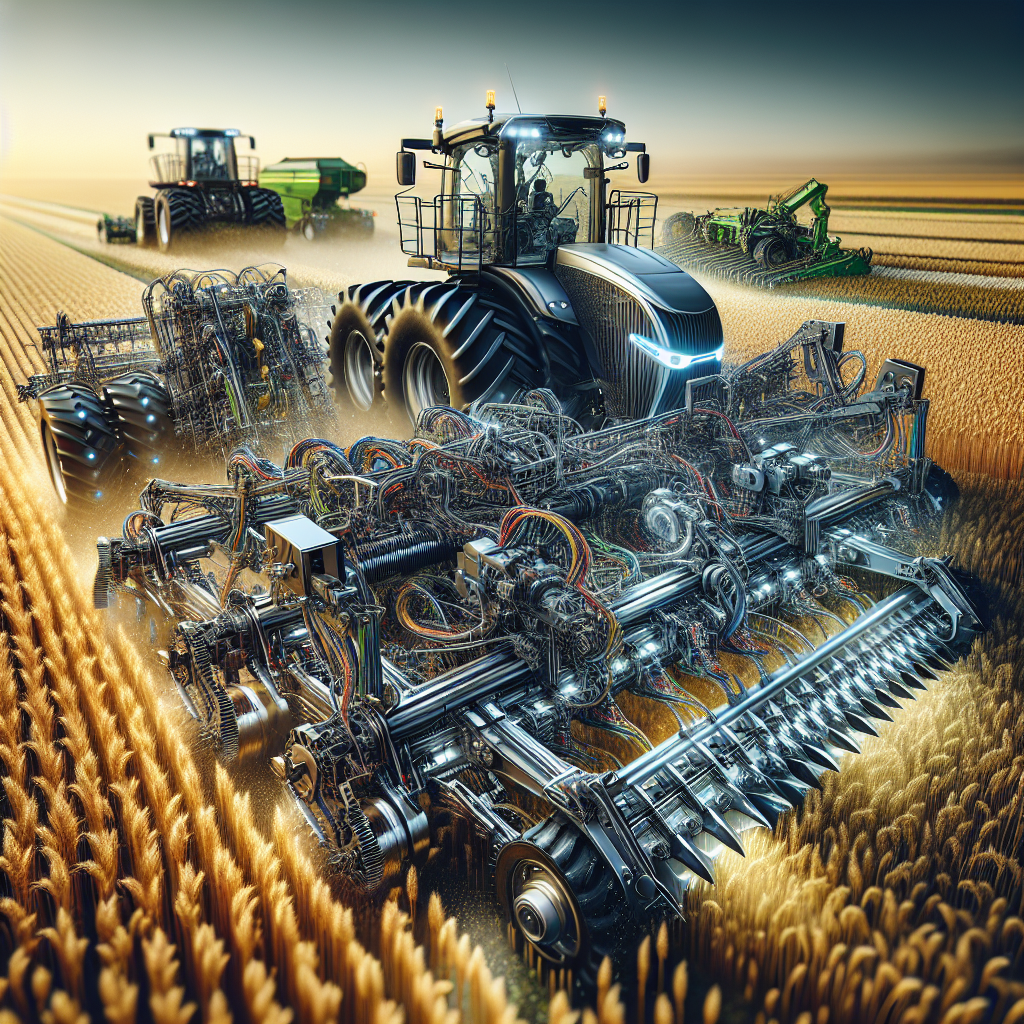
One notable example is the use of autonomous tractors in large-scale farming operations. These tractors are equipped with GPS and advanced sensors, allowing them to operate with minimal human intervention. This not only reduces labor costs but also increases precision and efficiency in field operations.
Advanced Topics
Precision Agriculture
Precision agriculture is an advanced farming practice that leverages technology to optimize field-level management. Key components include:
- GPS and GIS: These technologies enable precise mapping and monitoring of fields.
- Remote Sensing: Drones and satellites provide real-time data on crop health and soil conditions.
- Variable Rate Technology (VRT): Allows for the application of inputs (seeds, fertilizers, pesticides) at variable rates based on field conditions.
Recent Innovations
Recent research and innovations in the mechanics of machines in agricultural engineering include:
- Autonomous Machinery: Development of self-driving tractors and harvesters.
- Robotics: Use of robots for tasks like planting, weeding, and harvesting.
- Artificial Intelligence (AI): AI algorithms for predictive analytics and decision-making in farming.
Future Trends
The future of agricultural machinery is likely to be shaped by advancements in AI, machine learning, and IoT (Internet of Things). These technologies will enable even greater automation, precision, and efficiency in farming practices.
Challenges and Considerations
Technical Challenges
Despite the advancements, there are several challenges associated with the mechanics of machines in agricultural engineering:
- Complexity: Modern machines are complex and require specialized knowledge for operation and maintenance.
- Cost: High initial investment and maintenance costs can be prohibitive for small-scale farmers.
- Environmental Impact: The use of heavy machinery can lead to soil compaction and other environmental issues.
Potential Solutions
Addressing these challenges requires a multi-faceted approach:
- Education and Training: Providing farmers with the necessary skills and knowledge to operate and maintain modern machinery.
- Subsidies and Financial Support: Government and private sector initiatives to make advanced machinery more affordable.
- Sustainable Practices: Developing and promoting machinery that minimizes environmental impact.
Conclusion
The mechanics of machines in agricultural engineering is a dynamic and evolving field that plays a crucial role in modern farming practices. From the early innovations of the steel plow and mechanical reaper to the advanced technologies of precision agriculture and autonomous machinery, the integration of mechanical principles has significantly enhanced agricultural productivity and sustainability. While there are challenges to overcome, ongoing research and innovation promise a future where farming is more efficient, precise, and environmentally friendly. The importance of this field cannot be overstated, as it continues to shape the future of agriculture and food production worldwide.