Fascinating Facts Every Mechanical Engineer Should Know
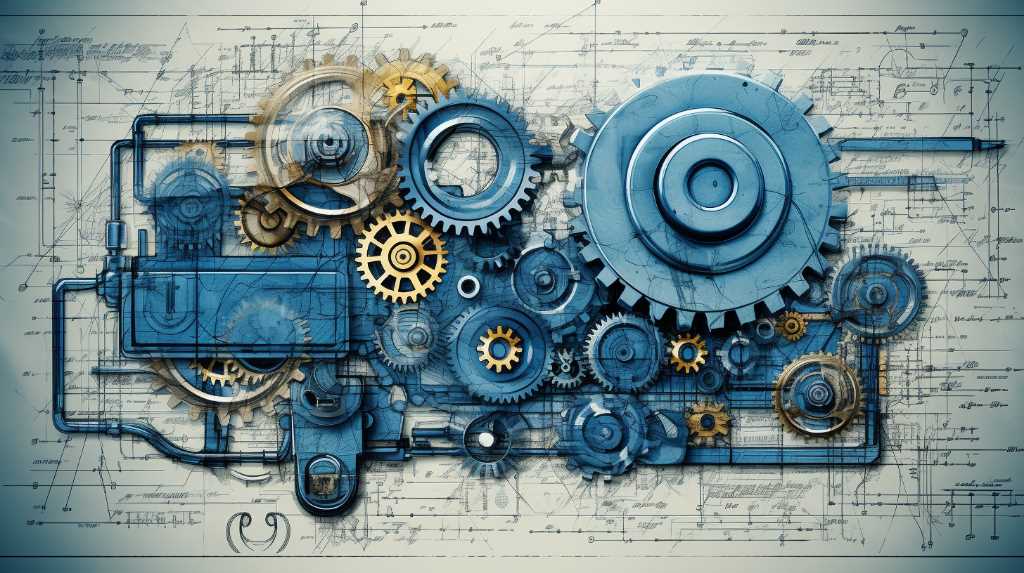
Mechanical engineering is a key field that combines physics and math with the study of materials to push technology and industry forward. Let’s dive into some interesting facts that every mechanical engineer should know.
Take the Antikythera Mechanism, for example, which is thought to be the first computer ever made. It shows just how far back mechanical engineering goes, and how it has always been tied to cutting-edge inventions.
Now, think about the huge leaps in materials science we’ve seen recently. These advances have changed mechanical engineering in big ways.
Also, when mechanical engineers understand how robotics have evolved and how thermodynamics work, they can design systems that use energy more efficiently. This is important because it can help reduce waste and save money.
It’s also inspiring to look back at the mechanical engineers who came before us. They set the stage for the innovation we see today, and their stories encourage current engineers to keep exploring and getting better.
Learning these facts is more than just interesting; they spark new ideas and push engineers to keep making progress.
The Antikythera Mechanism Mystery
The Antikythera Mechanism is a fascinating piece of ancient Greek technology that was found in a shipwreck near the island of Antikythera in 1901. Experts have studied this device very carefully and believe it was used to predict the positions of stars and planets, and to track eclipses for calendars and astrology.
It’s made of more than 30 interlocking bronze gears, showing a level of skill that is really impressive for its time – around the second century BCE. Many people think of it as the earliest known computer.
The discovery of the Antikythera Mechanism has changed our understanding of ancient technology, making us reconsider how early such advanced devices were invented.
Materials Science Breakthroughs
Moving beyond the clever designs of the past, today’s discoveries in materials science have greatly improved how we engineer things.
Take graphene, for instance, which is a super-thin form of carbon. It’s incredibly strong for its weight, changing the game for industries like aerospace and electronics.
Then there are self-healing materials that fix themselves like living organisms do. These are super useful in places where it’s hard to do repairs.
We’ve also got metamaterials, which are specially designed to do things that natural materials can’t, like bending light in unusual ways. This is a big deal for things like lenses and improving how we communicate.
3D printing, or additive manufacturing, is another leap forward. It lets us make special metal blends tailored for any job, helping engineers to make stronger, more efficient things.
All these new materials come from a deep understanding of atoms and the structure of crystals. Because of this knowledge, we’re starting to see brand-new ways of building that could change our world.
Milestones in Robotics Evolution
Robotics has changed how we build things and go about our daily lives. This change started with the debut of Unimate in the 1960s, the first robot used in factories, which made car production much faster and more efficient. After that, the Stanford arm was created, which could be programmed to do different tasks, showing how important it is for robots to do more than one thing.
As technology got better, robots that could make decisions on their own were made, like the Mars rovers. These space robots showed how robotics could blend with artificial intelligence to take on challenges like exploring other planets. Now, we have robots known as cobots that work safely with people, making teamwork between humans and robots better than ever.
These important steps show that robots are becoming smarter and more skilled, and they will keep shaping our future in exciting ways.
Thermodynamics and Energy Efficiency
The principles of thermodynamics have been key since the 1800s for making machines and processes more energy-efficient. These principles teach us how to save energy, how energy moves, and the best we can do when changing energy from one form to another.
Engineers today use these rules carefully to make systems work better and last longer. For example, when engineers design things like heat exchangers, air conditioners, and car engines, they pay a lot of attention to how well they use energy. They aim to create as little entropy, or disorder, as possible. This means more energy does useful work and less is wasted.
This careful way of looking at things, based on thermodynamics, helps create new materials and technologies that save energy and handle it well. Doing this is crucial for taking care of our planet and making sure engineering projects make economic sense.
Pioneers of Mechanical Engineering
When looking back at the start of mechanical engineering, it’s important to remember the brilliant minds that set the stage for the machines we use today. James Watt made the steam engine much better, which was a key moment in starting the Industrial Revolution.
Nikolaus Otto created the internal combustion engine, which is a big part of how we understand power and movement in machines. We also have to thank Rudolf Diesel for making the Diesel engine, which turned out to be more efficient than the engines that ran on gasoline.
These inventors didn’t just play around with ideas; they used careful analysis and hands-on experiments. Their hard work turned simple ideas into the well-organized field of engineering that helps us make and understand complex machines now.
Each of their discoveries marked an important step in the growth of mechanical engineering.
Conclusion
Mechanical engineering is an amazing field filled with big changes and a long history. It has given us things like the mysterious Antikythera Mechanism, a very old computer, and has led to new discoveries in making materials, the growth of robots, and finding better ways to save energy with thermodynamics.
Understanding the past is key for mechanical engineers because it helps spark new ideas and makes sure the field keeps moving forward. Remembering the work of early engineers is not just about honoring them; it’s about using their ideas to make new things and solve today’s problems in creative ways.