Dynamic Analysis of Machines: Concepts and Techniques
Introduction
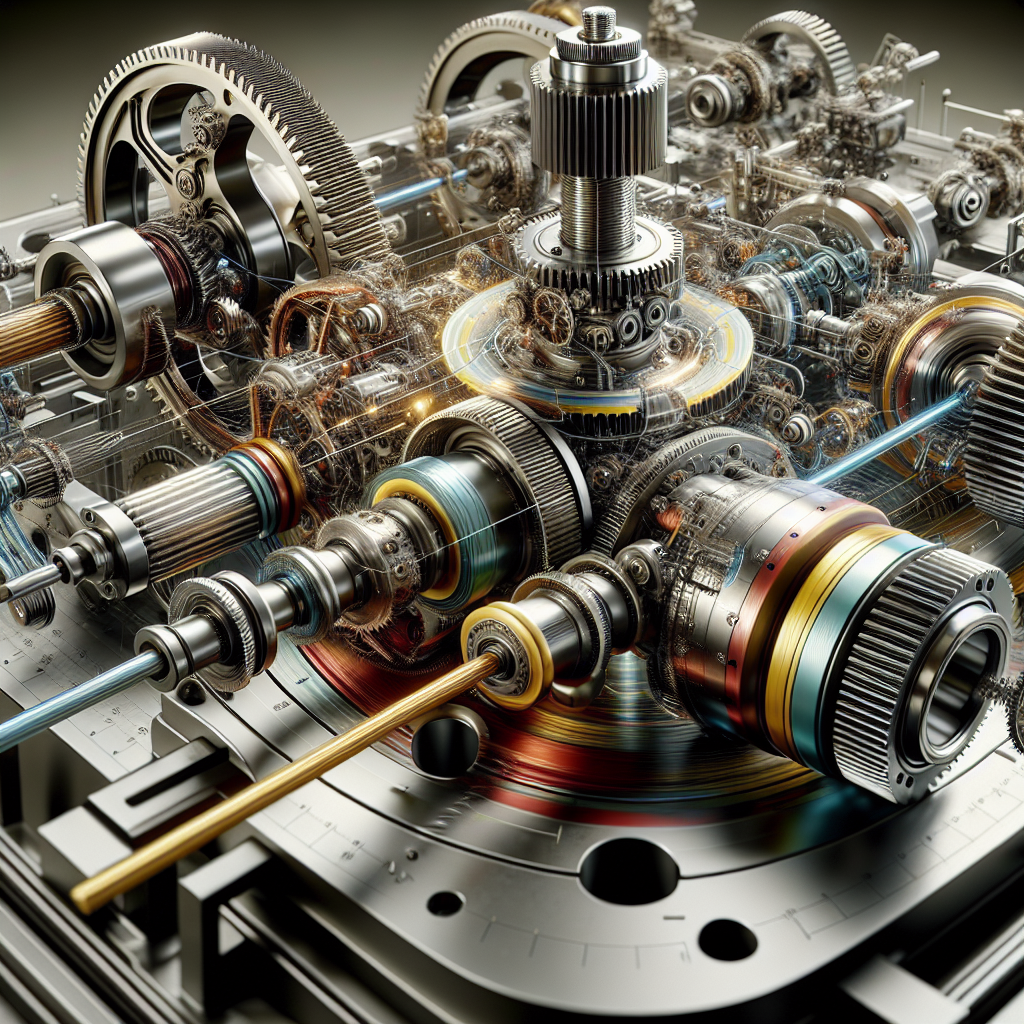
Dynamic analysis of machines is a critical aspect of the field of Mechanics of Machines in Engineering. It involves the study of forces and motions in mechanical systems, which is essential for designing efficient, reliable, and safe machinery. This analysis helps engineers understand how machines behave under various operating conditions, predict potential failures, and optimize performance. The importance of dynamic analysis cannot be overstated, as it directly impacts the functionality and longevity of machines used in industries ranging from automotive to aerospace, manufacturing, and robotics.
Fundamentals
Basic Principles and Concepts
Dynamic analysis of machines is grounded in several fundamental principles and concepts:
- Newton’s Laws of Motion: These laws form the basis for understanding the relationship between forces and motion in mechanical systems.
- Kinematics: The study of motion without considering the forces that cause it. It involves parameters such as displacement, velocity, and acceleration.
- Kinetics: The study of forces and torques and their effect on motion. It includes concepts like work, energy, and power.
- Vibration Analysis: The study of oscillatory motions in machines, which is crucial for identifying and mitigating resonant frequencies that can lead to failure.
- Dynamic Equilibrium: A state where the sum of forces and moments acting on a system is zero, leading to a steady-state motion.
Key Terms
- Degrees of Freedom (DOF): The number of independent movements a system can undergo.
- Natural Frequency: The frequency at which a system naturally oscillates when disturbed.
- Damping: The mechanism by which energy is dissipated in a vibrating system, reducing the amplitude of oscillations.
- Mode Shapes: The specific patterns of motion that a system undergoes at its natural frequencies.
Historical Development
The dynamic analysis of machines has a rich history, with contributions from many notable figures:
- Isaac Newton (1643-1727): Laid the foundation with his laws of motion and universal gravitation.
- Leonhard Euler (1707-1783): Developed the Euler-Bernoulli beam theory, which is fundamental in structural dynamics.
- Joseph Fourier (1768-1830): Introduced Fourier series, which are essential for analyzing periodic motions.
- William Rowan Hamilton (1805-1865): Formulated Hamiltonian mechanics, a reformulation of classical mechanics.
- Stephen Timoshenko (1878-1972): Made significant contributions to the field of vibration analysis and structural dynamics.
These milestones have paved the way for modern techniques and tools used in dynamic analysis today.
Applications
Dynamic analysis of machines finds applications in various industries and fields:
Automotive Industry
In the automotive industry, dynamic analysis is used to design and optimize engines, transmissions, and suspension systems. For example, vibration analysis helps in identifying and mitigating engine vibrations, leading to smoother and more efficient engines.
Aerospace Industry
In aerospace, dynamic analysis is crucial for ensuring the structural integrity and performance of aircraft and spacecraft. It helps in predicting and mitigating issues like flutter, which can lead to catastrophic failures.
Manufacturing
In manufacturing, dynamic analysis is used to design and optimize machinery such as CNC machines, robots, and conveyor systems. It ensures that these machines operate efficiently and reliably under various load conditions.
Case Study: Wind Turbines
Wind turbines are a prime example of the application of dynamic analysis. Engineers use dynamic analysis to study the effects of wind loads, vibrations, and rotational forces on the turbine blades and structure. This helps in designing turbines that can withstand harsh environmental conditions and operate efficiently over their lifespan.
Advanced Topics
Nonlinear Dynamics
Nonlinear dynamics deals with systems where the relationship between forces and motions is not linear. This is common in real-world applications where materials exhibit nonlinear behavior, or where large deformations occur. Techniques such as perturbation methods and numerical simulations are used to analyze these systems.
Multibody Dynamics
Multibody dynamics involves the study of systems with multiple interconnected bodies. This is essential for analyzing complex machinery like robotic arms, vehicle suspensions, and biomechanical systems. Software tools like ADAMS and Simpack are commonly used for multibody dynamic simulations.
Recent Research and Innovations
Recent research in dynamic analysis focuses on areas like:
- Smart Materials: Materials that can change their properties in response to external stimuli, leading to adaptive and self-healing systems.
- Machine Learning: Using machine learning algorithms to predict and optimize the dynamic behavior of machines.
- Real-Time Monitoring: Developing sensors and algorithms for real-time monitoring and control of dynamic systems.
Challenges and Considerations
Despite its importance, dynamic analysis of machines faces several challenges:
Complexity
The complexity of real-world systems makes dynamic analysis challenging. Simplifying assumptions are often necessary, but they can lead to inaccuracies. Advanced computational methods and high-fidelity simulations are needed to address this complexity.
Data Availability
Accurate dynamic analysis requires detailed data on material properties, loading conditions, and boundary conditions. Obtaining this data can be difficult, especially for new or custom-designed systems.
Computational Resources
Dynamic analysis, especially for large and complex systems, requires significant computational resources. High-performance computing and parallel processing techniques are often necessary to perform these analyses efficiently.
Potential Solutions
To address these challenges, researchers are exploring several potential solutions:
- Improved Modeling Techniques: Developing more accurate and efficient modeling techniques to capture the complexity of real-world systems.
- Advanced Sensors: Using advanced sensors to collect detailed data for dynamic analysis.
- Cloud Computing: Leveraging cloud computing resources to perform large-scale dynamic simulations.
Conclusion
Dynamic analysis of machines is a vital aspect of the field of Mechanics of Machines in Engineering. It provides the tools and techniques necessary to understand and optimize the behavior of mechanical systems under various operating conditions. From its historical roots to modern applications and advanced research, dynamic analysis continues to evolve, addressing new challenges and pushing the boundaries of what is possible. As industries demand more efficient, reliable, and safe machinery, the importance of dynamic analysis will only grow, making it an indispensable part of engineering practice.