Reliability Engineering in Mechanics of Machines
Introduction
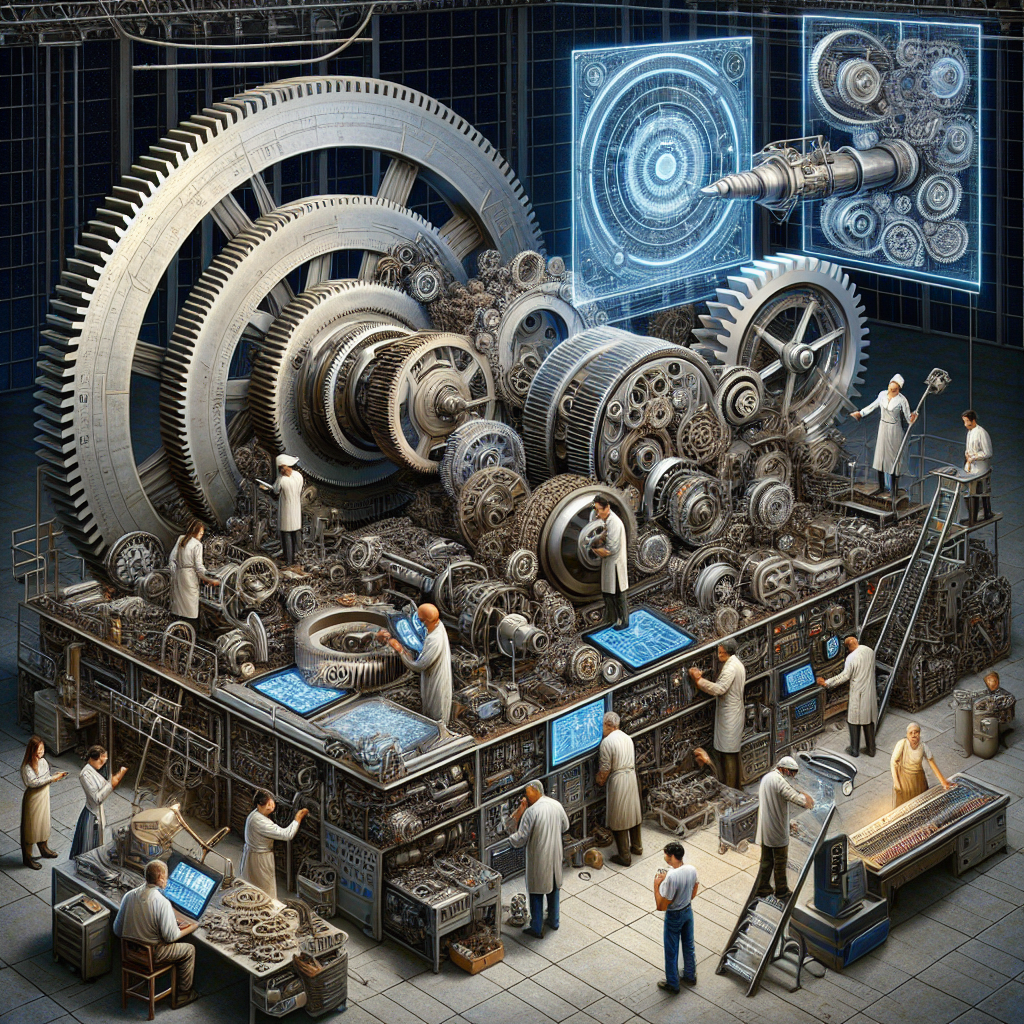
Reliability engineering in the mechanics of machines is a critical discipline within the broader field of engineering. It focuses on ensuring that mechanical systems and components perform their intended functions without failure over a specified period. This field is essential for the design, development, and maintenance of machines, as it directly impacts their efficiency, safety, and longevity. Reliability engineering integrates principles from mechanical engineering, materials science, and statistical analysis to predict and enhance the performance of mechanical systems. Its relevance spans various industries, including automotive, aerospace, manufacturing, and energy, making it a cornerstone of modern engineering practices.
Fundamentals
Basic Principles and Concepts
Reliability engineering is grounded in several fundamental principles and concepts:
- Reliability: The probability that a system or component will perform its required functions under stated conditions for a specified period.
- Failure Modes: The various ways in which a system or component can fail. Understanding failure modes is crucial for identifying potential weaknesses and improving reliability.
- Failure Rate: The frequency with which failures occur in a system or component. It is often expressed as failures per unit of time.
- Mean Time Between Failures (MTBF): A measure of the average time between failures for a system or component. It is a key indicator of reliability.
- Redundancy: The inclusion of extra components or systems to increase reliability. Redundancy can be in the form of parallel systems or backup components.
- Fault Tolerance: The ability of a system to continue operating correctly in the presence of faults or failures.
Theories and Key Terms
Several theories and key terms are integral to reliability engineering:
- Weibull Distribution: A statistical distribution commonly used to model the time to failure of a system or component. It helps in analyzing reliability data and predicting failure patterns.
- Reliability Block Diagrams (RBD): Graphical representations of the reliability relationships between different components of a system. RBDs help in understanding how component failures affect overall system reliability.
- Failure Mode and Effects Analysis (FMEA): A systematic approach for identifying potential failure modes, their causes, and effects on system performance. FMEA helps in prioritizing risks and implementing corrective actions.
- Fault Tree Analysis (FTA): A top-down approach for analyzing the causes of system failures. FTA uses logic diagrams to identify potential failure paths and their probabilities.
Historical Development
The field of reliability engineering has evolved significantly over the years, with contributions from various notable figures and key milestones:
- Early 20th Century: The concept of reliability began to take shape with the advent of complex machinery and systems. Engineers started to recognize the importance of ensuring consistent performance and minimizing failures.
- World War II: The need for reliable military equipment and systems led to significant advancements in reliability engineering. Techniques such as FMEA and FTA were developed to improve the reliability of critical systems.
- 1950s-1960s: The space race and the development of nuclear power further accelerated the growth of reliability engineering. The introduction of statistical methods and reliability testing became more prevalent.
- 1970s-1980s: The rise of computer technology and automation brought new challenges and opportunities for reliability engineering. Software reliability became a critical focus, and new methodologies were developed to address the unique challenges of digital systems.
- 1990s-Present: The integration of reliability engineering with other disciplines, such as quality engineering and risk management, has led to more comprehensive approaches. Advances in materials science, data analytics, and machine learning have further enhanced the field.
Applications
Reliability engineering has a wide range of practical applications across various industries:
Automotive Industry
In the automotive industry, reliability engineering is crucial for ensuring the safety and performance of vehicles. Techniques such as FMEA and reliability testing are used to identify potential failure modes in components like engines, transmissions, and braking systems. Case studies have shown that implementing reliability engineering practices can significantly reduce warranty claims and improve customer satisfaction.
Aerospace Industry
The aerospace industry relies heavily on reliability engineering to ensure the safety and performance of aircraft and spacecraft. Redundancy and fault tolerance are critical for mission-critical systems. For example, the reliability of the Space Shuttle’s main engines was enhanced through rigorous testing and analysis, leading to improved safety and mission success rates.
Manufacturing Industry
In manufacturing, reliability engineering helps in maintaining the uptime and efficiency of production equipment. Predictive maintenance techniques, such as condition monitoring and reliability-centered maintenance (RCM), are used to identify potential failures before they occur. This approach minimizes downtime and reduces maintenance costs.
Energy Industry
The energy industry, including power generation and oil and gas, relies on reliability engineering to ensure the continuous operation of critical infrastructure. Reliability analysis is used to assess the performance of components like turbines, generators, and pipelines. For instance, reliability engineering has been instrumental in improving the reliability of wind turbines, leading to increased energy production and reduced maintenance costs.
Advanced Topics
Recent Research and Innovations
Recent research in reliability engineering has focused on several advanced topics:
- Prognostics and Health Management (PHM): PHM involves the use of data analytics and machine learning to predict the remaining useful life of components and systems. This approach enables proactive maintenance and reduces the risk of unexpected failures.
- Reliability of Complex Systems: As systems become more complex, new methodologies are being developed to assess and improve their reliability. This includes the use of network theory and system-of-systems approaches.
- Reliability in Additive Manufacturing: Additive manufacturing, or 3D printing, presents unique challenges for reliability engineering. Research is focused on understanding the failure mechanisms of printed components and developing standards for reliability testing.
Future Trends
The future of reliability engineering is likely to be shaped by several emerging trends:
- Integration with Artificial Intelligence (AI): AI and machine learning will play a significant role in enhancing reliability analysis and prediction. These technologies can process large volumes of data and identify patterns that may not be apparent through traditional methods.
- Internet of Things (IoT): The proliferation of IoT devices will enable real-time monitoring and analysis of system performance. This will facilitate more accurate reliability assessments and timely maintenance interventions.
- Sustainability and Green Engineering: Reliability engineering will increasingly focus on sustainability, with an emphasis on designing systems that are not only reliable but also environmentally friendly and resource-efficient.
Challenges and Considerations
Despite its importance, reliability engineering faces several challenges and considerations:
Data Availability and Quality
Reliable data is essential for accurate reliability analysis. However, obtaining high-quality data can be challenging, especially for new or complex systems. Incomplete or inaccurate data can lead to incorrect reliability predictions and suboptimal decision-making.
Complexity of Modern Systems
Modern systems are becoming increasingly complex, with numerous interconnected components and subsystems. This complexity makes it difficult to identify all potential failure modes and accurately assess system reliability. Advanced modeling techniques and simulation tools are needed to address this challenge.
Cost and Resource Constraints
Implementing reliability engineering practices can be resource-intensive, requiring significant time, expertise, and financial investment. Balancing the costs of reliability improvements with the benefits they provide is a critical consideration for organizations.
Human Factors
Human factors, such as operator errors and maintenance practices, can significantly impact system reliability. Addressing these factors requires a holistic approach that includes training, process improvements, and ergonomic design.
Potential Solutions and Areas for Further Research
Several potential solutions and areas for further research can help address these challenges:
- Enhanced Data Collection and Analysis: Developing advanced data collection methods and analytical tools can improve the accuracy and reliability of data used in reliability engineering.
- Interdisciplinary Collaboration: Collaboration between reliability engineers, data scientists, and domain experts can lead to more comprehensive and effective reliability solutions.
- Standardization and Best Practices: Establishing industry standards and best practices for reliability engineering can help organizations implement effective reliability programs more efficiently.
- Human-Centered Design: Incorporating human factors into the design process can reduce the risk of operator errors and improve overall system reliability.
Conclusion
Reliability engineering in the mechanics of machines is a vital discipline that ensures the performance, safety, and longevity of mechanical systems. By understanding and applying the principles of reliability engineering, engineers can design and maintain systems that meet the demands of various industries. The historical development of the field highlights its evolution and the contributions of notable figures, while practical applications demonstrate its relevance across different sectors. Advanced topics and future trends indicate the ongoing innovation and potential for further advancements in reliability engineering. Despite the challenges and considerations, continued research and collaboration will drive the field forward, ensuring that mechanical systems remain reliable and efficient in an increasingly complex world.