Balancing of Rotating Masses: Methods and Applications
Introduction
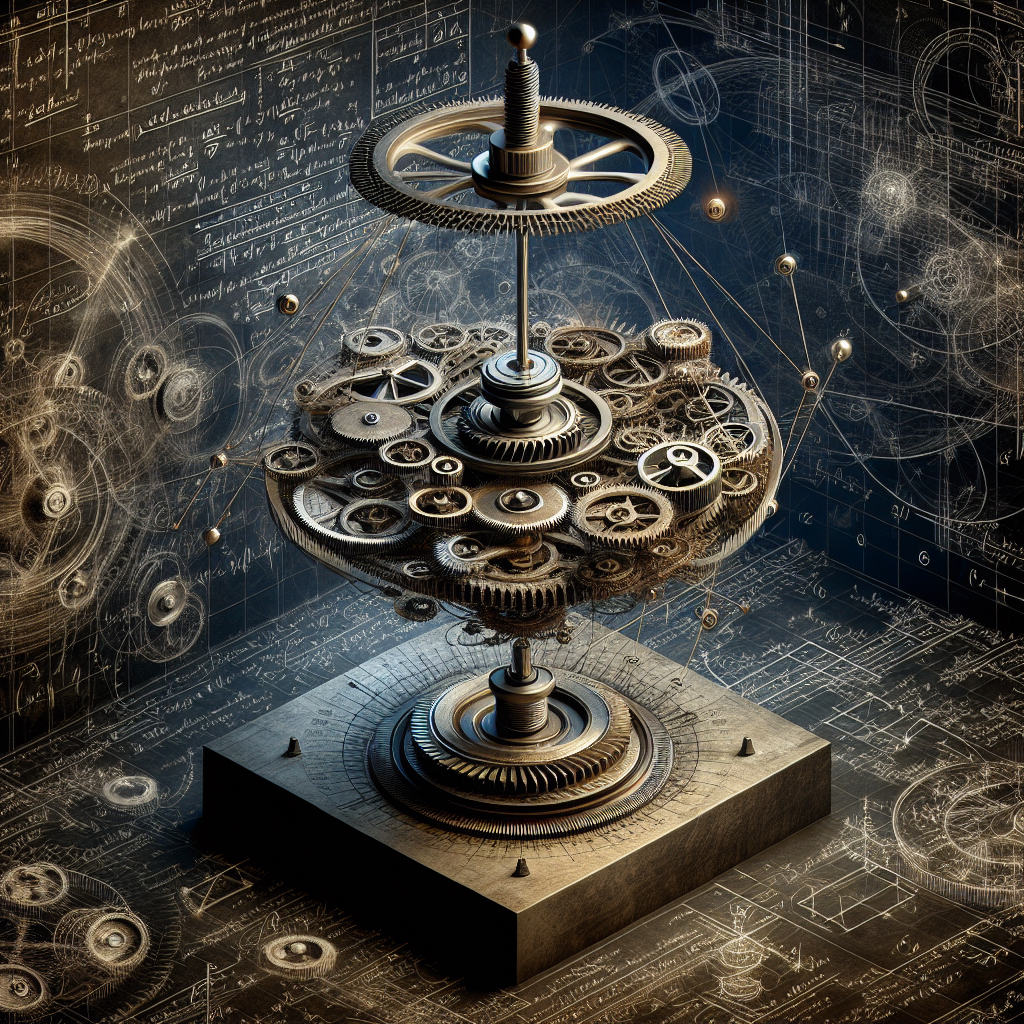
In the field of Mechanics of Machines in Engineering, the balancing of rotating masses is a critical topic that ensures the smooth and efficient operation of machinery. Unbalanced rotating masses can lead to excessive vibrations, noise, and even catastrophic failure of mechanical systems. Therefore, understanding and implementing effective balancing techniques is essential for the longevity and reliability of machines. This article delves into the importance, principles, historical development, applications, advanced topics, challenges, and considerations associated with the balancing of rotating masses.
Fundamentals
Basic Principles and Concepts
The balancing of rotating masses involves distributing the mass of a rotating object so that its center of mass coincides with its axis of rotation. This ensures that the object rotates smoothly without causing undue vibrations or stresses on the bearings and other supporting structures.
Key Terms
- Unbalance: The condition where the mass distribution of a rotating object is not symmetrical about its axis of rotation.
- Static Balance: Achieved when the center of mass of a rotating object is on its axis of rotation, eliminating any net force during rotation.
- Dynamic Balance: Achieved when the rotating object does not produce any net force or moment during rotation, ensuring smooth operation at all speeds.
- Balancing Machine: A device used to measure and correct the unbalance in rotating objects.
Theories
Two primary theories underpin the balancing of rotating masses: the Law of Conservation of Angular Momentum and the Principle of Superposition. The former states that the angular momentum of a system remains constant if no external torque acts on it, while the latter allows for the analysis of complex systems by breaking them down into simpler components.
Historical Development
Early Developments
The concept of balancing rotating masses dates back to the early days of mechanical engineering. In the 19th century, engineers like James Watt and George Stephenson recognized the importance of balancing in steam engines and locomotives. They developed rudimentary techniques to reduce vibrations and improve the efficiency of their machines.
Key Milestones
- 1900s: The development of the first balancing machines, which allowed for more precise measurement and correction of unbalance.
- 1930s: The introduction of dynamic balancing techniques, which enabled the balancing of rotating objects at operational speeds.
- 1960s: The advent of computer-aided balancing, which significantly improved the accuracy and efficiency of the balancing process.
Notable Figures
Several notable figures have made significant contributions to the field of balancing rotating masses. These include:
- James Watt: Pioneered early balancing techniques in steam engines.
- George Stephenson: Applied balancing principles to locomotives, improving their performance and reliability.
- Henry Ford: Implemented balancing techniques in automotive manufacturing, setting new standards for vehicle performance.
Applications
Automotive Industry
In the automotive industry, balancing rotating masses is crucial for the smooth operation of engines, crankshafts, and wheels. Unbalanced components can lead to excessive wear, reduced fuel efficiency, and increased emissions. Modern vehicles use advanced balancing techniques to ensure optimal performance and longevity.
Aerospace Industry
The aerospace industry relies heavily on the precise balancing of rotating components such as turbines, rotors, and propellers. Unbalanced components can cause severe vibrations, leading to structural damage and potential failure. Advanced balancing techniques are employed to ensure the safety and reliability of aircraft.
Manufacturing Industry
In manufacturing, balancing rotating masses is essential for the smooth operation of machinery such as lathes, milling machines, and grinders. Unbalanced components can lead to poor surface finish, reduced tool life, and increased maintenance costs. Balancing techniques are used to enhance the efficiency and quality of manufacturing processes.
Case Studies
One notable case study involves the balancing of wind turbine blades. Unbalanced blades can cause significant vibrations, leading to structural damage and reduced efficiency. By employing advanced balancing techniques, engineers were able to reduce vibrations, improve energy output, and extend the lifespan of the turbines.
Advanced Topics
Recent Research and Innovations
Recent research in the field of balancing rotating masses has focused on the development of more accurate and efficient balancing techniques. Innovations such as laser-based balancing, real-time monitoring, and adaptive balancing systems have significantly improved the precision and reliability of the balancing process.
Future Trends
Future trends in balancing rotating masses include the integration of artificial intelligence and machine learning algorithms to predict and correct unbalance in real-time. Additionally, advancements in materials science and manufacturing techniques are expected to lead to the development of lighter and more balanced components.
Challenges and Considerations
Challenges
Despite significant advancements, several challenges remain in the field of balancing rotating masses. These include:
- Complex Geometries: Balancing components with complex geometries can be challenging due to the difficulty in accurately measuring and correcting unbalance.
- High-Speed Applications: Balancing components that operate at high speeds requires advanced techniques to ensure stability and reliability.
- Material Inhomogeneity: Variations in material properties can lead to unbalance, making it difficult to achieve precise balancing.
Considerations
When balancing rotating masses, several considerations must be taken into account:
- Measurement Accuracy: Accurate measurement of unbalance is crucial for effective balancing. Advanced sensors and measurement techniques are often required.
- Correction Methods: Various methods can be used to correct unbalance, including adding or removing material, adjusting mass distribution, and using counterweights.
- Operational Conditions: Balancing must be performed under conditions that closely mimic the actual operating environment to ensure optimal performance.
Conclusion
The balancing of rotating masses is a fundamental aspect of the Mechanics of Machines in Engineering. It plays a crucial role in ensuring the smooth and efficient operation of machinery across various industries. From its early development to recent innovations, the field has seen significant advancements that have improved the accuracy and reliability of balancing techniques. Despite ongoing challenges, continued research and development hold promise for even more effective solutions in the future. Understanding and implementing proper balancing techniques is essential for engineers to design and maintain high-performance, reliable machines.