Mechanics of Machines in Construction Equipment
Introduction
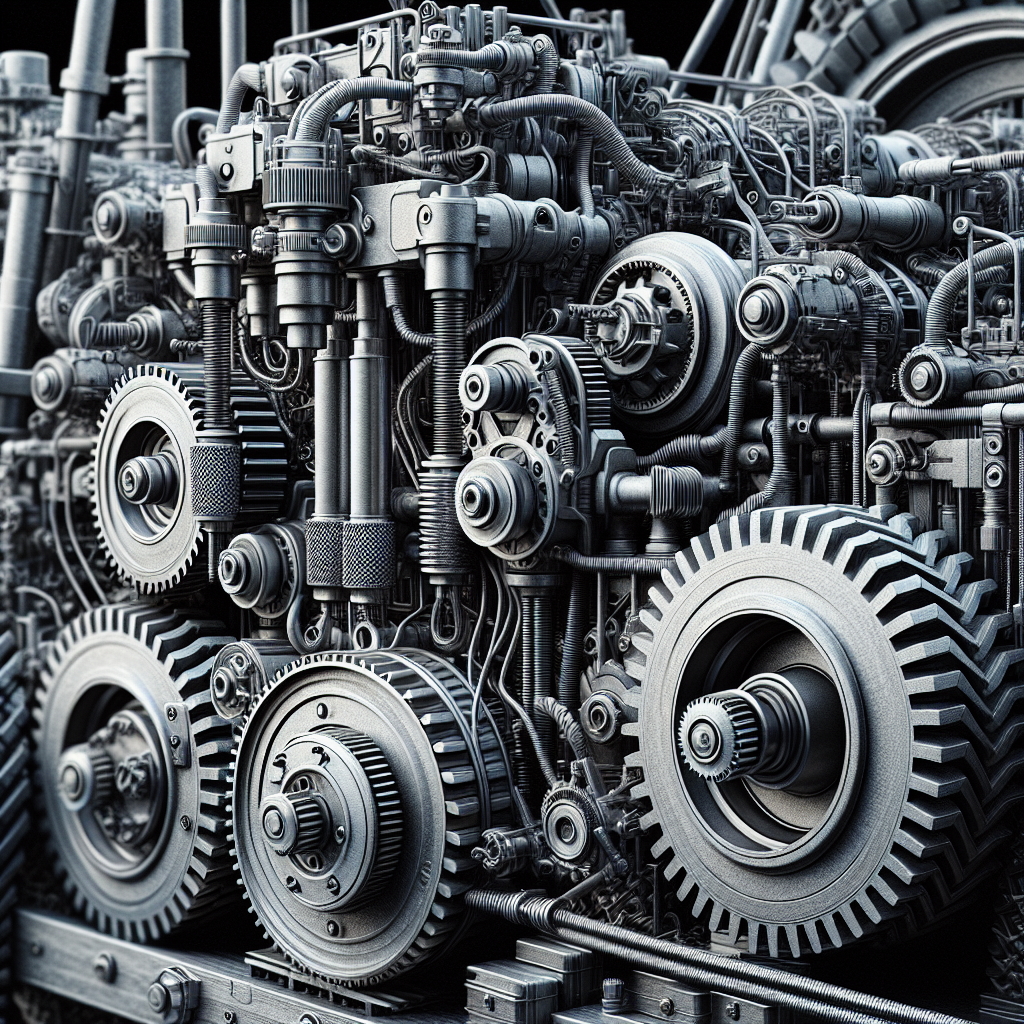
The field of Mechanics of Machines in Engineering is a cornerstone of modern technology, playing a crucial role in the design, analysis, and operation of machinery. One of the most significant applications of this field is in construction equipment, where the principles of mechanics are employed to create machines that can perform a variety of tasks with efficiency and precision. From excavators and bulldozers to cranes and loaders, construction equipment relies heavily on the mechanics of machines to function effectively. This article delves into the mechanics of machines in construction equipment, exploring its importance, fundamental principles, historical development, practical applications, advanced topics, challenges, and future trends.
Fundamentals
Understanding the mechanics of machines in construction equipment requires a grasp of several basic principles and concepts. At its core, the mechanics of machines involves the study of forces and motion in mechanical systems. Key terms and theories include:
Definitions and Key Terms
- Mechanics: The branch of physics dealing with the behavior of physical bodies when subjected to forces or displacements.
- Machine: A device that transmits or modifies energy to perform a specific task.
- Force: An interaction that changes the motion of an object.
- Torque: A measure of the force that can cause an object to rotate about an axis.
- Work: The product of force and displacement in the direction of the force.
- Power: The rate at which work is done or energy is transferred.
Theories and Principles
- Newton’s Laws of Motion: Fundamental principles that describe the relationship between the motion of an object and the forces acting on it.
- Statics: The study of forces in systems that are in equilibrium.
- Dynamics: The study of forces and motion in systems that are not in equilibrium.
- Kinematics: The study of motion without considering the forces that cause it.
- Kinetics: The study of the relationship between the motion of objects and the forces acting on them.
Historical Development
The development of construction equipment and the application of mechanics of machines in this field have a rich history. Key milestones include:
Early Innovations
In ancient times, simple machines such as levers, pulleys, and inclined planes were used to perform construction tasks. The Egyptians, for example, used these principles to build the pyramids.
Industrial Revolution
The Industrial Revolution marked a significant turning point with the invention of steam engines and other machinery. This period saw the development of more complex machines, such as cranes and excavators, which greatly enhanced construction capabilities.
20th Century and Beyond
The 20th century brought about significant advancements in construction equipment, driven by innovations in hydraulics, pneumatics, and electronics. Notable figures such as John Deere and Caterpillar played crucial roles in developing modern construction machinery.
Applications
The mechanics of machines in construction equipment have a wide range of practical applications across various industries. Some notable examples include:
Excavators
Excavators are essential for digging and earthmoving tasks. They use hydraulic systems to control the movement of the boom, arm, and bucket, allowing for precise and powerful excavation.
Bulldozers
Bulldozers are used for pushing large quantities of soil, sand, and other materials. They rely on powerful engines and robust tracks to navigate rough terrain and perform heavy-duty tasks.
Cranes
Cranes are vital for lifting and moving heavy objects. They use a combination of mechanical advantage, hydraulics, and counterweights to achieve the necessary lifting capacity and stability.
Loaders
Loaders are versatile machines used for loading materials into trucks, laying pipes, and clearing debris. They employ articulated steering and hydraulic systems for efficient operation.
Case Studies
One notable case study is the construction of the Burj Khalifa in Dubai, where advanced construction equipment played a crucial role. High-capacity cranes and specialized excavators were used to handle the unique challenges posed by the skyscraper’s height and design.
Advanced Topics
The field of mechanics of machines in construction equipment is continually evolving, with ongoing research and innovations. Some advanced topics include:
Automation and Robotics
Automation and robotics are transforming construction equipment, enabling machines to perform tasks autonomously. This includes the use of drones for site surveys and autonomous excavators for earthmoving.
Telematics
Telematics involves the integration of telecommunications and informatics to monitor and manage construction equipment. This technology allows for real-time tracking, diagnostics, and maintenance, improving efficiency and reducing downtime.
Energy Efficiency
Recent research focuses on improving the energy efficiency of construction equipment. This includes the development of hybrid and electric machines that reduce fuel consumption and emissions.
Future Trends
Future trends in the mechanics of machines in construction equipment include the use of artificial intelligence for predictive maintenance, the development of more sustainable materials, and the integration of advanced sensors for enhanced safety and performance.
Challenges and Considerations
Despite the advancements, there are several challenges and considerations associated with the mechanics of machines in construction equipment:
Complexity and Cost
The increasing complexity of construction equipment can lead to higher costs and maintenance requirements. Ensuring that operators are adequately trained to handle advanced machinery is also a challenge.
Environmental Impact
Construction equipment can have a significant environmental impact, including noise pollution, emissions, and habitat disruption. Developing more sustainable practices and technologies is essential to mitigate these effects.
Safety
Safety is a paramount concern in construction. Ensuring that machines are designed and operated safely requires rigorous testing, adherence to standards, and continuous monitoring.
Potential Solutions
Potential solutions to these challenges include:
- Investing in research and development to create more efficient and sustainable machines.
- Implementing comprehensive training programs for operators and maintenance personnel.
- Adopting advanced safety features such as collision avoidance systems and remote monitoring.
- Encouraging collaboration between industry, academia, and government to address environmental and safety concerns.
Conclusion
The mechanics of machines in construction equipment is a vital field within engineering, underpinning the functionality and efficiency of machinery used in construction. From the basic principles of mechanics to advanced topics like automation and energy efficiency, this field continues to evolve, driven by innovation and research. While there are challenges to overcome, the potential for further advancements is immense. Understanding and applying the mechanics of machines in construction equipment not only enhances productivity but also contributes to safer, more sustainable construction practices. As we look to the future, the continued development and application of these principles will play a crucial role in shaping the built environment.