Robotics in Mechanical Engineering: Fundamentals
Introduction
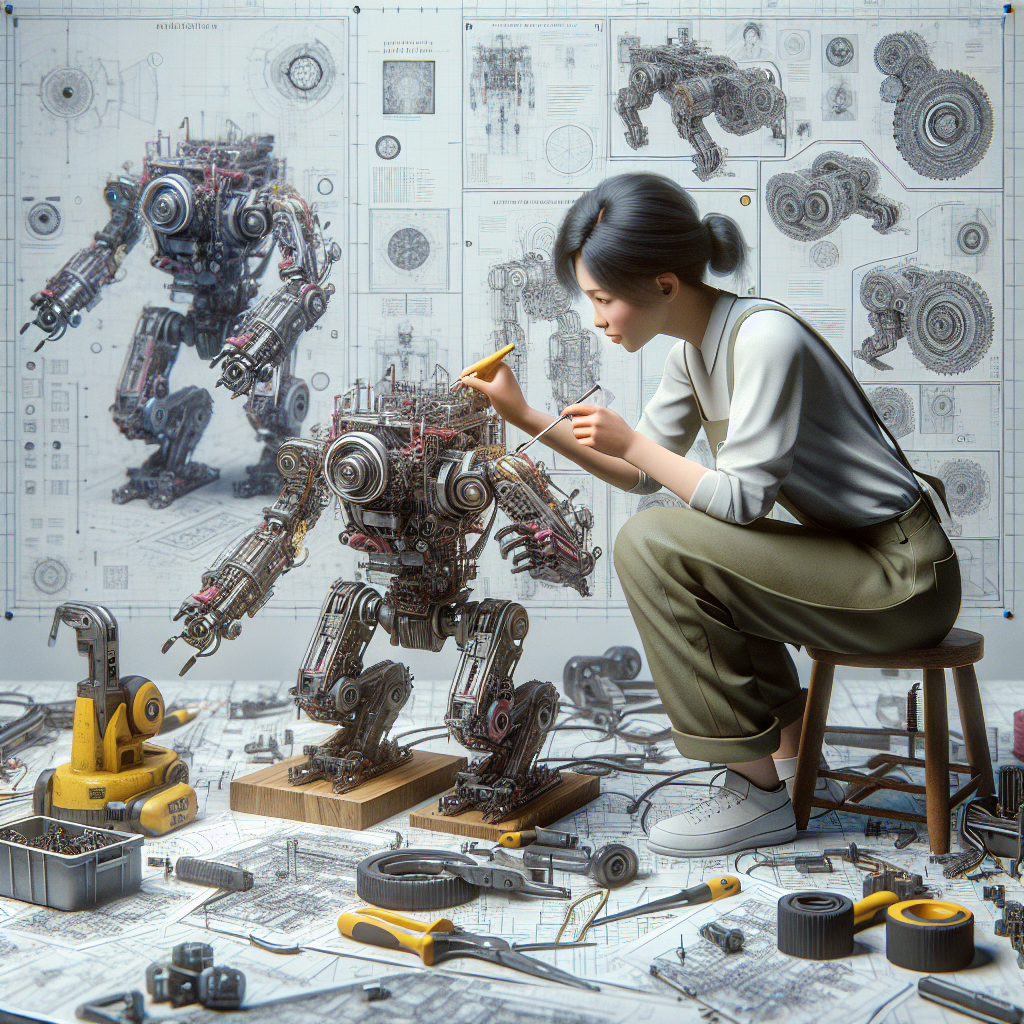
Robotics in Mechanical Engineering is a rapidly evolving field that integrates principles of mechanics, electronics, computer science, and control engineering to design and create robots. These robots are capable of performing tasks that are either too complex, dangerous, or repetitive for humans. The importance of robotics in engineering cannot be overstated, as it has revolutionized various industries, from manufacturing and healthcare to space exploration and agriculture. This article delves into the fundamentals of robotics in the context of the Mechanics of Machines in Engineering, providing a comprehensive overview of its principles, historical development, applications, advanced topics, and challenges.
Fundamentals
Basic Principles and Concepts
Robotics is a multidisciplinary field that encompasses several core principles and concepts:
- Mechanics: The study of forces and their effects on matter. In robotics, mechanics is crucial for understanding how robots move and interact with their environment.
- Kinematics: The branch of mechanics that deals with the motion of objects without considering the forces that cause the motion. Kinematics is essential for designing the movement of robotic arms and joints.
- Dynamics: The study of forces and torques and their effect on motion. Dynamics helps in understanding how robots can be controlled and stabilized.
- Control Systems: These are systems that manage, command, direct, or regulate the behavior of other devices or systems. Control systems are vital for the precise operation of robots.
- Sensors and Actuators: Sensors gather information from the environment, while actuators are the components that cause movement or action in the robot. Together, they enable robots to interact with their surroundings.
Key Terms
- Robot: A programmable machine capable of carrying out a series of actions autonomously or semi-autonomously.
- End Effector: The device at the end of a robotic arm, designed to interact with the environment (e.g., grippers, welding torches).
- Degrees of Freedom (DOF): The number of independent movements a robot can perform. More DOF means greater flexibility and capability.
- Artificial Intelligence (AI): The simulation of human intelligence in machines, enabling them to perform tasks that typically require human intelligence.
Historical Development
The history of robotics is rich with innovation and milestones:
- Ancient Times: The concept of automated machines dates back to ancient civilizations. For example, the Greek engineer Hero of Alexandria created mechanical devices powered by steam.
- 20th Century: The term “robot” was first used by Czech writer Karel Čapek in his 1920 play “R.U.R.” (Rossum’s Universal Robots). The first industrial robot, Unimate, was developed by George Devol and Joseph Engelberger in the 1950s and was used in General Motors’ assembly line.
- Late 20th Century: The development of microprocessors and advancements in computer science led to more sophisticated robots. The 1980s and 1990s saw the rise of robots in manufacturing, with companies like FANUC and KUKA leading the way.
- 21st Century: The integration of AI and machine learning has significantly advanced robotics. Robots are now capable of learning from their environment and improving their performance over time.
Applications
Robotics has a wide range of applications across various industries:
Manufacturing
Robots are extensively used in manufacturing for tasks such as assembly, welding, painting, and material handling. For example, automotive companies use robotic arms for precision welding and assembly, significantly increasing production efficiency and quality.
Healthcare
In healthcare, robots assist in surgeries, rehabilitation, and patient care. The da Vinci Surgical System, for instance, allows surgeons to perform minimally invasive surgeries with high precision.
Agriculture
Robots are used in agriculture for planting, harvesting, and monitoring crops. Autonomous tractors and drones equipped with sensors help farmers optimize their yield and reduce labor costs.
Space Exploration
Robots play a crucial role in space exploration. NASA’s Mars rovers, such as Curiosity and Perseverance, are designed to explore the Martian surface, gather data, and perform experiments.
Service Industry
Service robots are used in various settings, including hospitality, retail, and domestic environments. For example, robots like Pepper and Roomba are designed to interact with customers and perform household chores, respectively.
Advanced Topics
Artificial Intelligence and Machine Learning
The integration of AI and machine learning in robotics has led to significant advancements. Robots can now learn from their environment, adapt to new situations, and improve their performance over time. This capability is particularly useful in applications requiring high levels of autonomy and adaptability.
Human-Robot Interaction (HRI)
HRI focuses on the interaction between humans and robots. Research in this area aims to make robots more intuitive and user-friendly, enabling them to work alongside humans in various settings. This includes developing natural language processing capabilities and improving robot perception and decision-making.
Swarm Robotics
Swarm robotics involves the coordination of multiple robots to perform tasks collectively. Inspired by the behavior of social insects like ants and bees, swarm robotics has applications in areas such as search and rescue, environmental monitoring, and agriculture.
Soft Robotics
Soft robotics focuses on creating robots with flexible and deformable bodies, inspired by biological organisms. These robots are particularly useful in applications requiring delicate handling, such as medical procedures and food processing.
Challenges and Considerations
Despite the advancements, robotics in mechanical engineering faces several challenges:
Technical Challenges
- Complexity: Designing and controlling robots with multiple degrees of freedom is complex and requires advanced algorithms and computational power.
- Power Supply: Providing sufficient power for robots, especially mobile ones, remains a challenge. Battery technology needs to advance to support longer operation times.
- Safety: Ensuring the safety of humans working alongside robots is crucial. This involves developing reliable sensors and control systems to prevent accidents.
Ethical and Social Considerations
- Job Displacement: The increasing use of robots in various industries raises concerns about job displacement and the need for workforce reskilling.
- Privacy: Robots equipped with cameras and sensors can potentially infringe on privacy. Regulations and guidelines are needed to address these concerns.
- Ethical Use: The deployment of robots in sensitive areas, such as healthcare and law enforcement, requires careful consideration of ethical implications.
Potential Solutions
- Research and Development: Continued research and development in areas such as AI, battery technology, and safety systems can address many technical challenges.
- Regulations and Standards: Developing regulations and standards for the ethical use of robots can help mitigate social and ethical concerns.
- Education and Training: Providing education and training programs for the workforce can help address job displacement and prepare individuals for new roles in a robot-driven economy.
Conclusion
Robotics in Mechanical Engineering is a dynamic and transformative field that has significantly impacted various industries. From manufacturing and healthcare to agriculture and space exploration, robots are enhancing efficiency, precision, and safety. The integration of advanced technologies such as AI and machine learning continues to push the boundaries of what robots can achieve. However, challenges related to complexity, power supply, safety, and ethical considerations must be addressed to fully realize the potential of robotics. As research and development continue, the future of robotics in mechanical engineering holds immense promise, making it an essential area of study and innovation in the field of Mechanics of Machines in Engineering.