
Microprocessors in Mechatronics
Introduction
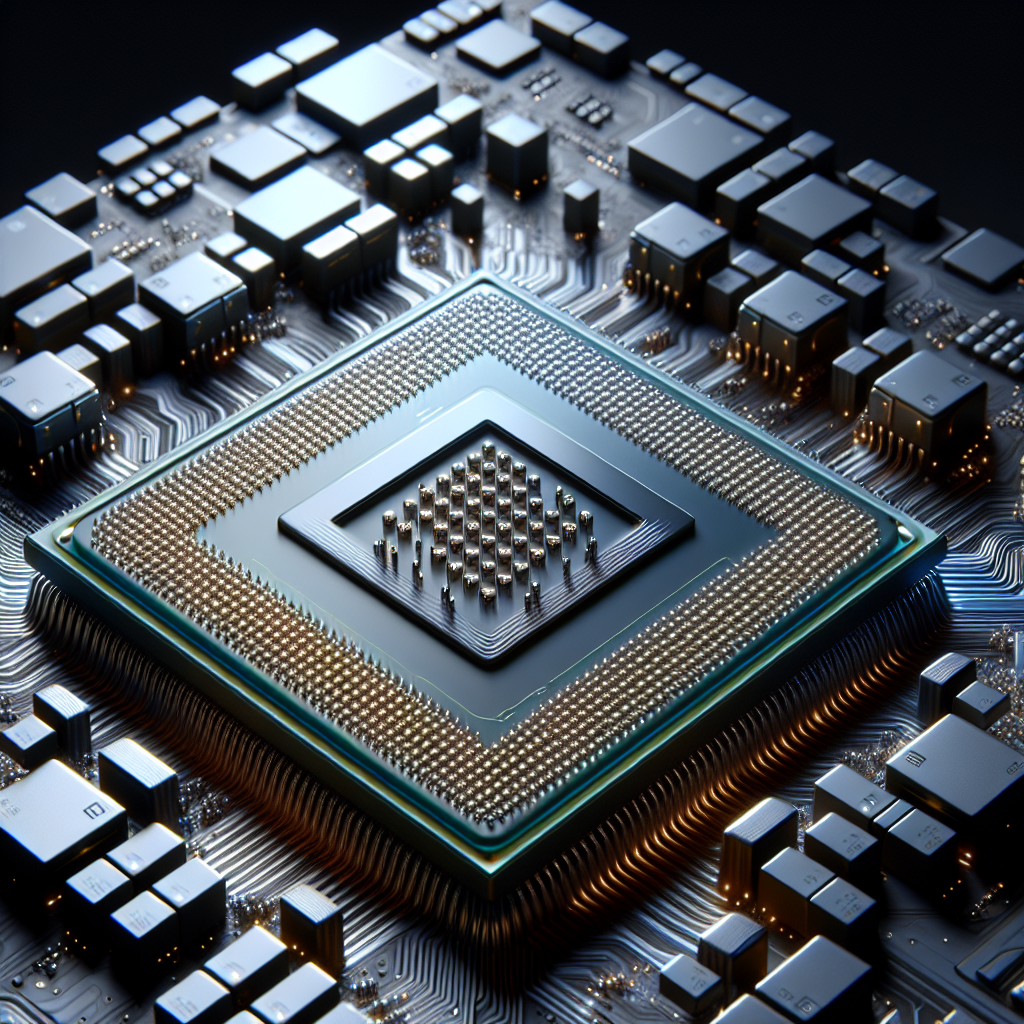
Microprocessors are the heart of modern mechatronic systems, playing a crucial role in the integration of mechanical, electronic, and computational technologies. In the field of engineering, mechatronics represents a multidisciplinary approach that combines mechanical engineering, electronics, computer science, and control engineering to design and create intelligent systems and products. The importance of microprocessors in mechatronics cannot be overstated, as they provide the computational power necessary to process data, execute control algorithms, and enable communication between various system components. This article delves into the significance of microprocessors in mechatronics, exploring their fundamentals, historical development, applications, advanced topics, challenges, and future trends.
Fundamentals
Basic Principles and Concepts
At its core, a microprocessor is a central processing unit (CPU) on a single integrated circuit (IC) chip. It performs arithmetic and logic operations, controls data flow, and executes instructions from a program. Key components of a microprocessor include the arithmetic logic unit (ALU), control unit, registers, and buses. In mechatronic systems, microprocessors serve as the brain, coordinating the actions of sensors, actuators, and other electronic components.
Key Terms
- CPU (Central Processing Unit): The primary component of a microprocessor that performs most of the processing inside a computer.
- ALU (Arithmetic Logic Unit): A digital circuit used to perform arithmetic and logic operations.
- Registers: Small, fast storage locations within the CPU used to hold data temporarily.
- Buses: Electrical pathways used for communication between different parts of a microprocessor.
- Embedded Systems: Specialized computing systems that perform dedicated functions within larger mechanical or electrical systems.
Historical Development
Early Innovations
The development of microprocessors began in the early 1970s with the invention of the Intel 4004, the world’s first commercially available microprocessor. Created by Intel engineers Federico Faggin, Ted Hoff, and Stan Mazor, the 4004 was a 4-bit processor designed for use in calculators. This breakthrough paved the way for more advanced microprocessors, such as the Intel 8008 and 8080, which found applications in early personal computers and industrial control systems.
Key Milestones
- 1971: Introduction of the Intel 4004, the first commercially available microprocessor.
- 1974: Release of the Intel 8080, an 8-bit microprocessor that became widely used in early personal computers.
- 1981: IBM introduces the IBM PC, powered by the Intel 8088 microprocessor, marking the beginning of the personal computer revolution.
- 1985: Introduction of the Intel 80386, a 32-bit microprocessor that significantly increased computing power and capabilities.
- 2000s: Development of multi-core processors, allowing for parallel processing and increased performance in mechatronic systems.
Applications
Industrial Automation
Microprocessors are integral to industrial automation systems, where they control machinery, monitor processes, and ensure efficient operation. Programmable logic controllers (PLCs), which are specialized microprocessor-based devices, are widely used in manufacturing to automate production lines, control robotic arms, and manage complex processes.
Automotive Industry
In the automotive industry, microprocessors are used in engine control units (ECUs) to optimize engine performance, reduce emissions, and enhance fuel efficiency. They also play a critical role in advanced driver-assistance systems (ADAS), such as adaptive cruise control, lane-keeping assistance, and collision avoidance systems.
Consumer Electronics
Microprocessors are found in a wide range of consumer electronics, from smartphones and tablets to smart home devices and wearable technology. In these applications, they enable complex functionalities, such as voice recognition, image processing, and real-time data analysis.
Medical Devices
In the medical field, microprocessors are used in diagnostic equipment, such as MRI and CT scanners, as well as in therapeutic devices like insulin pumps and pacemakers. These devices rely on microprocessors to process data, control functions, and ensure patient safety.
Case Study: Robotics
Robotics is a prime example of mechatronics in action, where microprocessors are essential for controlling robotic systems. For instance, in autonomous robots, microprocessors process sensor data, execute navigation algorithms, and control actuators to perform tasks such as object manipulation, path planning, and obstacle avoidance.
Advanced Topics
Multi-Core Processors
Recent advancements in microprocessor technology have led to the development of multi-core processors, which contain multiple processing units on a single chip. This allows for parallel processing, significantly enhancing the performance and efficiency of mechatronic systems. Multi-core processors are particularly beneficial in applications requiring real-time data processing and complex computations.
Artificial Intelligence and Machine Learning
The integration of artificial intelligence (AI) and machine learning (ML) with microprocessors is revolutionizing mechatronics. AI algorithms can be implemented on microprocessors to enable intelligent decision-making, predictive maintenance, and adaptive control in mechatronic systems. For example, AI-powered microprocessors can analyze sensor data to predict equipment failures and optimize maintenance schedules.
Internet of Things (IoT)
The Internet of Things (IoT) is another advanced concept closely related to microprocessors in mechatronics. IoT involves connecting physical devices to the internet, allowing them to communicate and share data. Microprocessors play a key role in IoT-enabled mechatronic systems by processing data from sensors, executing control algorithms, and facilitating communication with other devices and cloud-based services.
Challenges and Considerations
Power Consumption
One of the primary challenges associated with microprocessors in mechatronics is power consumption. As microprocessors become more powerful and complex, they require more energy to operate. This can be a significant limitation in battery-powered devices and applications where energy efficiency is critical. Researchers are exploring low-power microprocessor designs and energy-efficient algorithms to address this challenge.
Heat Dissipation
Heat dissipation is another important consideration, as microprocessors generate heat during operation. Excessive heat can lead to thermal throttling, reduced performance, and potential damage to the system. Effective cooling solutions, such as heat sinks, fans, and advanced thermal management techniques, are essential to ensure reliable operation.
Security
Security is a growing concern in mechatronic systems, especially with the increasing connectivity of IoT devices. Microprocessors must be designed with robust security features to protect against cyber threats, data breaches, and unauthorized access. This includes implementing encryption, secure boot processes, and hardware-based security modules.
Complexity and Integration
The integration of microprocessors with other components in mechatronic systems can be complex, requiring careful design and testing to ensure compatibility and reliable operation. Engineers must consider factors such as signal integrity, electromagnetic interference (EMI), and system-level integration challenges.
Conclusion
Microprocessors are indispensable in the field of mechatronics, providing the computational power necessary to control and optimize complex systems. From industrial automation and automotive applications to consumer electronics and medical devices, microprocessors enable a wide range of functionalities and innovations. As technology continues to advance, the integration of multi-core processors, artificial intelligence, and the Internet of Things will further enhance the capabilities of mechatronic systems. However, challenges such as power consumption, heat dissipation, security, and system integration must be addressed to fully realize the potential of microprocessors in mechatronics. By overcoming these challenges and continuing to innovate, engineers can create smarter, more efficient, and more reliable mechatronic systems that will shape the future of engineering.


