
Microcontrollers in Mechatronics
Introduction
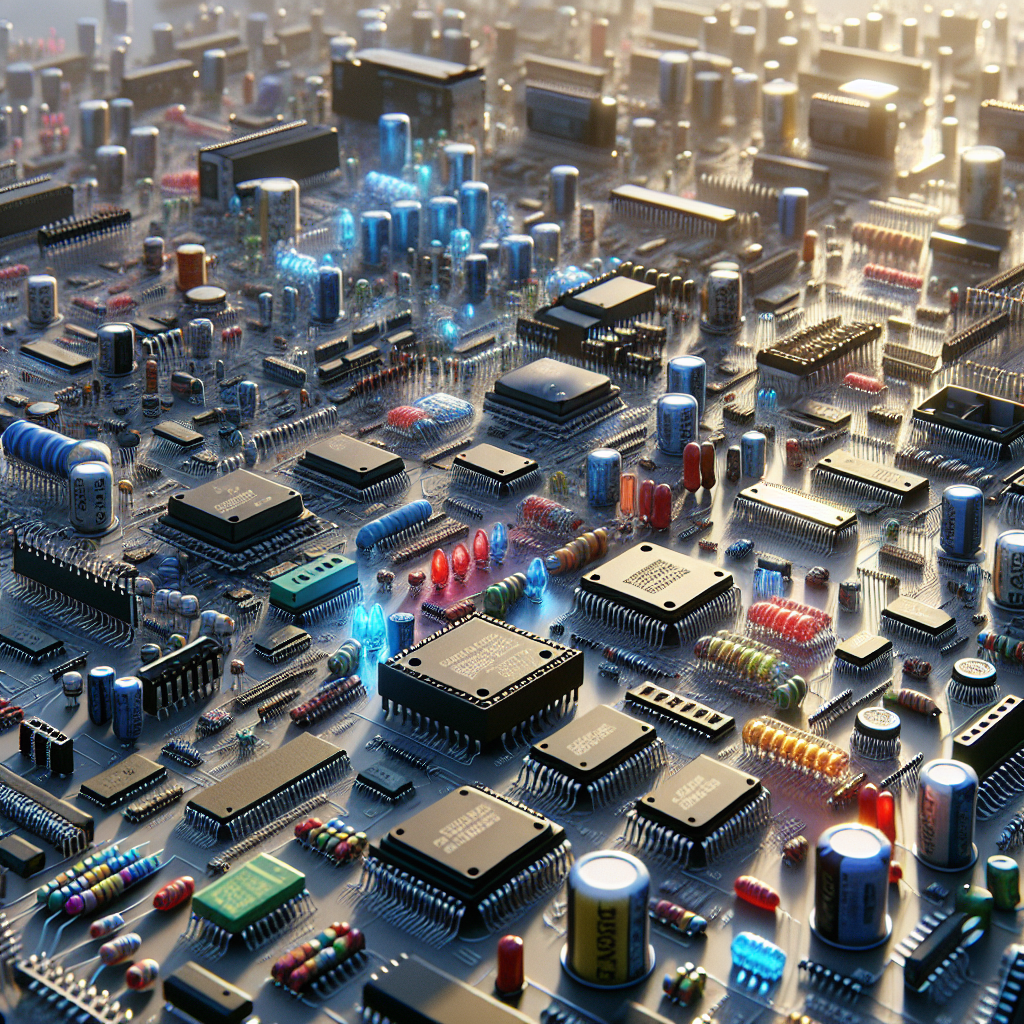
In the rapidly evolving field of engineering, mechatronics stands out as a multidisciplinary domain that integrates mechanical engineering, electronics, computer science, and control engineering. At the heart of many mechatronic systems lies the microcontroller, a compact integrated circuit designed to govern specific operations within an embedded system. Microcontrollers are pivotal in the development and functionality of modern mechatronic devices, offering precise control, programmability, and versatility. This article delves into the significance of microcontrollers in mechatronics, exploring their fundamentals, historical development, applications, advanced topics, challenges, and future trends.
Fundamentals
Basic Principles and Concepts
A microcontroller is a small computer on a single integrated circuit (IC) that contains a processor core, memory, and programmable input/output peripherals. Unlike general-purpose microprocessors, microcontrollers are designed for specific control applications, making them ideal for embedded systems in mechatronics.
Key Terms
- Processor Core: The central unit that executes instructions and processes data.
- Memory: Includes both volatile (RAM) and non-volatile (ROM, Flash) memory for storing data and instructions.
- Peripherals: Input/output interfaces such as timers, analog-to-digital converters (ADC), and communication modules (UART, SPI, I2C).
- Embedded System: A dedicated system that performs specific tasks within a larger mechanical or electrical system.
Theories
Microcontrollers operate based on the principles of digital logic and computer architecture. They follow a fetch-decode-execute cycle to process instructions stored in memory. The integration of peripherals allows microcontrollers to interact with sensors, actuators, and other components, enabling real-time control and automation in mechatronic systems.
Historical Development
Early Beginnings
The concept of microcontrollers dates back to the early 1970s when the need for compact, efficient control systems in industrial applications became apparent. The first commercially successful microcontroller, the Intel 8048, was introduced in 1976. It featured an 8-bit processor, ROM, RAM, and I/O ports, setting the stage for future developments.
Key Milestones
- 1976: Introduction of the Intel 8048, the first microcontroller.
- 1980: Launch of the Intel 8051, which became one of the most popular microcontrollers due to its versatility and ease of use.
- 1990s: Emergence of 16-bit and 32-bit microcontrollers, offering enhanced performance and capabilities.
- 2000s: Development of microcontrollers with integrated wireless communication modules, expanding their applications in IoT and smart devices.
Notable Figures
Several key figures have contributed to the development of microcontrollers. Federico Faggin, Marcian Hoff, and Masatoshi Shima were instrumental in the creation of the Intel 4004, the world’s first microprocessor, which laid the groundwork for microcontroller technology. Additionally, Gary Boone and Michael Cochran from Texas Instruments developed the TMS1000, one of the earliest microcontrollers.
Applications
Industrial Automation
Microcontrollers play a crucial role in industrial automation, controlling machinery, assembly lines, and robotic systems. They enable precise control of motors, sensors, and actuators, improving efficiency and productivity. For example, programmable logic controllers (PLCs) use microcontrollers to automate manufacturing processes, reducing human intervention and error.
Consumer Electronics
In consumer electronics, microcontrollers are found in a wide range of devices, from household appliances to wearable technology. They control functions such as temperature regulation in smart thermostats, motion detection in security systems, and user interfaces in smartphones and tablets.
Automotive Industry
The automotive industry relies heavily on microcontrollers for various applications, including engine control units (ECUs), anti-lock braking systems (ABS), airbag deployment, and infotainment systems. Microcontrollers enhance vehicle safety, performance, and user experience.
Medical Devices
Microcontrollers are integral to medical devices such as insulin pumps, pacemakers, and diagnostic equipment. They provide accurate control and monitoring of physiological parameters, ensuring patient safety and effective treatment.
Case Studies
One notable case study is the development of autonomous drones. Microcontrollers are used to process sensor data, control flight dynamics, and execute navigation algorithms. Companies like DJI have leveraged microcontroller technology to create advanced drones capable of autonomous flight, obstacle avoidance, and real-time video transmission.
Advanced Topics
Recent Research and Innovations
Recent advancements in microcontroller technology include the integration of artificial intelligence (AI) and machine learning (ML) capabilities. Microcontrollers with AI/ML cores can perform complex data analysis and decision-making at the edge, reducing latency and improving system responsiveness. Additionally, the development of low-power microcontrollers has enabled the proliferation of battery-operated IoT devices.
Future Trends
The future of microcontrollers in mechatronics is promising, with trends pointing towards increased connectivity, enhanced security features, and greater computational power. The advent of 5G technology will further expand the capabilities of microcontroller-based systems, enabling faster data transfer and real-time communication in smart cities, autonomous vehicles, and industrial IoT applications.
Challenges and Considerations
Challenges
- Power Consumption: Balancing performance and power efficiency is a critical challenge, especially for battery-operated devices.
- Security: Ensuring the security of microcontroller-based systems is paramount, as they are often targets for cyber-attacks.
- Complexity: The increasing complexity of microcontroller applications requires advanced programming skills and thorough testing to ensure reliability.
Potential Solutions
- Low-Power Design: Implementing power-saving techniques such as sleep modes and energy-efficient peripherals can mitigate power consumption issues.
- Security Measures: Incorporating hardware-based security features and robust encryption algorithms can enhance system security.
- Education and Training: Providing comprehensive training and resources for engineers can help address the complexity of microcontroller programming and application development.
Conclusion
Microcontrollers are indispensable in the field of mechatronics, offering unparalleled control, flexibility, and integration capabilities. From industrial automation to consumer electronics, automotive systems, and medical devices, microcontrollers have revolutionized the way we design and interact with technology. As advancements continue to unfold, the role of microcontrollers in mechatronics will only grow, driving innovation and shaping the future of engineering. Understanding the fundamentals, historical development, applications, advanced topics, and challenges associated with microcontrollers is essential for engineers and researchers striving to harness their full potential in mechatronic systems.


