Mechanics of Machines in Manufacturing
Introduction
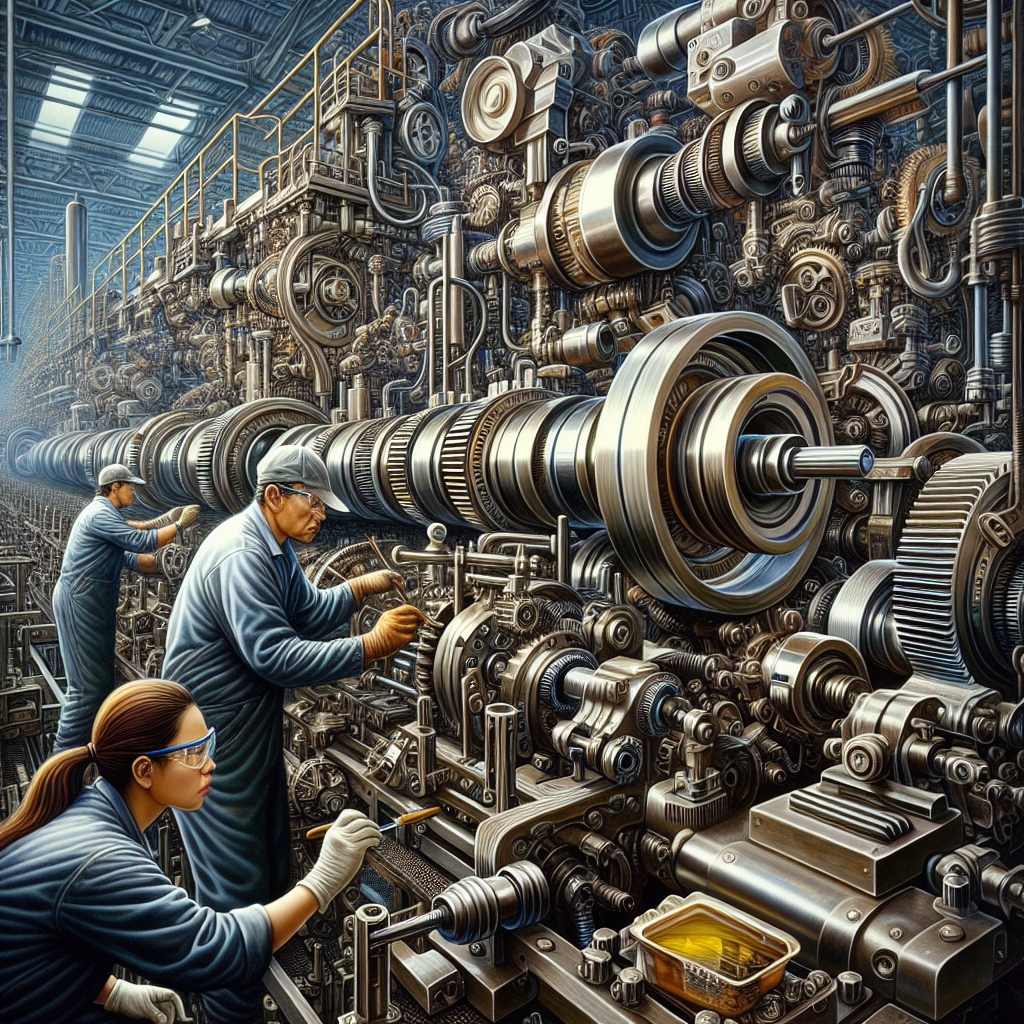
The field of Mechanics of Machines in Manufacturing is a cornerstone of modern engineering, playing a pivotal role in the design, analysis, and optimization of machinery used in manufacturing processes. This discipline encompasses a wide range of topics, from the fundamental principles of mechanics to advanced techniques in machine design and automation. Understanding the mechanics of machines is crucial for improving efficiency, productivity, and innovation in manufacturing industries. This article delves into the various aspects of Mechanics of Machines in Manufacturing, highlighting its importance, fundamental principles, historical development, practical applications, advanced topics, challenges, and future trends.
Fundamentals
Basic Principles and Concepts
Mechanics of Machines is a branch of mechanical engineering that focuses on the behavior of machines and mechanical systems. It involves the study of forces, motion, and energy transformations in machinery. Key concepts in this field include:
- Kinematics: The study of motion without considering the forces that cause it. It involves analyzing the positions, velocities, and accelerations of machine components.
- Kinetics: The study of forces and torques and their effects on motion. It includes the analysis of dynamic forces in machines.
- Dynamics: The study of the relationship between motion and the forces affecting it. It combines both kinematics and kinetics.
- Statics: The study of forces in systems that are in equilibrium. It involves analyzing forces and moments in stationary machines.
- Mechanisms: The study of mechanical systems that transmit motion and force. Common mechanisms include gears, cams, linkages, and levers.
Key Terms
- Degrees of Freedom (DOF): The number of independent movements a mechanism can perform.
- Linkage: A mechanical system of interconnected links that transfer motion and force.
- Cam: A rotating or sliding piece in a mechanical linkage used to transform rotary motion into linear motion.
- Gear: A rotating machine part with cut teeth that mesh with another toothed part to transmit torque.
- Actuator: A device that converts energy into motion, commonly used in automation systems.
Historical Development
The study of Mechanics of Machines has a rich history, with contributions from numerous notable figures and key milestones that have shaped the field.
Early Developments
Ancient civilizations, such as the Greeks and Romans, made significant contributions to the understanding of mechanics. Archimedes’ work on levers and pulleys laid the foundation for the study of mechanical advantage. The development of simple machines, such as the wheel and axle, inclined plane, and screw, marked the early stages of mechanical engineering.
Industrial Revolution
The Industrial Revolution in the 18th and 19th centuries brought about a surge in mechanical innovation. James Watt’s improvements to the steam engine revolutionized manufacturing and transportation. The development of machine tools, such as lathes and milling machines, enabled the mass production of complex mechanical components.
20th Century and Beyond
The 20th century saw rapid advancements in machine design and automation. The introduction of computer-aided design (CAD) and computer-aided manufacturing (CAM) revolutionized the way machines were designed and produced. The development of robotics and automation systems further enhanced manufacturing efficiency and precision.
Applications
The principles of Mechanics of Machines are applied across various industries, driving innovation and efficiency in manufacturing processes.
Automotive Industry
In the automotive industry, the design and analysis of engines, transmissions, and suspension systems rely heavily on the principles of Mechanics of Machines. Advanced simulation tools are used to optimize the performance and durability of automotive components.
Aerospace Industry
The aerospace industry utilizes the principles of Mechanics of Machines in the design of aircraft and spacecraft. The analysis of flight dynamics, control systems, and propulsion mechanisms is critical for ensuring the safety and efficiency of aerospace vehicles.
Robotics and Automation
Robotics and automation systems are integral to modern manufacturing. The design of robotic arms, conveyor systems, and automated assembly lines involves the application of kinematics, dynamics, and control theory. These systems enhance productivity and precision in manufacturing processes.
Case Study: CNC Machining
Computer Numerical Control (CNC) machining is a prime example of the application of Mechanics of Machines in manufacturing. CNC machines use precise control of motion to produce complex parts with high accuracy. The kinematics and dynamics of the machine components are carefully analyzed to ensure optimal performance.
Advanced Topics
Recent Research and Innovations
Recent research in the field of Mechanics of Machines has focused on advanced topics such as:
- Mechatronics: The integration of mechanical, electrical, and computer engineering to create intelligent systems. Mechatronics is essential for the development of advanced automation and robotics systems.
- Biomechanics: The application of mechanical principles to biological systems. This field has led to innovations in medical devices, prosthetics, and human-machine interfaces.
- Nanomechanics: The study of mechanical behavior at the nanoscale. Nanomechanics has applications in the development of nanomaterials, nanodevices, and nanorobots.
- Artificial Intelligence (AI) in Manufacturing: The use of AI algorithms to optimize machine performance, predict maintenance needs, and enhance decision-making in manufacturing processes.
Future Trends
The future of Mechanics of Machines in Manufacturing is likely to be shaped by several emerging trends:
- Industry 4.0: The integration of digital technologies, such as the Internet of Things (IoT), big data, and cloud computing, into manufacturing processes. Industry 4.0 aims to create smart factories with enhanced connectivity and automation.
- Advanced Materials: The development of new materials with superior properties, such as high strength-to-weight ratios and enhanced durability. These materials will enable the design of more efficient and lightweight machines.
- Collaborative Robots (Cobots): Robots designed to work alongside humans in manufacturing environments. Cobots enhance productivity and safety by performing repetitive or hazardous tasks.
- Sustainable Manufacturing: The focus on reducing the environmental impact of manufacturing processes. This includes the development of energy-efficient machines and the use of renewable energy sources.
Challenges and Considerations
Despite the advancements in Mechanics of Machines, several challenges and considerations remain:
Complexity and Cost
The design and analysis of advanced machines can be complex and costly. The integration of multiple engineering disciplines, such as mechanical, electrical, and software engineering, requires specialized knowledge and resources.
Maintenance and Reliability
Ensuring the reliability and longevity of machines is a critical consideration. Regular maintenance and monitoring are essential to prevent breakdowns and minimize downtime. Predictive maintenance techniques, powered by AI and IoT, are being developed to address this challenge.
Human-Machine Interaction
The interaction between humans and machines in manufacturing environments poses challenges related to safety and ergonomics. Designing intuitive and user-friendly interfaces is crucial for enhancing productivity and reducing the risk of accidents.
Regulatory and Ethical Considerations
The development and deployment of advanced machines must comply with regulatory standards and ethical considerations. Ensuring the safety, privacy, and security of automated systems is paramount.
Conclusion
The Mechanics of Machines in Manufacturing is a dynamic and evolving field that plays a vital role in modern engineering. From the fundamental principles of kinematics and dynamics to advanced topics such as mechatronics and AI, this discipline drives innovation and efficiency in manufacturing processes. The historical development of this field has been marked by significant milestones and contributions from notable figures. Practical applications span various industries, including automotive, aerospace, and robotics. While challenges and considerations remain, ongoing research and emerging trends promise to shape the future of Mechanics of Machines in Manufacturing. As technology continues to advance, the importance of this field in engineering will only grow, paving the way for smarter, more efficient, and sustainable manufacturing solutions.