Mechanics of Machines in Biomedical Engineering
Introduction
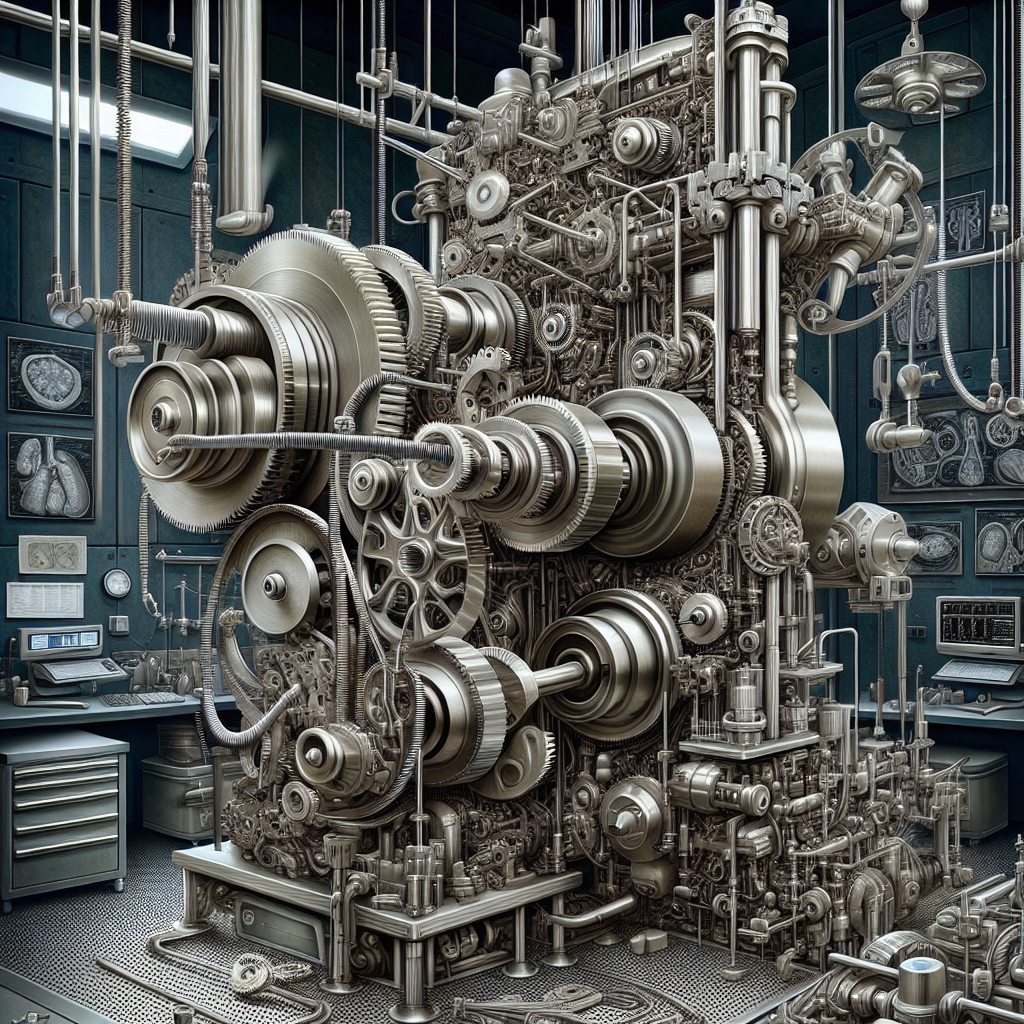
The field of Biomedical Engineering is a multidisciplinary domain that merges principles of engineering with biological sciences to develop technologies and devices that improve healthcare. One of the critical subfields within Biomedical Engineering is the Mechanics of Machines, which focuses on the design, analysis, and application of mechanical systems in medical devices and equipment. This article delves into the importance and relevance of Mechanics of Machines in Biomedical Engineering, exploring its fundamental principles, historical development, practical applications, advanced topics, challenges, and future trends.
Fundamentals
Basic Principles and Concepts
The Mechanics of Machines involves the study of forces and their effects on motion, particularly in mechanical systems. In Biomedical Engineering, this translates to understanding how mechanical principles can be applied to design medical devices that interact with the human body. Key concepts include:
- Kinematics: The study of motion without considering the forces that cause it. In biomedical applications, kinematics is crucial for understanding joint movements and designing prosthetics.
- Dynamics: The study of forces and their effects on motion. This is essential for designing devices like robotic surgical tools that require precise control of movement.
- Statics: The study of forces in systems that are in equilibrium. This is important for designing stable structures like orthopedic implants.
- Mechanisms: The study of mechanical systems and their components, such as gears, levers, and linkages, which are often used in medical devices.
Key Terms
- Biomechanics: The study of mechanical principles applied to biological systems.
- Prosthetics: Artificial devices that replace missing body parts.
- Orthotics: Devices that support or correct the function of a limb or the torso.
- Robotics: The design and use of robots, often used in surgical applications.
Historical Development
The application of mechanical principles to medicine has a rich history. Early examples include the use of simple machines like levers and pulleys in ancient medical devices. However, significant advancements began in the 20th century with the development of more sophisticated technologies.
Key Milestones
- 1950s: The development of the first artificial heart valve, which utilized mechanical principles to mimic the function of a natural valve.
- 1970s: The advent of robotic surgery, with the introduction of the first robotic surgical assistant.
- 1980s: The development of advanced prosthetics with microprocessors to control movement.
- 2000s: The rise of minimally invasive surgical techniques, enabled by sophisticated mechanical systems.
Notable Figures
- Dr. Willem Kolff: Known as the father of artificial organs, he developed the first artificial kidney and heart-lung machine.
- Dr. John Charnley: Pioneered the development of hip replacement surgery, utilizing mechanical principles to design durable implants.
- Dr. Robert Jarvik: Developed the Jarvik-7, the first successful permanent artificial heart.
Applications
The Mechanics of Machines in Biomedical Engineering has a wide range of applications, from diagnostic tools to therapeutic devices. Here are some notable examples:
Prosthetics and Orthotics
Modern prosthetics and orthotics are designed using advanced mechanical principles to closely mimic natural limb movements. For instance, microprocessor-controlled prosthetic knees can adjust to different walking speeds and terrains, providing a more natural gait for amputees.
Robotic Surgery
Robotic surgical systems, such as the da Vinci Surgical System, utilize precise mechanical movements to perform minimally invasive surgeries. These systems offer greater precision, reduced recovery times, and lower risk of complications compared to traditional surgery.
Medical Imaging
Mechanical systems are integral to medical imaging technologies like MRI and CT scanners. These devices rely on precise mechanical movements to capture detailed images of the body’s internal structures, aiding in accurate diagnosis and treatment planning.
Rehabilitation Devices
Rehabilitation devices, such as robotic exoskeletons, use mechanical principles to assist patients in regaining mobility after injuries or surgeries. These devices can provide controlled, repetitive movements that are essential for effective rehabilitation.
Advanced Topics
Recent Research and Innovations
Recent advancements in the Mechanics of Machines in Biomedical Engineering include the development of soft robotics, which use flexible materials to create more adaptable and safer medical devices. For example, soft robotic grippers can be used in surgery to handle delicate tissues without causing damage.
Future Trends
The future of this field is likely to see further integration of artificial intelligence (AI) and machine learning with mechanical systems. AI can enhance the precision and adaptability of medical devices, leading to more personalized and effective treatments. Additionally, advancements in materials science are expected to lead to the development of more durable and biocompatible implants and prosthetics.
Challenges and Considerations
Technical Challenges
One of the primary challenges in this field is ensuring the reliability and safety of mechanical systems used in medical devices. These devices must operate flawlessly under various conditions, as any failure can have serious consequences for patients.
Ethical Considerations
The use of advanced mechanical systems in medicine also raises ethical questions, particularly regarding the extent to which machines should be involved in patient care. Ensuring that these technologies are used responsibly and ethically is crucial.
Regulatory Hurdles
Medical devices must undergo rigorous testing and approval processes before they can be used in clinical settings. Navigating these regulatory requirements can be time-consuming and costly, posing a significant challenge for researchers and developers.
Potential Solutions
Addressing these challenges requires a multidisciplinary approach, involving collaboration between engineers, medical professionals, and regulatory bodies. Continued research and development, along with robust testing and validation processes, are essential for overcoming these hurdles and advancing the field.
Conclusion
The Mechanics of Machines in Biomedical Engineering is a vital and rapidly evolving field that has the potential to revolutionize healthcare. By applying mechanical principles to the design and development of medical devices, engineers can create innovative solutions that improve patient outcomes and enhance the quality of care. Despite the challenges and ethical considerations, the future of this field looks promising, with ongoing research and technological advancements paving the way for new and exciting developments. As we continue to explore the intersection of mechanics and medicine, the possibilities for improving human health and well-being are virtually limitless.