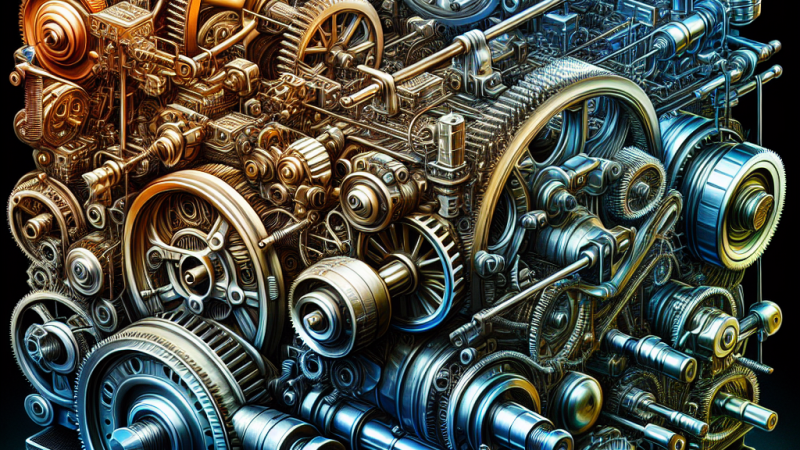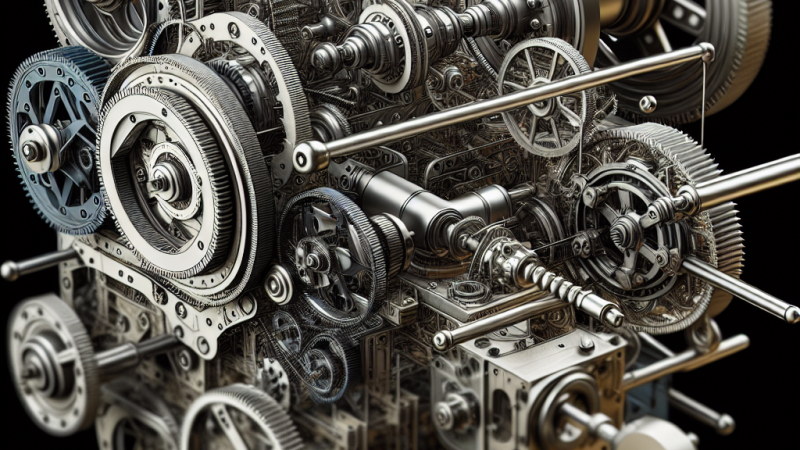
Mechanics of Machines in Automotive Engineering
Introduction
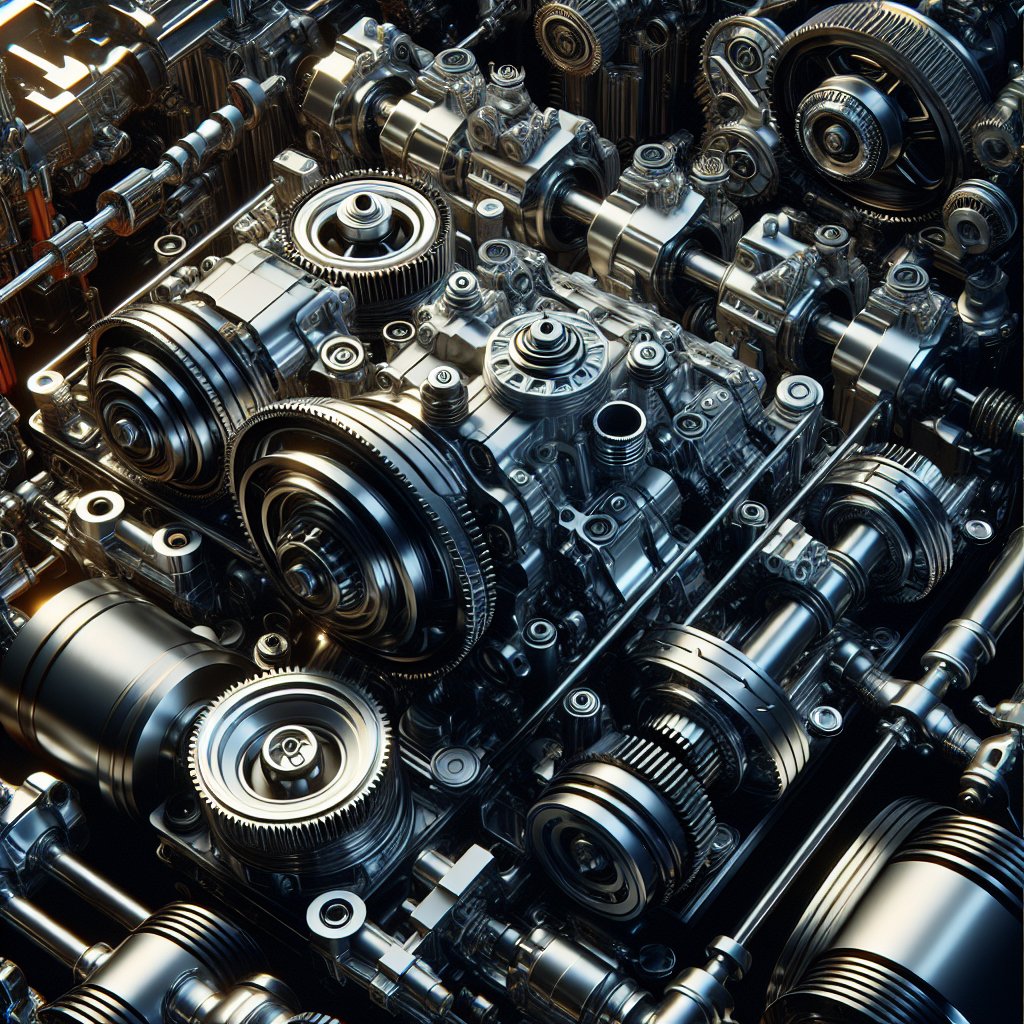
The field of Mechanics of Machines in Automotive Engineering is a cornerstone of modern engineering, playing a crucial role in the design, analysis, and optimization of automotive systems. This discipline focuses on understanding the behavior of mechanical systems and components under various conditions, ensuring that vehicles operate efficiently, safely, and reliably. The importance of this field cannot be overstated, as it directly impacts the performance, durability, and innovation of automotive technologies. From the development of internal combustion engines to the advent of electric and autonomous vehicles, the mechanics of machines underpin every aspect of automotive engineering.
Fundamentals
Basic Principles and Concepts
The mechanics of machines in automotive engineering revolves around several fundamental principles and concepts:
- Newton’s Laws of Motion: These laws form the foundation for analyzing the forces and motions in mechanical systems. They describe the relationship between a body and the forces acting upon it, and the body’s motion in response to those forces.
- Kinematics: This branch of mechanics deals with the motion of objects without considering the forces that cause the motion. It involves the study of displacement, velocity, and acceleration.
- Dynamics: Unlike kinematics, dynamics considers the forces and torques that cause motion. It is essential for understanding how mechanical systems respond to various inputs and conditions.
- Vibration Analysis: This involves studying the oscillatory motions of mechanical systems. Vibration analysis is crucial for identifying and mitigating issues that can lead to mechanical failure or reduced performance.
- Mechanisms: Mechanisms are assemblies of moving parts designed to perform specific functions. Common examples in automotive engineering include gear trains, linkages, and camshafts.
Key Terms
- Torque: A measure of the rotational force applied to an object.
- Power: The rate at which work is done or energy is transferred.
- Efficiency: The ratio of useful work performed by a machine to the total energy input.
- Stress and Strain: Stress is the internal force per unit area within materials, while strain is the deformation or displacement resulting from stress.
Historical Development
The evolution of the mechanics of machines in automotive engineering is marked by several key milestones and contributions from notable figures:
- Leonardo da Vinci (1452-1519): Often considered the father of modern engineering, da Vinci’s sketches and designs laid the groundwork for many mechanical systems.
- Isaac Newton (1643-1727): Newton’s laws of motion and universal gravitation provided the theoretical framework for understanding mechanical systems.
- James Watt (1736-1819): Watt’s improvements to the steam engine revolutionized mechanical engineering and paved the way for the development of internal combustion engines.
- Henry Ford (1863-1947): Ford’s introduction of assembly line production techniques transformed the automotive industry, making vehicles more affordable and accessible.
- Soichiro Honda (1906-1991): Honda’s innovations in engine design and manufacturing processes significantly advanced automotive technology.
These milestones highlight the continuous evolution of mechanical systems and their impact on automotive engineering. From the early days of steam engines to the modern era of electric and autonomous vehicles, the mechanics of machines have been at the forefront of technological advancements.
Applications
The principles and concepts of mechanics of machines are applied across various industries and fields, with significant implications for automotive engineering:
Internal Combustion Engines
The design and optimization of internal combustion engines rely heavily on the mechanics of machines. Engineers analyze the kinematics and dynamics of engine components, such as pistons, crankshafts, and camshafts, to ensure efficient power generation and minimal wear.
Suspension Systems
Suspension systems are critical for vehicle stability and comfort. The mechanics of machines help engineers design suspension components that absorb shocks and vibrations, providing a smooth ride while maintaining control and handling.
Transmission Systems
Transmission systems transfer power from the engine to the wheels. The design of gears, clutches, and other transmission components involves detailed analysis of forces, torques, and motion to ensure efficient power delivery and durability.
Electric and Hybrid Vehicles
The transition to electric and hybrid vehicles introduces new challenges and opportunities for the mechanics of machines. Engineers must design electric motors, battery systems, and regenerative braking mechanisms that optimize performance and energy efficiency.
Autonomous Vehicles
Autonomous vehicles rely on advanced mechanical systems for navigation, control, and safety. The mechanics of machines play a crucial role in developing sensors, actuators, and control algorithms that enable self-driving capabilities.
Advanced Topics
Finite Element Analysis (FEA)
Finite Element Analysis is a computational technique used to simulate and analyze the behavior of mechanical systems under various conditions. FEA allows engineers to model complex geometries, materials, and loading scenarios, providing valuable insights into stress, strain, and deformation.
Multibody Dynamics (MBD)
Multibody Dynamics involves the study of systems with multiple interconnected bodies. MBD simulations help engineers understand the interactions between different components, such as suspension linkages and drivetrain assemblies, ensuring optimal performance and reliability.
Advanced Materials
The development of advanced materials, such as composites and high-strength alloys, has significant implications for the mechanics of machines. These materials offer improved strength-to-weight ratios, enabling the design of lighter and more efficient automotive components.
Recent Research and Innovations
Recent research in the mechanics of machines focuses on areas such as:
- Smart Materials: Materials that can change properties in response to external stimuli, such as temperature or stress, offering new possibilities for adaptive and responsive automotive systems.
- Artificial Intelligence (AI): AI algorithms are being integrated into mechanical systems for predictive maintenance, fault detection, and optimization, enhancing the performance and reliability of automotive technologies.
- 3D Printing: Additive manufacturing techniques enable the production of complex and customized components, reducing lead times and material waste.
Challenges and Considerations
Despite the advancements in the mechanics of machines, several challenges and considerations remain:
Complexity and Integration
The increasing complexity of automotive systems requires seamless integration of mechanical, electrical, and software components. Ensuring compatibility and interoperability between these systems is a significant challenge.
Cost and Sustainability
The development and implementation of advanced mechanical systems can be costly. Balancing performance, cost, and sustainability is crucial for the widespread adoption of new technologies.
Regulatory and Safety Standards
Automotive systems must comply with stringent regulatory and safety standards. Ensuring that new technologies meet these requirements while maintaining performance and reliability is a critical consideration.
Potential Solutions and Future Research
Addressing these challenges requires ongoing research and innovation. Potential solutions include:
- Interdisciplinary Collaboration: Collaboration between mechanical, electrical, and software engineers can facilitate the integration of complex systems.
- Cost-Effective Manufacturing: Advances in manufacturing techniques, such as 3D printing and automation, can reduce production costs and improve sustainability.
- Regulatory Compliance: Proactive engagement with regulatory bodies and adherence to safety standards can ensure the successful deployment of new technologies.
Conclusion
The mechanics of machines in automotive engineering is a dynamic and evolving field that underpins the design, analysis, and optimization of automotive systems. From the fundamental principles of motion and force to advanced topics such as finite element analysis and smart materials, this discipline plays a crucial role in shaping the future of automotive technology. Despite the challenges and complexities, ongoing research and innovation continue to drive advancements in this field, ensuring that vehicles are safer, more efficient, and more reliable. As the automotive industry transitions to electric and autonomous vehicles, the mechanics of machines will remain at the forefront of engineering excellence, driving progress and innovation for years to come.