Historical Development of Mechanics of Machines
Introduction
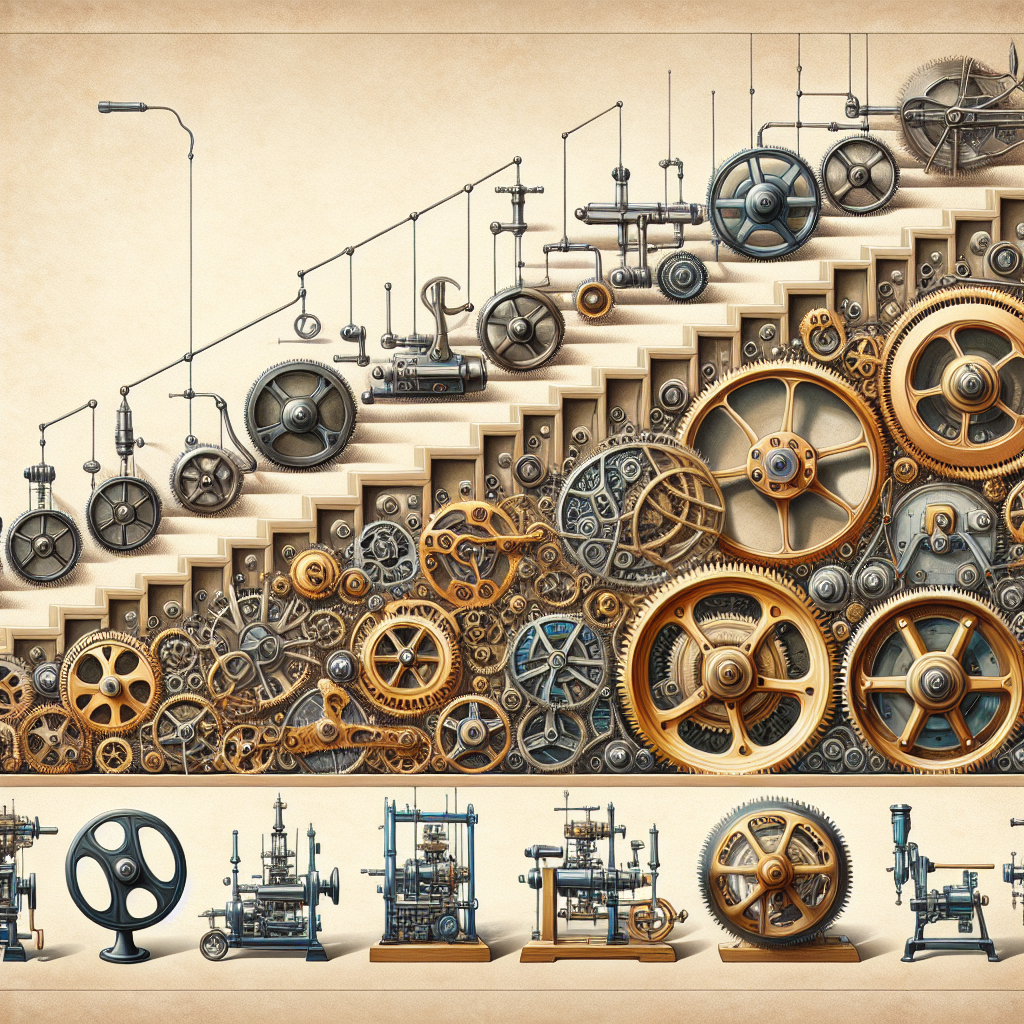
The field of Mechanics of Machines, also known as Kinematics and Dynamics of Machinery, is a cornerstone of mechanical engineering. It deals with the study of motion and the forces that produce motion in mechanical systems. This discipline is crucial for the design, analysis, and optimization of machines and mechanical systems, which are integral to various industries such as automotive, aerospace, manufacturing, and robotics. Understanding the mechanics of machines allows engineers to create more efficient, reliable, and innovative mechanical systems, thereby driving technological advancement and economic growth.
Fundamentals
Basic Principles and Concepts
The Mechanics of Machines encompasses several fundamental principles and concepts:
- Kinematics: The study of motion without considering the forces that cause it. It involves analyzing the positions, velocities, and accelerations of machine components.
- Dynamics: The study of forces and torques and their effect on motion. It includes both kinematics and the forces that cause motion.
- Mechanisms: Assemblies of moving parts designed to perform a specific function. Examples include gears, cams, and linkages.
- Degrees of Freedom: The number of independent movements a mechanism can perform. For example, a simple pendulum has one degree of freedom.
- Force Analysis: Determining the forces acting on each component of a mechanism to ensure structural integrity and proper function.
- Energy Methods: Using principles of energy conservation to analyze mechanical systems, such as potential and kinetic energy.
Key Terms
- Linkage: A mechanical system of links connected by joints to form a closed chain or series of closed chains.
- Cam: A rotating or sliding piece in a mechanical linkage used to transform rotary motion into linear motion or vice versa.
- Gear: A rotating machine part with cut teeth that mesh with another toothed part to transmit torque.
- Crankshaft: A shaft driven by a crank mechanism, typically used in internal combustion engines.
- Flywheel: A rotating mechanical device used to store rotational energy and smooth out the delivery of power from an engine.
Historical Development
Early Beginnings
The study of mechanics dates back to ancient civilizations. The Greeks, particularly Archimedes, made significant contributions to the understanding of levers, pulleys, and screws. Archimedes’ principles laid the groundwork for future developments in mechanics.
Renaissance and the Birth of Modern Mechanics
The Renaissance period saw a resurgence in scientific inquiry and innovation. Leonardo da Vinci’s extensive studies and sketches of machines and mechanisms were pivotal. He conceptualized numerous mechanical devices, including gears, cams, and linkages, many of which are still in use today.
Industrial Revolution
The Industrial Revolution marked a significant turning point in the development of mechanics of machines. James Watt’s improvements to the steam engine in the late 18th century revolutionized industry and transportation. Watt’s work on the parallel motion linkage and the flywheel were critical advancements.
20th Century and Beyond
The 20th century saw rapid advancements in the field, driven by the demands of World War I and II, and the subsequent technological boom. Notable figures such as Henry Ford revolutionized manufacturing with the introduction of assembly lines and mass production techniques. The development of computer-aided design (CAD) and computer-aided engineering (CAE) in the latter half of the century further transformed the field, allowing for more precise and efficient design and analysis of mechanical systems.
Applications
Automotive Industry
The mechanics of machines is fundamental to the automotive industry. From the design of internal combustion engines to the development of advanced suspension systems, understanding the principles of kinematics and dynamics is crucial. For example, the design of a car’s transmission system relies heavily on gear mechanisms to efficiently transfer power from the engine to the wheels.
Aerospace Industry
In the aerospace industry, the mechanics of machines is applied in the design and analysis of aircraft and spacecraft. The development of landing gear mechanisms, control surfaces, and propulsion systems all require a deep understanding of mechanical principles. The use of advanced materials and computer simulations has further enhanced the performance and safety of aerospace systems.
Manufacturing and Robotics
Mechanics of machines plays a vital role in manufacturing and robotics. Automated assembly lines, robotic arms, and CNC machines all rely on precise mechanical systems to perform tasks with high accuracy and efficiency. The development of robotic mechanisms, such as articulated arms and parallel robots, has revolutionized manufacturing processes, enabling higher productivity and quality.
Medical Devices
The field also finds applications in the design of medical devices. Surgical robots, prosthetic limbs, and diagnostic equipment all incorporate complex mechanical systems. For instance, the Da Vinci Surgical System uses robotic arms with multiple degrees of freedom to perform minimally invasive surgeries with high precision.
Advanced Topics
Mechatronics
Mechatronics is an interdisciplinary field that combines mechanics, electronics, and computer science. It focuses on the design and control of intelligent systems and products. Advances in mechatronics have led to the development of sophisticated robotic systems, autonomous vehicles, and smart manufacturing technologies.
Biomechanics
Biomechanics applies the principles of mechanics to biological systems. It involves the study of human movement, the design of orthopedic implants, and the development of assistive devices. Recent research in biomechanics has led to innovations in wearable exoskeletons and advanced prosthetics that enhance mobility and quality of life for individuals with disabilities.
Nanomechanics
Nanomechanics is the study of mechanical properties and behaviors at the nanoscale. It involves the manipulation and control of materials at the atomic and molecular levels. Advances in nanomechanics have led to the development of nanorobots, nanosensors, and other nanodevices with applications in medicine, electronics, and materials science.
Challenges and Considerations
Complexity and Precision
The design and analysis of mechanical systems can be highly complex, requiring precise calculations and simulations. Ensuring the accuracy and reliability of these systems is a significant challenge, particularly in safety-critical applications such as aerospace and medical devices.
Material Limitations
The performance of mechanical systems is often constrained by the properties of the materials used. Advances in material science, such as the development of high-strength alloys and composites, have helped address some of these limitations. However, ongoing research is needed to develop new materials with enhanced properties.
Environmental Impact
The environmental impact of mechanical systems is an important consideration. Engineers must design systems that are energy-efficient and minimize waste and emissions. The development of sustainable technologies, such as electric vehicles and renewable energy systems, is a key area of focus.
Integration with Emerging Technologies
The integration of mechanical systems with emerging technologies, such as artificial intelligence and the Internet of Things (IoT), presents both opportunities and challenges. Ensuring seamless integration and interoperability requires a multidisciplinary approach and ongoing research and development.
Conclusion
The historical development of the mechanics of machines has been marked by significant milestones and contributions from notable figures. From the early principles established by Archimedes to the advanced technologies of today, this field has continually evolved to meet the demands of various industries. Understanding the fundamentals of kinematics and dynamics, as well as the practical applications and advanced topics, is essential for engineers to design and optimize mechanical systems. Despite the challenges and considerations, ongoing research and innovation continue to drive the field forward, ensuring its relevance and importance in the ever-changing landscape of engineering.