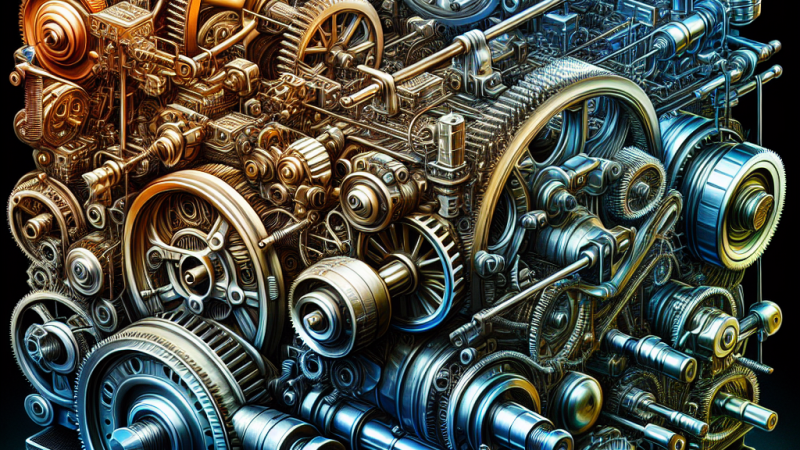
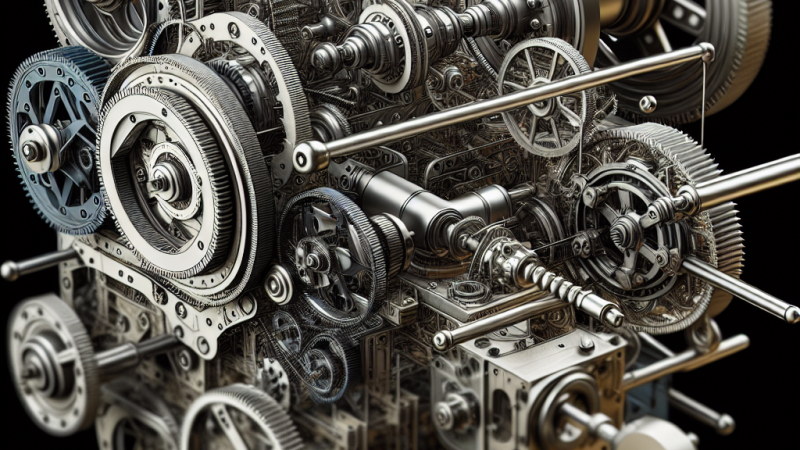
Mechanics of Machines in Aerospace Engineering
Introduction
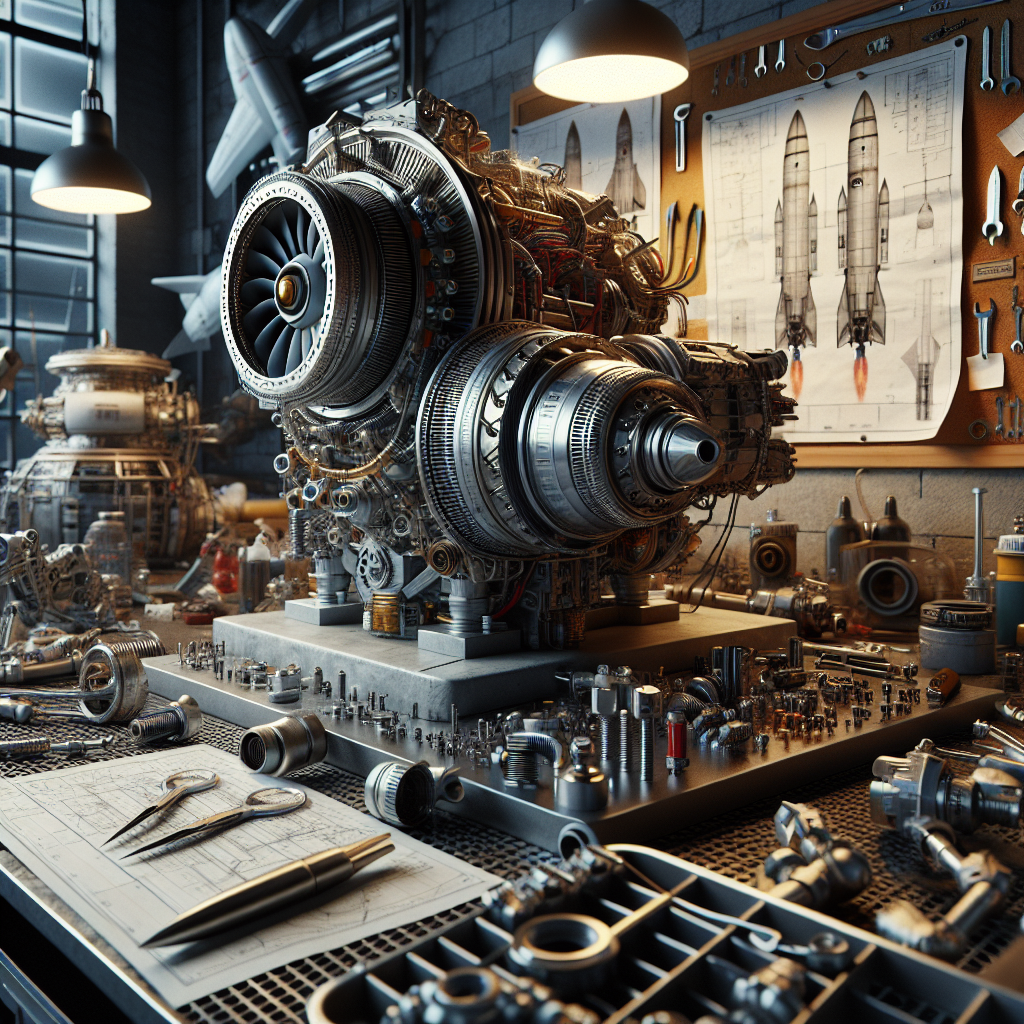
The field of Mechanics of Machines in Aerospace Engineering is a cornerstone of modern engineering, playing a pivotal role in the design, analysis, and optimization of machinery used in aerospace applications. This discipline encompasses a wide range of topics, from the fundamental principles of mechanics to advanced computational techniques, all aimed at ensuring the reliability, efficiency, and safety of aerospace systems. The importance of this field cannot be overstated, as it directly impacts the performance and sustainability of aircraft, spacecraft, and other aerospace vehicles. This article delves into the various aspects of Mechanics of Machines in Aerospace Engineering, providing a comprehensive overview of its fundamentals, historical development, applications, advanced topics, challenges, and future trends.
Fundamentals
Basic Principles and Concepts
At its core, the Mechanics of Machines in Aerospace Engineering involves the study of forces and their effects on motion. Key principles include Newton’s laws of motion, the conservation of energy, and the principles of dynamics and kinematics. These principles are applied to analyze and design mechanical systems that can withstand the extreme conditions encountered in aerospace environments.
Definitions and Key Terms
- Dynamics: The study of forces and torques and their effect on motion.
- Kinematics: The study of motion without considering the forces that cause it.
- Stress and Strain: Measures of internal forces and deformations in materials.
- Fatigue: The weakening of a material caused by repeatedly applied loads.
- Vibration Analysis: The study of oscillatory motions and their effects on mechanical systems.
Theories
Several theories underpin the Mechanics of Machines in Aerospace Engineering:
- Euler-Bernoulli Beam Theory: Used to calculate the load-carrying and deflection characteristics of beams.
- Finite Element Analysis (FEA): A computational technique used to predict how objects react to external forces, vibration, heat, and other physical effects.
- Control Theory: Used to design systems that maintain desired outputs despite disturbances.
Historical Development
Early Milestones
The history of Mechanics of Machines in Aerospace Engineering dates back to the early 20th century, with the advent of powered flight. The Wright brothers’ first successful flight in 1903 marked a significant milestone, demonstrating the practical application of mechanical principles in aviation.
Notable Figures
- Sir George Cayley: Often referred to as the “father of aerodynamics,” Cayley made significant contributions to the understanding of flight mechanics.
- Leonardo da Vinci: Although not directly involved in aerospace engineering, his early sketches and studies of flight mechanisms laid the groundwork for future developments.
- Hugo Junkers: A pioneer in the development of all-metal aircraft, Junkers’ work significantly advanced the field of aerospace engineering.
Modern Developments
In the latter half of the 20th century, advancements in computational technology revolutionized the field. The development of Finite Element Analysis (FEA) and Computational Fluid Dynamics (CFD) allowed engineers to simulate and analyze complex mechanical systems with unprecedented accuracy. These tools have become indispensable in modern aerospace engineering, enabling the design of more efficient and reliable machines.
Applications
Aerospace Industry
The primary application of Mechanics of Machines in Aerospace Engineering is, unsurprisingly, in the aerospace industry. This includes the design and analysis of aircraft, spacecraft, and satellites. Engineers use principles of mechanics to ensure that these vehicles can withstand the stresses and strains of flight, from takeoff to landing, and even in the harsh conditions of space.
Case Studies
- Boeing 787 Dreamliner: The use of advanced composite materials and innovative design techniques has made the Dreamliner one of the most efficient commercial aircraft in operation.
- SpaceX Falcon 9: The reusable rocket design incorporates advanced mechanical systems to withstand multiple launches and landings, significantly reducing the cost of space travel.
Other Industries
While the primary focus is on aerospace, the principles and techniques developed in this field have applications in other industries as well. For example, the automotive industry benefits from advancements in vibration analysis and fatigue testing, leading to more durable and reliable vehicles. Similarly, the principles of control theory are applied in robotics and automation, enhancing the performance and efficiency of these systems.
Advanced Topics
Recent Research and Innovations
Recent research in the field has focused on several advanced topics:
- Smart Materials: Materials that can change properties in response to external stimuli, such as temperature or stress, are being explored for use in adaptive aerospace structures.
- Topology Optimization: This computational technique is used to design lightweight yet strong structures by optimizing material distribution within a given design space.
- Artificial Intelligence (AI): AI and machine learning algorithms are being integrated into the design and analysis processes to predict failures and optimize performance.
Future Trends
The future of Mechanics of Machines in Aerospace Engineering looks promising, with several emerging trends:
- Hypersonic Flight: The development of vehicles capable of traveling at speeds greater than Mach 5 presents new challenges and opportunities for mechanical engineers.
- Space Tourism: As commercial space travel becomes a reality, the demand for reliable and efficient spacecraft will drive further advancements in the field.
- Sustainable Aviation: The push for greener, more sustainable aviation solutions will lead to innovations in materials, propulsion systems, and overall aircraft design.
Challenges and Considerations
Technical Challenges
Despite the advancements, several challenges remain:
- Material Limitations: Finding materials that can withstand extreme conditions while remaining lightweight is a constant challenge.
- Complexity of Systems: The increasing complexity of aerospace systems requires more sophisticated analysis and design tools.
- Cost: The high cost of research, development, and testing can be a significant barrier to innovation.
Potential Solutions
Addressing these challenges requires a multi-faceted approach:
- Interdisciplinary Collaboration: Collaboration between different engineering disciplines can lead to more innovative solutions.
- Investment in Research: Increased funding for research and development can accelerate the discovery of new materials and technologies.
- Education and Training: Ensuring that engineers are well-versed in the latest tools and techniques is crucial for the continued advancement of the field.
Conclusion
In summary, the Mechanics of Machines in Aerospace Engineering is a vital field that underpins the design and operation of modern aerospace systems. From its historical roots to its current applications and future trends, this discipline continues to evolve, driven by advancements in technology and a relentless pursuit of innovation. While challenges remain, the potential for groundbreaking developments makes this an exciting and dynamic field. As we look to the future, the importance of Mechanics of Machines in Aerospace Engineering will only continue to grow, shaping the next generation of aerospace vehicles and technologies.