Applications of Mechanics of Machines in Engineering
Introduction
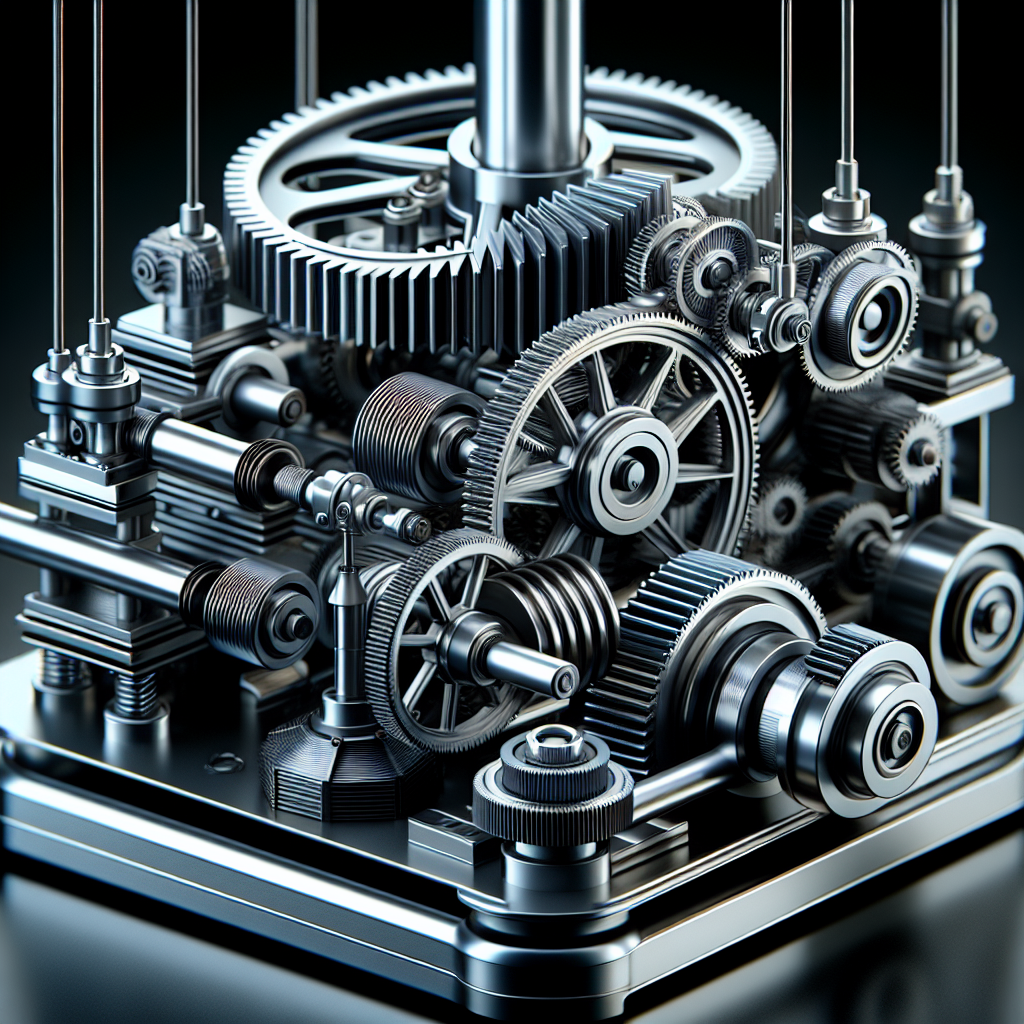
The field of Mechanics of Machines is a cornerstone of engineering, encompassing the study of mechanical systems and their motion. This discipline is crucial for designing, analyzing, and optimizing machines that are integral to various industries, from automotive to aerospace, manufacturing to robotics. Understanding the mechanics of machines allows engineers to create more efficient, reliable, and innovative solutions, thereby driving technological advancement and economic growth. This article delves into the applications of Mechanics of Machines in engineering, exploring its fundamentals, historical development, practical applications, advanced topics, challenges, and future trends.
Fundamentals
Mechanics of Machines involves the study of forces and their effects on machine components. Key principles include kinematics, which deals with the motion of bodies without considering forces, and kinetics, which involves the forces causing motion. Essential concepts include:
- Kinematics: The study of motion without regard to the forces that cause it. It includes the analysis of velocity, acceleration, and displacement.
- Kinetics: The study of forces and torques and their effect on motion. It involves Newton’s laws of motion, work-energy principles, and impulse-momentum principles.
- Dynamics: The study of forces and torques and their effect on motion, combining both kinematics and kinetics.
- Mechanisms: Assemblies of moving parts designed to perform a specific function, such as gears, cams, and linkages.
- Vibrations: The study of oscillatory motion of mechanical systems, which is crucial for understanding and mitigating unwanted oscillations in machines.
These principles form the foundation for analyzing and designing mechanical systems, ensuring they operate efficiently and safely.
Historical Development
The study of Mechanics of Machines has a rich history, with contributions from numerous notable figures:
- Archimedes (287-212 BC): Known for his work on levers and pulleys, Archimedes laid the groundwork for understanding mechanical advantage.
- Leonardo da Vinci (1452-1519): His detailed sketches and studies of gears, cams, and other mechanisms were ahead of his time and influenced future developments in machine design.
- Isaac Newton (1643-1727): Newton’s laws of motion and universal gravitation provided a theoretical framework for understanding the forces and motions in mechanical systems.
- James Watt (1736-1819): His improvements to the steam engine and the development of the flywheel significantly advanced the field of mechanical engineering.
- Franz Reuleaux (1829-1905): Often called the “father of kinematics,” Reuleaux’s work on the classification of mechanisms and the development of kinematic chains was pivotal.
These milestones have shaped the modern understanding of Mechanics of Machines, leading to the sophisticated analysis and design techniques used today.
Applications
The principles of Mechanics of Machines are applied across various industries, driving innovation and efficiency. Some notable applications include:
Automotive Industry
In the automotive sector, Mechanics of Machines is crucial for designing engines, transmissions, and suspension systems. For example, the analysis of camshaft profiles ensures optimal valve timing, improving engine performance and fuel efficiency. Additionally, the study of vehicle dynamics helps in designing stable and safe vehicles.
Aerospace Industry
In aerospace engineering, the principles are applied to design and analyze aircraft components such as landing gear, control surfaces, and propulsion systems. The study of vibrations is particularly important to prevent resonance and ensure the structural integrity of aircraft.
Manufacturing Industry
Mechanics of Machines plays a vital role in the design and optimization of manufacturing equipment, such as robotic arms, conveyor systems, and CNC machines. Understanding the kinematics and dynamics of these systems ensures precise and efficient operation.
Robotics
In robotics, the study of mechanisms and kinematics is essential for designing robotic arms, grippers, and mobile robots. Advanced control algorithms are developed based on the principles of Mechanics of Machines to achieve precise and adaptive movements.
Renewable Energy
The design and analysis of wind turbines, hydroelectric generators, and other renewable energy systems rely heavily on Mechanics of Machines. Understanding the dynamics and vibrations of these systems is crucial for maximizing energy efficiency and longevity.
Advanced Topics
Recent advancements in Mechanics of Machines have led to the development of sophisticated techniques and theories:
Multibody Dynamics
This advanced field involves the study of systems with multiple interconnected bodies. It is used to analyze complex mechanical systems such as vehicle suspensions, robotic arms, and biomechanical models.
Nonlinear Dynamics
Many mechanical systems exhibit nonlinear behavior, where the response is not directly proportional to the input. Nonlinear dynamics involves the study of such systems, which is crucial for understanding phenomena like chaos and bifurcations.
Computational Mechanics
The use of computational tools and simulations has revolutionized the field. Finite element analysis (FEA) and multibody dynamics simulations allow engineers to model and analyze complex systems with high accuracy, reducing the need for physical prototypes.
Smart Materials and Structures
The integration of smart materials, such as shape memory alloys and piezoelectric materials, into mechanical systems has opened new possibilities for adaptive and responsive machines. These materials can change their properties in response to external stimuli, enabling innovative applications in various fields.
Challenges and Considerations
Despite the advancements, several challenges and considerations remain in the field of Mechanics of Machines:
Complexity of Systems
Modern mechanical systems are becoming increasingly complex, making their analysis and design more challenging. Advanced computational tools and techniques are required to handle this complexity.
Material Limitations
The performance of mechanical systems is often limited by the properties of the materials used. Research into new materials and manufacturing techniques is essential to overcome these limitations.
Environmental Impact
The environmental impact of mechanical systems is a growing concern. Engineers must consider sustainability and energy efficiency in their designs to minimize the ecological footprint.
Safety and Reliability
Ensuring the safety and reliability of mechanical systems is paramount. This requires rigorous testing, analysis, and adherence to standards and regulations.
Interdisciplinary Collaboration
The integration of Mechanics of Machines with other fields, such as electronics, computer science, and materials science, is essential for developing advanced systems. Effective interdisciplinary collaboration is crucial for success.
Conclusion
The Mechanics of Machines is a fundamental discipline in engineering, underpinning the design and analysis of mechanical systems across various industries. From historical milestones to modern advancements, this field has continually evolved, driving innovation and efficiency. Despite the challenges, the future of Mechanics of Machines is promising, with ongoing research and technological advancements paving the way for more sophisticated and sustainable solutions. Understanding and applying the principles of Mechanics of Machines is essential for engineers to create the machines that power our world.