Control Systems in Mechatronics: Principles and Design
Introduction
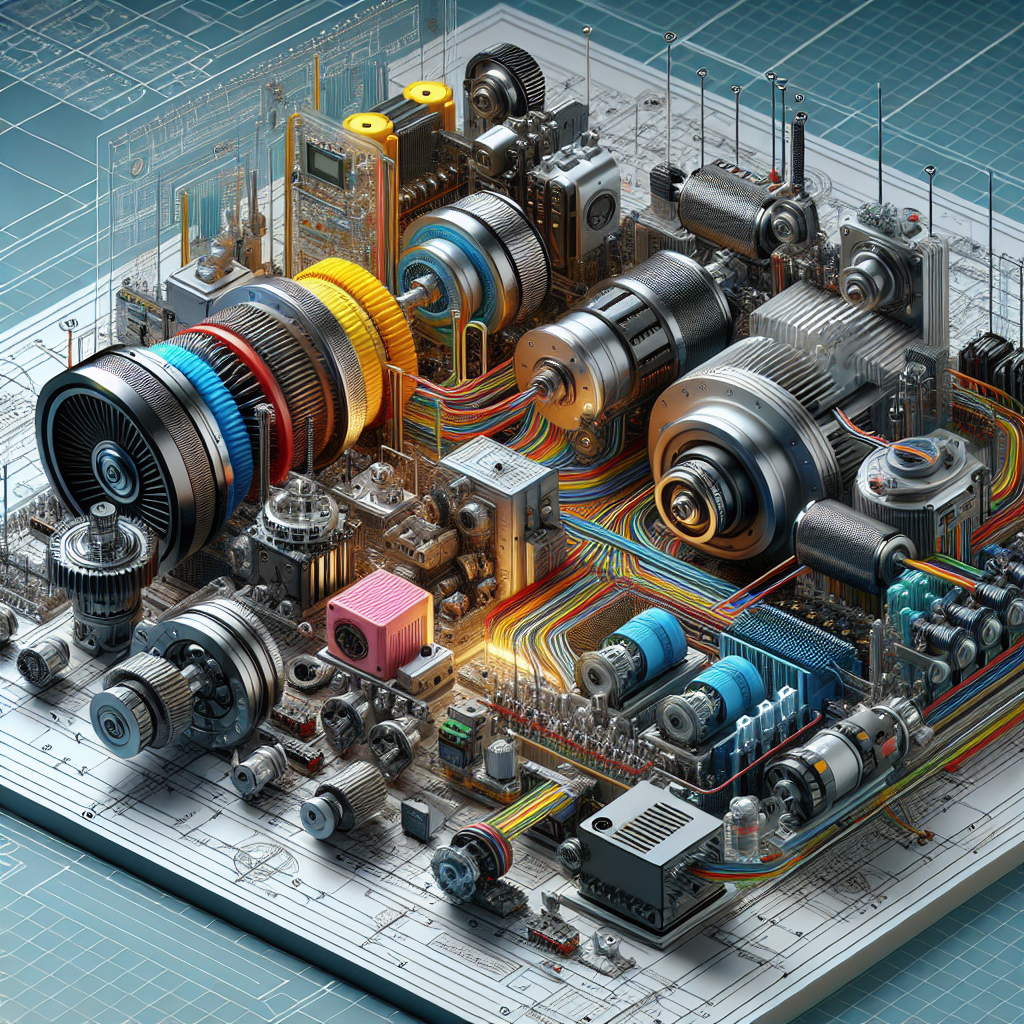
In the realm of engineering, particularly within the field of Mechanics of Machines, control systems in mechatronics play a pivotal role. Mechatronics, an interdisciplinary field that synergizes mechanical engineering, electronics, computer science, and control engineering, has revolutionized the way machines and systems are designed and operated. Control systems are the backbone of mechatronics, enabling precise manipulation and regulation of mechanical systems through electronic and computational means. This article delves into the principles and design of control systems in mechatronics, highlighting their importance, historical development, applications, advanced topics, challenges, and future trends.
Fundamentals
Basic Principles and Concepts
Control systems in mechatronics are designed to manage, command, direct, or regulate the behavior of other devices or systems using control loops. The fundamental components of a control system include:
- Sensor: Measures the output of the system and provides feedback.
- Controller: Processes the feedback and determines the necessary action to achieve the desired output.
- Actuator: Executes the control action determined by the controller.
- Plant: The system or process being controlled.
Control systems can be classified into two main types:
- Open-Loop Control Systems: These systems operate without feedback. The control action is independent of the output.
- Closed-Loop Control Systems: Also known as feedback control systems, these systems use feedback to compare the actual output with the desired output and adjust the control action accordingly.
Key Terms and Theories
Several key terms and theories are essential to understanding control systems in mechatronics:
- Transfer Function: A mathematical representation of the relationship between the input and output of a system.
- Stability: The ability of a system to return to its equilibrium state after a disturbance.
- PID Control: A control strategy that uses proportional, integral, and derivative actions to achieve desired system behavior.
- State-Space Representation: A mathematical model that represents a system using a set of first-order differential equations.
Historical Development
The development of control systems in mechatronics has a rich history, marked by significant milestones and contributions from notable figures:
- James Clerk Maxwell (1868): Introduced the concept of feedback control in his paper on governors, laying the foundation for modern control theory.
- Harry Nyquist (1932): Developed the Nyquist stability criterion, a fundamental tool for analyzing the stability of control systems.
- Rudolf Kalman (1960): Introduced the Kalman filter, a powerful algorithm for estimating the state of a dynamic system from noisy measurements.
- Advancements in Digital Control (1970s-1980s): The advent of digital computers enabled the implementation of complex control algorithms, leading to significant advancements in control systems.
Applications
Control systems in mechatronics have a wide range of practical applications across various industries:
Automotive Industry
Modern vehicles are equipped with numerous control systems, such as:
- Anti-lock Braking System (ABS): Prevents wheel lock-up during braking, enhancing vehicle safety.
- Electronic Stability Control (ESC): Improves vehicle stability by detecting and reducing skidding.
- Adaptive Cruise Control (ACC): Automatically adjusts the vehicle’s speed to maintain a safe distance from the vehicle ahead.
Manufacturing and Robotics
In manufacturing, control systems are used to automate processes, improve precision, and enhance productivity. Examples include:
- Industrial Robots: Perform tasks such as welding, painting, and assembly with high precision and repeatability.
- Computer Numerical Control (CNC) Machines: Automate machining processes, allowing for the production of complex parts with high accuracy.
Aerospace and Defense
Control systems are critical in aerospace and defense applications, where precision and reliability are paramount. Examples include:
- Autopilot Systems: Automatically control the flight of an aircraft, reducing pilot workload and enhancing safety.
- Missile Guidance Systems: Ensure accurate targeting and interception of threats.
Medical Devices
In the medical field, control systems are used to enhance the functionality and safety of medical devices. Examples include:
- Robotic Surgery Systems: Enable surgeons to perform minimally invasive procedures with high precision.
- Infusion Pumps: Deliver precise doses of medication to patients.
Advanced Topics
Model Predictive Control (MPC)
Model Predictive Control (MPC) is an advanced control strategy that uses a model of the system to predict future behavior and optimize control actions. MPC is particularly useful for systems with constraints and multiple inputs and outputs. Recent research has focused on improving the computational efficiency and robustness of MPC algorithms.
Adaptive Control
Adaptive control systems can adjust their parameters in real-time to cope with changes in the system or environment. This capability is essential for systems that operate in uncertain or varying conditions. Innovations in adaptive control include machine learning techniques that enable systems to learn and adapt more effectively.
Networked Control Systems
Networked control systems (NCS) involve the use of communication networks to connect sensors, controllers, and actuators. NCS are prevalent in applications such as smart grids, industrial automation, and autonomous vehicles. Research in this area focuses on addressing challenges related to network delays, packet loss, and cybersecurity.
Challenges and Considerations
Despite the advancements in control systems, several challenges and considerations remain:
Complexity and Integration
The integration of mechanical, electronic, and computational components in mechatronic systems can be complex. Ensuring seamless communication and coordination between these components is crucial for system performance and reliability.
Robustness and Reliability
Control systems must be robust and reliable, especially in safety-critical applications. Designing systems that can withstand disturbances, uncertainties, and faults is a significant challenge.
Cybersecurity
As control systems become more interconnected through networks, they become vulnerable to cyber-attacks. Ensuring the security of these systems is essential to prevent unauthorized access and malicious activities.
Cost and Scalability
The cost of developing and implementing advanced control systems can be high. Additionally, scaling these systems for large-scale applications or mass production can be challenging.
Conclusion
Control systems in mechatronics are integral to the design and operation of modern machines and systems. They enable precise control, automation, and optimization across various industries, from automotive and manufacturing to aerospace and medical devices. The historical development of control systems has been marked by significant milestones and contributions from notable figures, leading to the advanced control strategies and technologies we have today.
While there are challenges and considerations associated with control systems, ongoing research and innovation continue to address these issues, paving the way for more robust, reliable, and secure systems. As the field of mechatronics evolves, control systems will remain a cornerstone, driving advancements and shaping the future of engineering.
In conclusion, the principles and design of control systems in mechatronics are of paramount importance in the field of Mechanics of Machines in Engineering. Understanding these principles and staying abreast of the latest developments is essential for engineers and researchers striving to create more efficient, effective, and innovative solutions.