Chain Drives: Types, Design, and Applications
Introduction
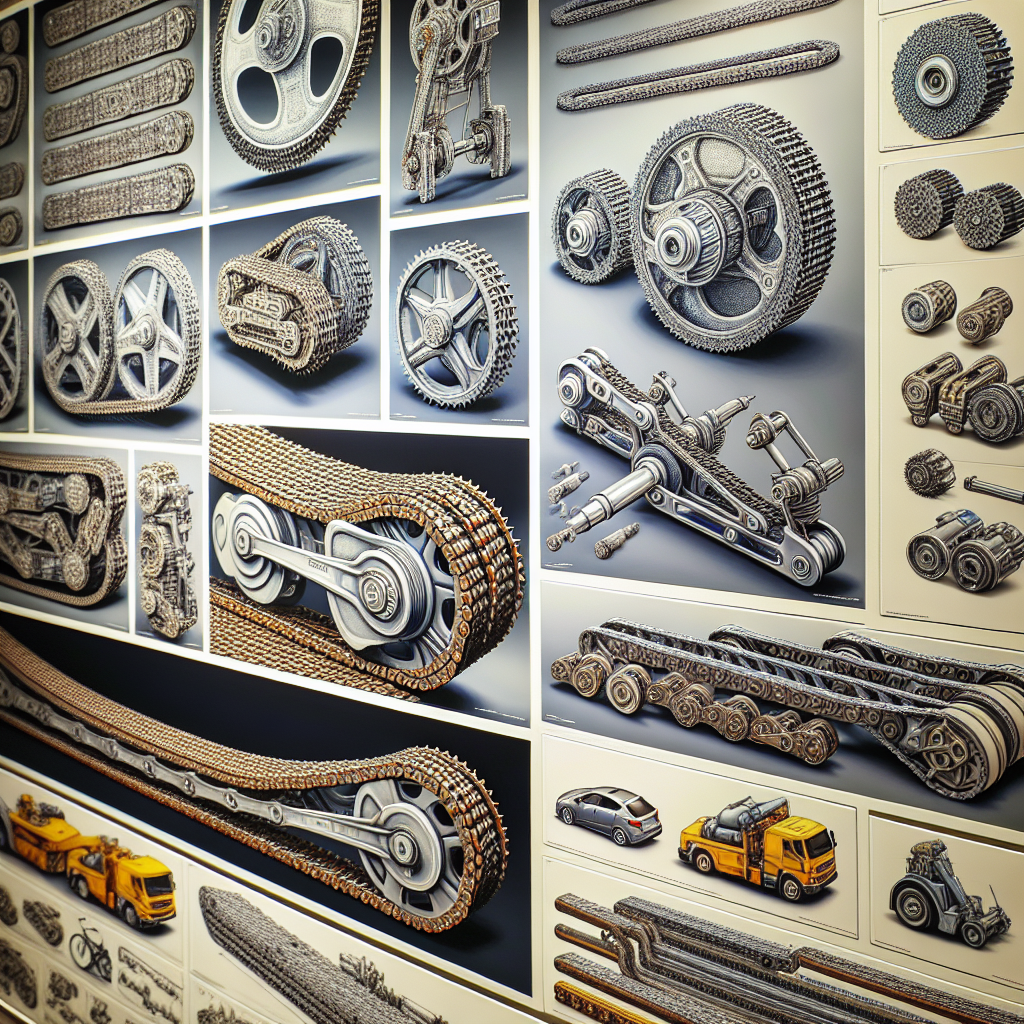
Chain drives are a fundamental component in the field of Mechanics of Machines in Engineering. They are used to transmit mechanical power from one place to another, often in machinery and vehicles. Chain drives are known for their efficiency, reliability, and ability to handle high loads and speeds. This article delves into the various aspects of chain drives, including their types, design principles, historical development, applications, advanced topics, and the challenges associated with their use.
Fundamentals
Basic Principles and Concepts
Chain drives consist of a series of links connected by pins, which engage with the teeth of sprockets to transmit power. The primary components of a chain drive system include the chain, sprockets, and a tensioning mechanism. The chain is typically made of metal, and its design can vary depending on the application.
Key Terms
- Pitch: The distance between the centers of two consecutive pins in the chain.
- Sprocket: A toothed wheel that engages with the chain to transmit power.
- Tensioner: A device used to maintain the proper tension in the chain.
- Roller Chain: A type of chain with rollers that reduce friction and wear.
- Silent Chain: A type of chain designed to operate with minimal noise.
Theories
The operation of chain drives is governed by several mechanical principles, including the laws of motion, friction, and wear. The efficiency of a chain drive system is influenced by factors such as the alignment of the sprockets, the tension in the chain, and the lubrication used.
Historical Development
Early Innovations
The concept of chain drives dates back to ancient times, with early examples found in the works of Leonardo da Vinci. However, it was not until the Industrial Revolution that chain drives became widely used in machinery. The development of the roller chain by Hans Renold in 1880 marked a significant milestone in the evolution of chain drives.
Key Milestones
- 1880: Hans Renold invents the roller chain, which becomes the standard for industrial applications.
- 1900s: The use of chain drives expands to bicycles, motorcycles, and automobiles.
- 1950s: The development of silent chains for use in automotive engines and other applications requiring low noise levels.
- 2000s: Advances in materials and manufacturing techniques lead to the development of high-performance chains for specialized applications.
Applications
Industrial Machinery
Chain drives are widely used in industrial machinery for tasks such as conveying, lifting, and driving various mechanical components. Examples include conveyor belts, hoists, and machine tools.
Automotive Industry
In the automotive industry, chain drives are used in engines to synchronize the rotation of the crankshaft and camshaft. This ensures that the engine’s valves open and close at the correct times. Chain drives are also used in motorcycles to transmit power from the engine to the rear wheel.
Agricultural Equipment
Agricultural machinery, such as tractors and harvesters, often use chain drives to transmit power to various components. These applications require chains that can withstand harsh operating conditions and heavy loads.
Case Studies
One notable example of chain drive application is in the Harley-Davidson motorcycle, where the chain drive system is used to deliver power from the engine to the rear wheel, providing the necessary torque and speed for optimal performance.
Advanced Topics
Recent Research and Innovations
Recent research in the field of chain drives has focused on improving the efficiency and durability of chains. Innovations include the development of self-lubricating chains, which reduce the need for maintenance, and the use of advanced materials such as carbon fiber composites to reduce weight and increase strength.
Future Trends
The future of chain drives is likely to see further advancements in materials and manufacturing techniques. The integration of smart technologies, such as sensors and IoT devices, could enable real-time monitoring of chain drive systems, allowing for predictive maintenance and improved performance.
Challenges and Considerations
Challenges
One of the primary challenges associated with chain drives is wear and tear. Chains are subject to friction and stress, which can lead to elongation and eventual failure. Proper lubrication and maintenance are essential to mitigate these issues.
Limitations
Chain drives can be noisy, especially at high speeds. This can be a limitation in applications where noise reduction is critical. Additionally, chain drives require precise alignment and tensioning to operate efficiently, which can be challenging to achieve in some applications.
Potential Solutions
To address these challenges, engineers can use advanced materials and coatings to reduce wear and improve the lifespan of chains. The use of automatic tensioners and alignment tools can also help ensure optimal performance. Ongoing research into self-lubricating chains and other innovations holds promise for further improvements.
Conclusion
Chain drives are a vital component in the field of Mechanics of Machines in Engineering. Their ability to transmit power efficiently and reliably makes them indispensable in a wide range of applications, from industrial machinery to automotive and agricultural equipment. While there are challenges associated with their use, ongoing research and innovation continue to drive improvements in performance and durability. As technology advances, chain drives will likely remain a key element in the design and operation of mechanical systems, underscoring their importance in engineering.