Belt Drives: Types, Design, and Applications
Introduction
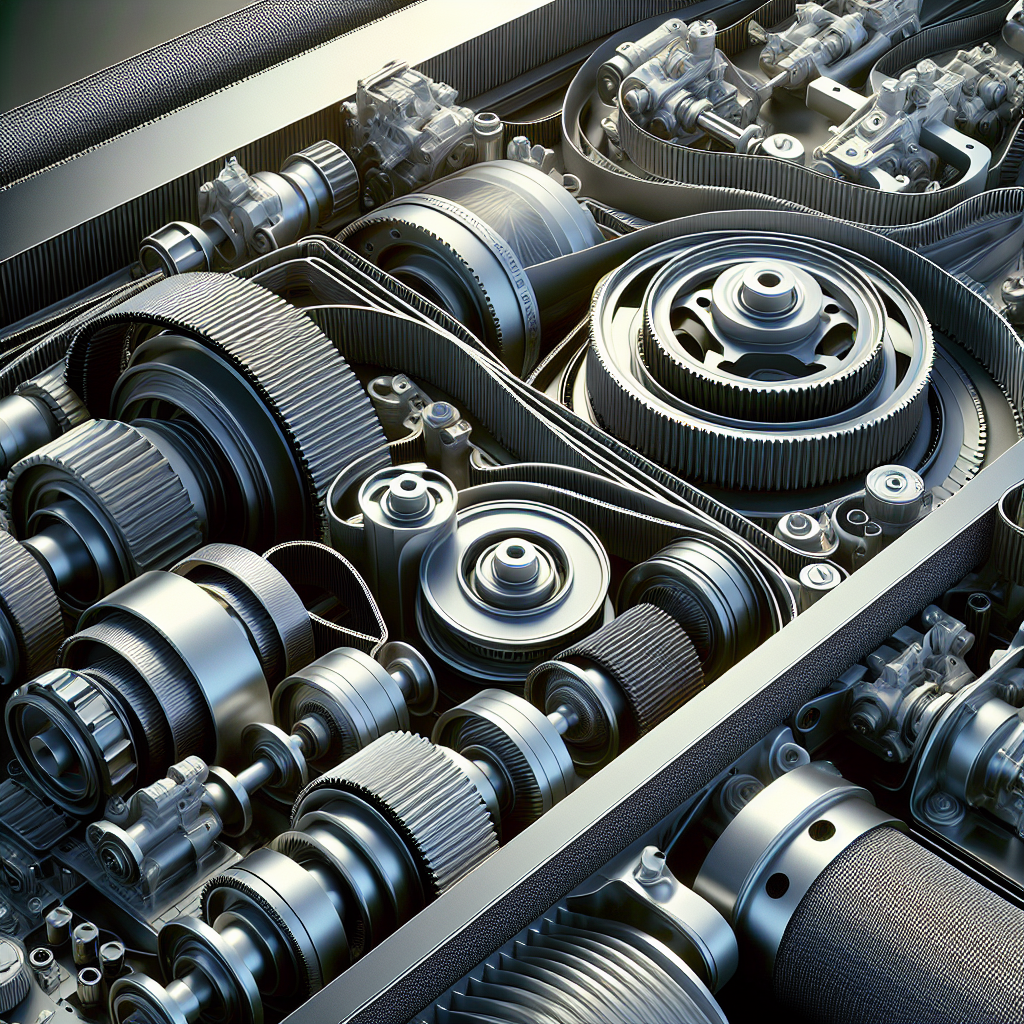
Belt drives are a fundamental component in the field of Mechanics of Machines in Engineering. They are used to transmit power between shafts through the use of belts and pulleys. Belt drives are essential in various mechanical systems due to their simplicity, efficiency, and cost-effectiveness. They play a crucial role in numerous applications, ranging from industrial machinery to automotive systems. This article delves into the types, design, and applications of belt drives, providing a comprehensive understanding of their importance and relevance in engineering.
Fundamentals
Basic Principles and Concepts
Belt drives operate on the principle of friction between the belt and the pulleys. The belt, typically made of flexible material such as rubber or synthetic compounds, wraps around the pulleys, creating a frictional grip that allows for the transmission of power. The primary components of a belt drive system include:
- Belt: The flexible element that transmits power.
- Pulleys: The rotating elements that the belt wraps around.
- Shafts: The axles on which the pulleys are mounted.
Key terms associated with belt drives include:
- Pitch Diameter: The diameter of the pulley at the point where the belt makes contact.
- Center Distance: The distance between the centers of the two pulleys.
- Slip: The relative motion between the belt and the pulley, which can lead to power loss.
- Tension: The force exerted by the belt on the pulleys to maintain contact and transmit power.
Historical Development
The concept of belt drives dates back to ancient times, with early examples found in the use of ropes and pulleys for lifting and moving heavy objects. However, the modern development of belt drives began during the Industrial Revolution. Key milestones in the history of belt drives include:
- 18th Century: The use of flat belts in textile mills and other industrial applications.
- 19th Century: The introduction of V-belts, which provided better grip and reduced slip compared to flat belts.
- 20th Century: The development of synchronous belts, also known as timing belts, which offer precise power transmission without slip.
Notable figures in the development of belt drives include John Gates, who invented the V-belt in 1917, and Carl Munters, who developed the first toothed belt in the 1940s. These innovations have significantly improved the efficiency and reliability of belt drive systems.
Types of Belt Drives
Flat Belts
Flat belts are one of the oldest types of belt drives. They consist of a flat, flexible belt that wraps around flat pulleys. Flat belts are suitable for low to moderate power transmission and are commonly used in applications such as conveyors and agricultural machinery.
V-Belts
V-belts have a trapezoidal cross-section, which allows them to fit into V-shaped grooves on the pulleys. This design provides better grip and reduces slip, making V-belts suitable for higher power transmission. They are widely used in automotive engines, industrial machinery, and HVAC systems.
Synchronous Belts
Synchronous belts, also known as timing belts, have teeth that mesh with corresponding grooves on the pulleys. This design ensures precise power transmission without slip, making synchronous belts ideal for applications requiring accurate timing, such as camshaft drives in engines and robotics.
Poly-V Belts
Poly-V belts, also known as serpentine belts, have multiple V-shaped ribs running along their length. This design allows for high power transmission and flexibility, making poly-V belts suitable for applications such as automotive accessory drives and industrial machinery.
Applications
Belt drives are used in a wide range of industries and applications due to their versatility and efficiency. Some notable examples include:
Automotive Industry
Belt drives are extensively used in automotive engines to drive components such as alternators, water pumps, and air conditioning compressors. Timing belts are crucial for synchronizing the camshaft and crankshaft, ensuring proper engine operation.
Industrial Machinery
In industrial settings, belt drives are used in conveyors, compressors, and machine tools. They provide reliable power transmission and are easy to maintain, making them ideal for heavy-duty applications.
Agriculture
Belt drives are commonly used in agricultural machinery such as tractors, combines, and balers. They provide efficient power transmission for various mechanical functions, including driving pumps, fans, and cutting blades.
HVAC Systems
Heating, ventilation, and air conditioning (HVAC) systems use belt drives to power fans, blowers, and compressors. Belt drives offer smooth and quiet operation, making them suitable for residential and commercial HVAC applications.
Advanced Topics
Recent Research and Innovations
Recent research in belt drive technology focuses on improving efficiency, durability, and performance. Innovations include the development of high-strength materials, such as aramid and carbon fiber, which enhance the tensile strength and longevity of belts. Additionally, advancements in belt design, such as ribbed and multi-ribbed belts, provide better grip and reduced slip.
Future Trends
The future of belt drives lies in the integration of smart technologies and materials. Researchers are exploring the use of sensors and IoT (Internet of Things) devices to monitor belt condition and performance in real-time. This allows for predictive maintenance and reduces downtime. Furthermore, the development of eco-friendly materials and manufacturing processes aims to reduce the environmental impact of belt drives.
Challenges and Considerations
Challenges
Despite their advantages, belt drives face several challenges, including:
- Slip: Slip between the belt and pulleys can lead to power loss and reduced efficiency.
- Wear and Tear: Belts are subject to wear and tear, requiring regular maintenance and replacement.
- Alignment: Proper alignment of pulleys is crucial to prevent belt misalignment and premature failure.
Considerations
When designing and selecting belt drives, engineers must consider factors such as:
- Load Requirements: The power and torque requirements of the application.
- Environmental Conditions: The operating environment, including temperature, humidity, and exposure to chemicals.
- Maintenance: The ease of maintenance and availability of replacement parts.
Potential Solutions
To address these challenges, engineers can implement solutions such as:
- Using High-Quality Materials: Selecting belts made from durable materials to reduce wear and tear.
- Regular Maintenance: Implementing a maintenance schedule to inspect and replace worn belts.
- Proper Alignment: Ensuring proper alignment of pulleys during installation and operation.
Conclusion
Belt drives are a vital component in the field of Mechanics of Machines in Engineering. They offer efficient and cost-effective power transmission for a wide range of applications, from automotive engines to industrial machinery. Understanding the types, design, and applications of belt drives is essential for engineers to optimize their performance and reliability. Despite the challenges associated with belt drives, ongoing research and innovations continue to enhance their efficiency and durability. As technology advances, belt drives will remain a crucial element in mechanical systems, contributing to the advancement of engineering and industry.