Cams and Followers: Design and Analysis
Introduction
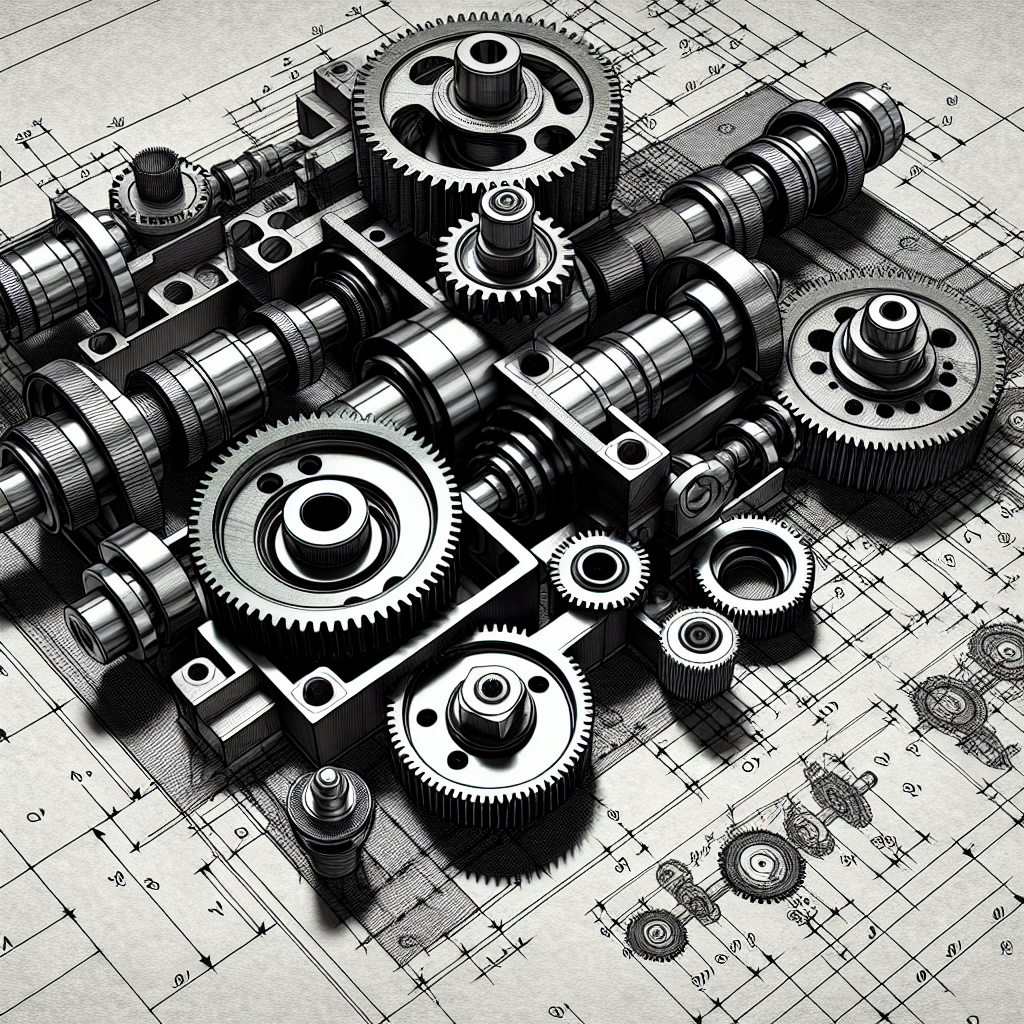
Cams and followers are fundamental components in the field of Mechanics of Machines, playing a crucial role in converting rotary motion into linear motion or vice versa. These mechanisms are integral to various engineering applications, from automotive engines to automated machinery. Understanding the design and analysis of cams and followers is essential for engineers to create efficient and reliable mechanical systems. This article delves into the importance, principles, historical development, applications, advanced topics, challenges, and considerations associated with cams and followers.
Fundamentals
Basic Principles and Concepts
A cam is a rotating or sliding piece in a mechanical linkage that drives a follower by direct contact. The follower is a component that moves in response to the cam’s motion. The primary function of a cam and follower system is to convert one type of motion into another, typically rotary motion into linear motion.
Definitions
- Cam: A mechanical component that imparts motion to a follower through direct contact.
- Follower: A component that follows the motion of the cam, translating it into a desired output motion.
- Cam Profile: The contour or shape of the cam that determines the motion of the follower.
- Lift: The maximum displacement of the follower from its rest position.
- Dwell: A period during which the follower remains stationary while the cam continues to rotate.
Theories
The design of cams and followers is governed by several theories, including:
- Displacement Diagram: A graphical representation of the follower’s displacement as a function of the cam’s rotation angle.
- Velocity and Acceleration Diagrams: These diagrams show the velocity and acceleration of the follower, respectively, as functions of the cam’s rotation angle.
- Pressure Angle: The angle between the direction of the follower’s motion and the normal to the cam profile. A smaller pressure angle is generally preferred to reduce side thrust on the follower.
Historical Development
The concept of cams and followers dates back to ancient times, with early examples found in Greek and Roman engineering. However, significant advancements occurred during the Industrial Revolution, when the need for automated machinery spurred innovation in cam design.
Key Milestones
- 18th Century: The development of textile machinery, such as the Jacquard loom, which utilized cams to control the movement of threads.
- 19th Century: The advent of internal combustion engines, where cams played a crucial role in controlling valve timing.
- 20th Century: The rise of automated manufacturing processes, leading to more sophisticated cam and follower designs.
Notable Figures
- Joseph Marie Jacquard: Inventor of the Jacquard loom, which used a series of cams to automate the weaving process.
- Nicolaus Otto: Developer of the four-stroke internal combustion engine, which relied on camshafts to control valve operation.
Applications
Cams and followers are used in a wide range of industries and applications, demonstrating their versatility and importance in modern engineering.
Automotive Industry
In internal combustion engines, camshafts control the opening and closing of intake and exhaust valves. The precise timing of these events is critical for engine performance and efficiency.
Manufacturing and Automation
Cams are widely used in automated machinery to control the movement of various components. For example, in packaging machines, cams can control the timing and sequence of operations such as cutting, folding, and sealing.
Textile Industry
The Jacquard loom, an early example of automated machinery, used cams to control the movement of threads, enabling the production of complex woven patterns.
Robotics
In robotics, cams can be used to create precise, repeatable motions, essential for tasks such as pick-and-place operations and assembly processes.
Advanced Topics
Recent Research and Innovations
Recent advancements in materials science and manufacturing techniques have led to the development of more durable and efficient cam and follower systems. For example, the use of advanced composites and coatings can reduce wear and friction, extending the lifespan of these components.
Computer-Aided Design (CAD) and Simulation
The use of CAD software and simulation tools has revolutionized the design process for cams and followers. Engineers can now model and analyze complex cam profiles, optimizing them for specific applications before physical prototypes are created.
Future Trends
Future trends in cam and follower design are likely to focus on further improving efficiency and durability. This may include the development of smart materials that can adapt to changing conditions, as well as the integration of sensors and feedback systems to enable real-time monitoring and adjustment of cam and follower performance.
Challenges and Considerations
Design Challenges
Designing an effective cam and follower system requires careful consideration of several factors, including:
- Load and Stress: The cam and follower must be able to withstand the forces and stresses imposed during operation.
- Wear and Friction: Minimizing wear and friction is essential for ensuring the longevity and reliability of the system.
- Precision: The cam profile must be precisely designed to achieve the desired motion of the follower.
Potential Solutions
Several strategies can be employed to address these challenges:
- Material Selection: Choosing materials with high strength and wear resistance can improve the durability of cams and followers.
- Lubrication: Proper lubrication can reduce friction and wear, extending the lifespan of the components.
- Advanced Manufacturing Techniques: Techniques such as precision machining and additive manufacturing can produce highly accurate cam profiles.
Areas for Further Research
Further research is needed to explore new materials and manufacturing techniques, as well as to develop more sophisticated design and analysis tools. Additionally, the integration of sensors and feedback systems presents an exciting area for future innovation.
Conclusion
Cams and followers are essential components in the field of Mechanics of Machines, with a wide range of applications across various industries. Understanding their design and analysis is crucial for engineers to create efficient and reliable mechanical systems. While there are challenges associated with their design, ongoing research and innovation continue to drive advancements in this field. As technology evolves, cams and followers will remain a vital part of modern engineering, enabling the development of increasingly sophisticated and efficient machinery.