Gear Trains: Analysis and Design
Introduction
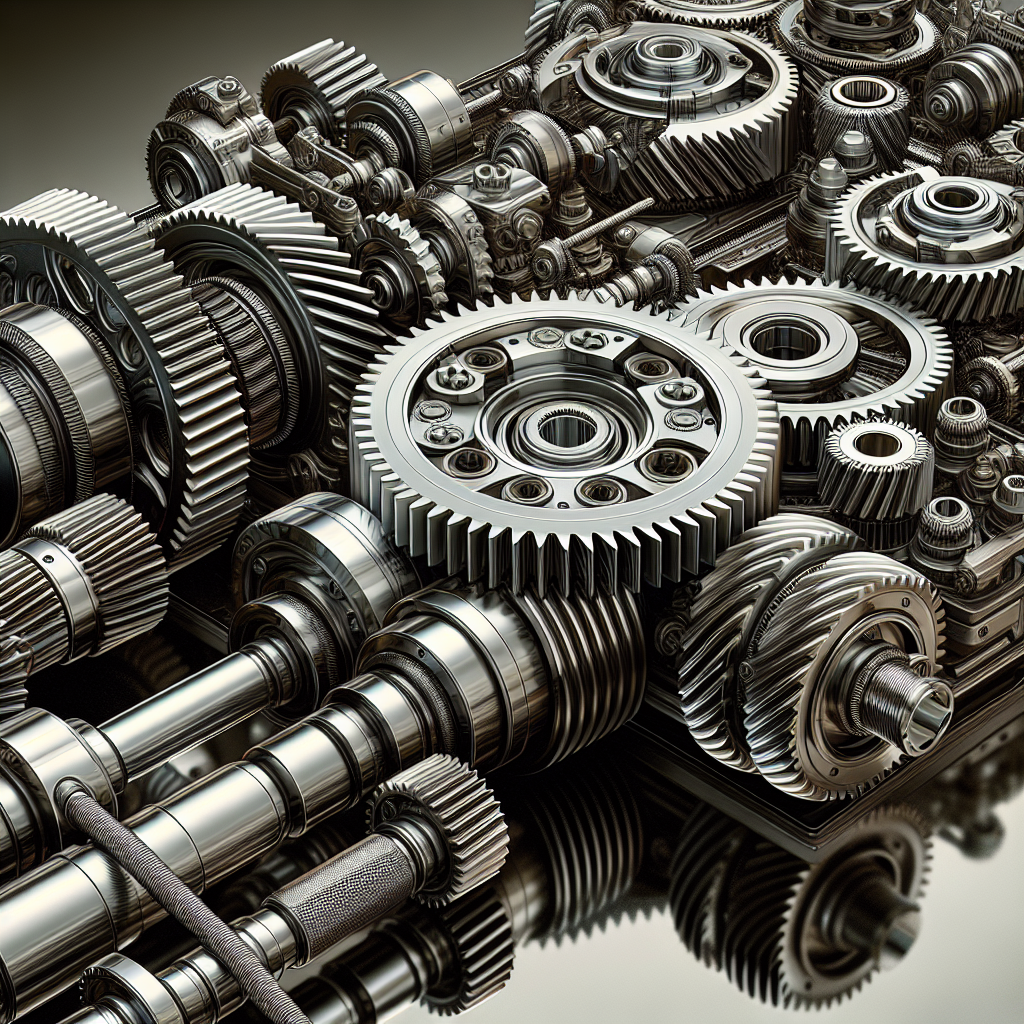
Gear trains are fundamental components in the field of Mechanics of Machines in Engineering. They are used to transmit power and motion between machine parts, making them indispensable in various mechanical systems. The importance of gear trains lies in their ability to modify the speed, torque, and direction of motion, which is crucial for the efficient functioning of machinery. From automotive transmissions to industrial machinery, gear trains play a pivotal role in ensuring the smooth operation of mechanical systems. This article delves into the analysis and design of gear trains, exploring their principles, historical development, applications, advanced topics, challenges, and considerations.
Fundamentals
Basic Principles and Concepts
At its core, a gear train is a series of gears that work together to transmit motion and power. The fundamental components of a gear train include:
- Gears: Toothed wheels that mesh with each other to transmit motion.
- Shafts: Cylindrical components that support the gears and transmit torque.
- Bearings: Elements that support the shafts and reduce friction.
Key Terms
- Gear Ratio: The ratio of the number of teeth on two meshing gears. It determines the speed and torque relationship between the gears.
- Torque: A measure of the rotational force applied to a gear.
- Speed: The rotational velocity of a gear, usually measured in revolutions per minute (RPM).
- Pitch Circle: An imaginary circle that represents the size of a gear for the purpose of meshing with another gear.
- Module: A measure of the size of the teeth on a gear, defined as the pitch circle diameter divided by the number of teeth.
Theories
The analysis of gear trains involves several key theories, including:
- Law of Gearing: This law states that the common normal at the point of contact between two meshing gear teeth must pass through the pitch point to ensure a constant velocity ratio.
- Involute Profile: The most common tooth profile used in gears, which ensures smooth and efficient power transmission.
- Conjugate Action: The principle that the shape of gear teeth must be such that they produce a constant velocity ratio during meshing.
Historical Development
The development of gear trains dates back to ancient civilizations. The earliest known gears were used in the Antikythera mechanism, an ancient Greek analog computer dating back to around 100 BC. This device demonstrated the use of gears for astronomical calculations.
During the Middle Ages, gears were used in various mechanical devices, including clocks and mills. The development of clockwork mechanisms in the 14th century marked a significant milestone in the history of gear trains. These early clocks used gear trains to regulate timekeeping, leading to advancements in precision engineering.
The Industrial Revolution in the 18th and 19th centuries brought about significant advancements in gear technology. Notable figures such as James Watt and Eli Whitney contributed to the development of gear trains for steam engines and manufacturing machinery. The introduction of standardized gear profiles and manufacturing techniques during this period laid the foundation for modern gear design.
Applications
Gear trains find applications in a wide range of industries and fields. Some notable examples include:
Automotive Industry
In the automotive industry, gear trains are used in transmissions to control the speed and torque of the vehicle. Manual and automatic transmissions rely on complex gear train arrangements to provide different gear ratios, enabling efficient power delivery and fuel economy.
Industrial Machinery
Gear trains are essential components in industrial machinery, such as conveyor systems, machine tools, and robotics. They enable precise control of motion and power transmission, ensuring the smooth operation of manufacturing processes.
Aerospace Industry
In the aerospace industry, gear trains are used in aircraft engines and control systems. They play a crucial role in transmitting power from the engine to various components, such as the propeller or rotor blades, ensuring reliable and efficient operation.
Renewable Energy
Gear trains are also used in renewable energy systems, such as wind turbines. They help convert the rotational motion of the turbine blades into electrical power by transmitting torque to the generator.
Advanced Topics
Epicyclic Gear Trains
Epicyclic or planetary gear trains are advanced gear systems that consist of one or more outer gears (planet gears) revolving around a central gear (sun gear). These systems offer high torque density and compact design, making them suitable for applications where space and weight are critical factors.
Harmonic Drive Gears
Harmonic drive gears are specialized gear systems that use a flexible spline to achieve high gear reduction ratios with minimal backlash. They are commonly used in robotics and precision machinery due to their high accuracy and compact size.
Recent Research and Innovations
Recent research in gear train technology focuses on improving efficiency, reducing noise and vibration, and enhancing durability. Innovations such as advanced materials, coatings, and lubrication techniques are being explored to extend the lifespan of gears and improve their performance.
Future Trends
The future of gear train technology is likely to be influenced by advancements in digital manufacturing, such as 3D printing and computer-aided design (CAD). These technologies enable the production of complex gear geometries with high precision, opening up new possibilities for gear train design and optimization.
Challenges and Considerations
Challenges
Despite their widespread use, gear trains face several challenges, including:
- Wear and Tear: Gears are subject to wear and tear due to continuous contact and friction, which can lead to reduced efficiency and failure over time.
- Noise and Vibration: Gear trains can generate noise and vibration, which can affect the performance and comfort of machinery.
- Complexity: Designing and manufacturing gear trains with precise tolerances and optimal performance can be complex and time-consuming.
Considerations
When designing gear trains, engineers must consider several factors, including:
- Material Selection: Choosing the right materials for gears is crucial for ensuring durability and performance. Common materials include steel, brass, and plastic.
- Lubrication: Proper lubrication is essential for reducing friction and wear in gear trains. Engineers must select appropriate lubricants and lubrication methods.
- Alignment: Ensuring proper alignment of gears is critical for minimizing wear and achieving efficient power transmission.
Potential Solutions
To address these challenges, researchers and engineers are exploring various solutions, such as:
- Advanced Materials: The development of advanced materials, such as composites and ceramics, can enhance the durability and performance of gears.
- Noise Reduction Techniques: Techniques such as helical gears and damping materials can help reduce noise and vibration in gear trains.
- Predictive Maintenance: Implementing predictive maintenance strategies using sensors and data analytics can help identify potential issues before they lead to failure.
Conclusion
In conclusion, gear trains are essential components in the field of Mechanics of Machines in Engineering. They play a crucial role in transmitting power and motion in various mechanical systems, from automotive transmissions to industrial machinery. Understanding the fundamentals, historical development, applications, advanced topics, challenges, and considerations associated with gear trains is vital for engineers and researchers working in this field. As technology continues to advance, the design and optimization of gear trains will remain a critical area of focus, driving innovation and improving the efficiency and performance of mechanical systems.