Mechanics of Machines in Process Engineering
Introduction
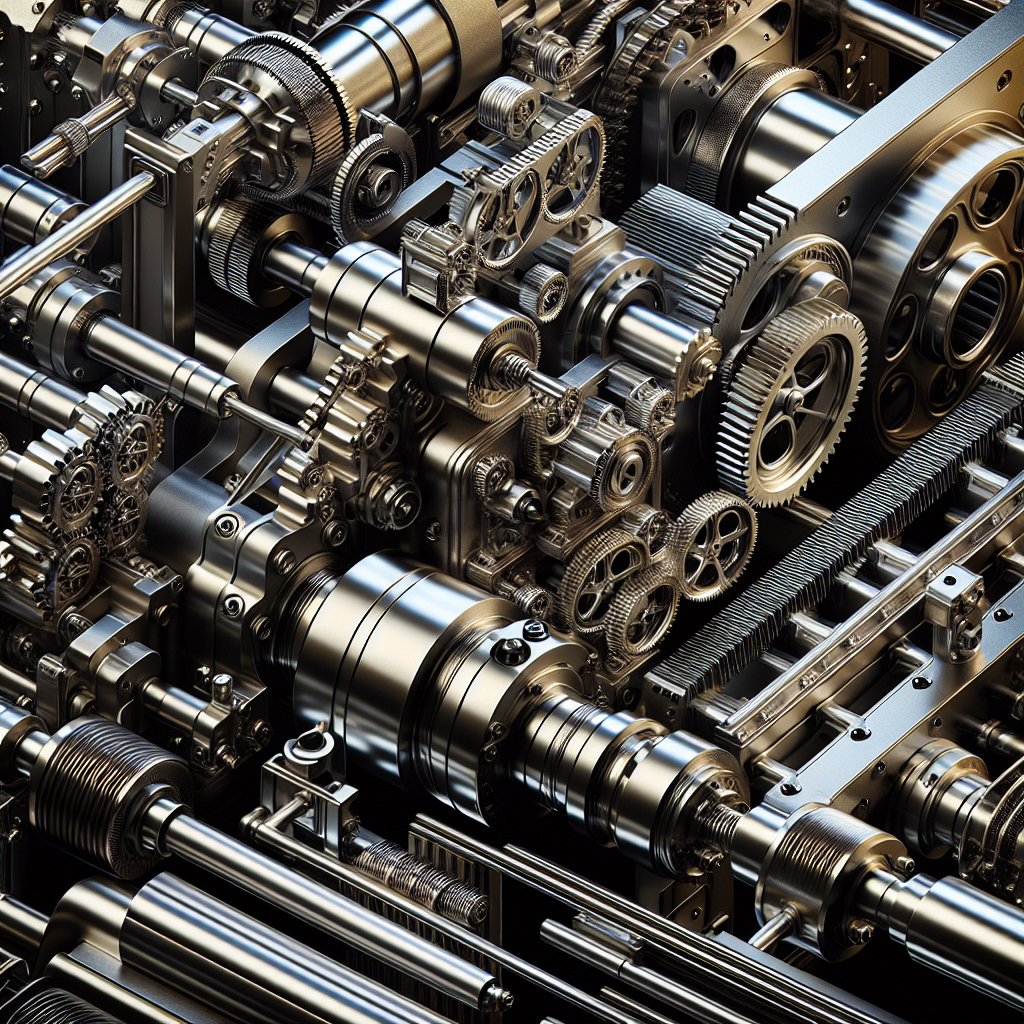
The field of Mechanics of Machines in Process Engineering is a cornerstone of modern engineering, playing a crucial role in the design, analysis, and optimization of machinery used in various industrial processes. This discipline combines principles from mechanical engineering, materials science, and control engineering to ensure that machines operate efficiently, safely, and reliably. The importance of this field cannot be overstated, as it directly impacts the productivity, quality, and sustainability of industrial operations. From manufacturing to energy production, the mechanics of machines are integral to the functioning of numerous sectors.
Fundamentals
Basic Principles and Concepts
At its core, the Mechanics of Machines involves the study of forces and motions in mechanical systems. Key principles include:
- Kinematics: The study of motion without considering the forces that cause it. It involves analyzing the positions, velocities, and accelerations of machine components.
- Kinetics: The study of forces and torques and their effects on motion. This includes understanding how forces interact with machine components to produce movement.
- Dynamics: The study of systems in motion, focusing on the relationship between motion and the forces affecting it.
- Statics: The study of systems in equilibrium, where all forces and moments are balanced.
Key Terms
- Mechanism: A combination of rigid or flexible bodies designed to convert input forces and movement into a desired set of output forces and movement.
- Linkage: A series of connected links that transfer motion and force in a machine.
- Cam: A rotating or sliding piece in a mechanical linkage used to transform rotary motion into linear motion.
- Gear: A rotating machine part with cut teeth that mesh with another toothed part to transmit torque.
Historical Development
The study of the Mechanics of Machines has a rich history, dating back to ancient civilizations. Early examples include the use of simple machines like levers, pulleys, and inclined planes in ancient Egypt and Greece. The development of more complex machines accelerated during the Renaissance, with notable contributions from figures like Leonardo da Vinci, who designed numerous mechanical devices.
The Industrial Revolution marked a significant milestone in the field, with the invention of steam engines and the development of machinery for manufacturing. James Watt’s improvements to the steam engine in the 18th century revolutionized industrial processes, leading to increased efficiency and productivity.
In the 20th century, advancements in materials science, control systems, and computer technology further transformed the field. The development of finite element analysis (FEA) and computer-aided design (CAD) tools allowed engineers to model and simulate machine behavior with unprecedented accuracy. Notable figures such as Richard Feynman and Nikola Tesla made significant contributions to the understanding and application of mechanical principles in engineering.
Applications
The Mechanics of Machines has a wide range of applications across various industries:
Manufacturing
In manufacturing, machines are used for tasks such as cutting, shaping, and assembling materials. CNC (Computer Numerical Control) machines, for example, rely on precise kinematic and dynamic analysis to produce high-quality parts with minimal waste.
Automotive Industry
The design and optimization of engines, transmissions, and suspension systems in vehicles are heavily dependent on the principles of Mechanics of Machines. Advanced simulations help engineers improve fuel efficiency, safety, and performance.
Energy Sector
In the energy sector, machines such as turbines, pumps, and compressors are essential for the generation and distribution of power. Understanding the mechanics of these machines ensures they operate efficiently and reliably under various conditions.
Robotics
Robotics is another field where the Mechanics of Machines plays a crucial role. The design of robotic arms, for instance, involves complex kinematic and dynamic analysis to achieve precise and controlled movements.
Case Study: Wind Turbines
Wind turbines are a practical example of the application of Mechanics of Machines in the energy sector. The design of wind turbine blades involves aerodynamic analysis to maximize energy capture from wind. The gearbox and generator systems require careful consideration of forces and torques to ensure efficient energy conversion and transmission.
Advanced Topics
Recent Research and Innovations
Recent advancements in the field include the development of smart materials and adaptive structures. Smart materials, such as shape memory alloys and piezoelectric materials, can change their properties in response to external stimuli, allowing for more efficient and adaptable machines.
Another area of innovation is the integration of artificial intelligence (AI) and machine learning in the design and control of machines. AI algorithms can optimize machine performance by predicting failures and adjusting operating parameters in real-time.
Future Trends
Future trends in the Mechanics of Machines include the continued development of autonomous systems and the Internet of Things (IoT). Autonomous machines, such as self-driving cars and drones, rely on advanced kinematic and dynamic models to navigate and perform tasks without human intervention. The IoT enables machines to communicate and coordinate with each other, leading to more efficient and interconnected industrial processes.
Challenges and Considerations
Challenges
Despite the advancements, several challenges remain in the field:
- Complexity: The increasing complexity of modern machines requires sophisticated modeling and simulation techniques, which can be computationally intensive and time-consuming.
- Material Limitations: The performance of machines is often limited by the properties of available materials. Developing new materials with enhanced properties is an ongoing challenge.
- Maintenance: Ensuring the reliability and longevity of machines requires effective maintenance strategies. Predictive maintenance, which uses data analytics to predict failures, is an area of active research.
Considerations
When designing and analyzing machines, engineers must consider factors such as safety, environmental impact, and cost. Balancing these factors often involves trade-offs, requiring careful decision-making and optimization.
Potential Solutions
Potential solutions to these challenges include the development of more efficient algorithms for modeling and simulation, the discovery of new materials with superior properties, and the implementation of advanced maintenance techniques such as condition monitoring and predictive analytics.
Conclusion
The Mechanics of Machines in Process Engineering is a vital field that underpins the design and operation of machinery across various industries. From historical developments to modern advancements, the principles and applications of this discipline continue to evolve, driving innovation and efficiency in industrial processes. Despite the challenges, ongoing research and technological advancements hold promise for overcoming limitations and unlocking new possibilities. As we look to the future, the Mechanics of Machines will remain a key area of focus, contributing to the advancement of engineering and the betterment of society.