
Geothermal Heat Pumps
Introduction
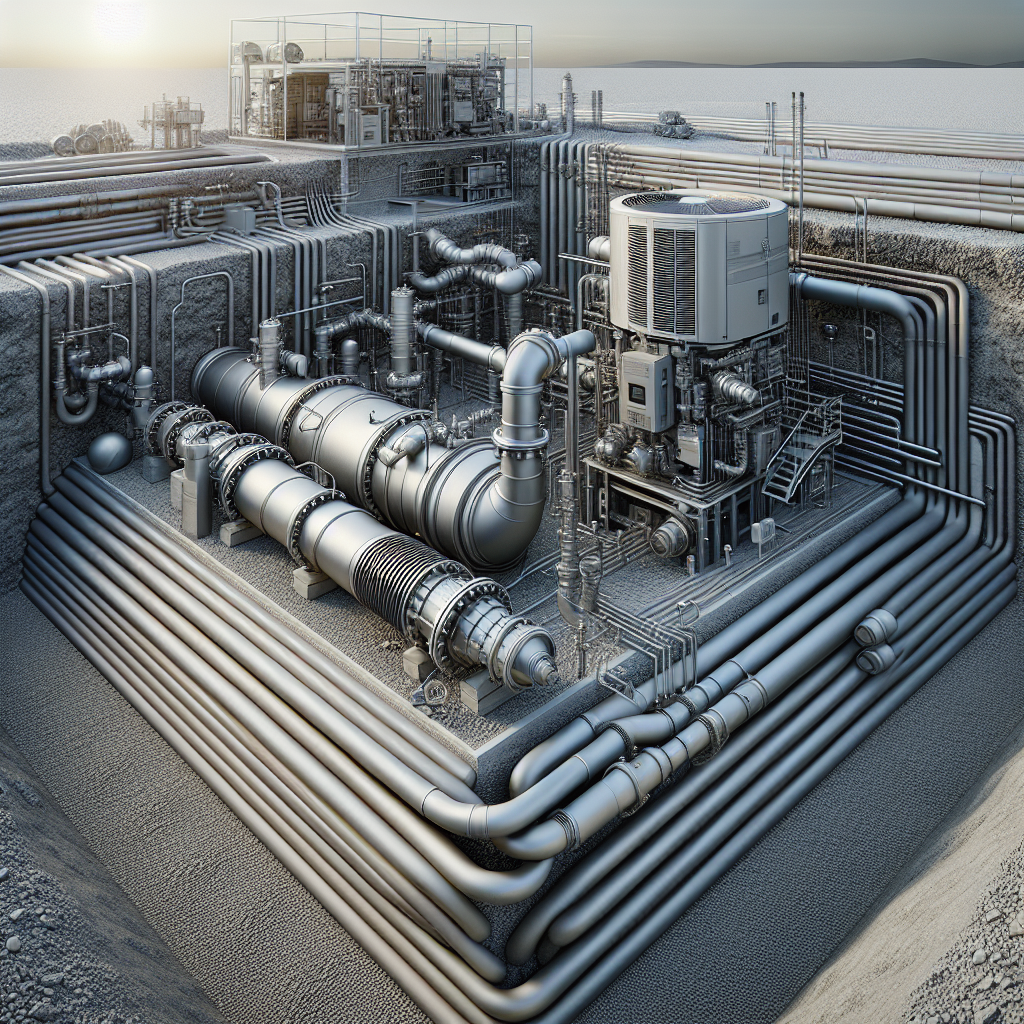
In the quest for sustainable and renewable energy solutions, geothermal heat pumps (GHPs) have emerged as a significant technology. These systems harness the stable temperatures found beneath the Earth’s surface to provide heating, cooling, and hot water for residential, commercial, and industrial applications. The importance of geothermal heat pumps in the field of engineering cannot be overstated, as they offer a highly efficient and environmentally friendly alternative to traditional heating and cooling systems. This article delves into the fundamentals, historical development, applications, advanced topics, challenges, and considerations associated with geothermal heat pumps, highlighting their relevance and potential in the renewable energy landscape.
Fundamentals
Basic Principles and Concepts
Geothermal heat pumps operate on the principle of heat exchange, utilizing the relatively constant temperatures found a few feet below the Earth’s surface. Unlike air temperatures, which can vary significantly, ground temperatures remain relatively stable throughout the year. This stability allows GHPs to efficiently transfer heat between the ground and a building, providing heating in the winter and cooling in the summer.
Key Components
- Ground Heat Exchanger: This component consists of a series of pipes buried in the ground, either in a horizontal or vertical configuration. The pipes are filled with a heat transfer fluid, typically a mixture of water and antifreeze.
- Heat Pump Unit: The heat pump unit contains a compressor, heat exchanger, and refrigerant. It is responsible for transferring heat between the ground heat exchanger and the building’s heating and cooling system.
- Distribution System: This system distributes the heated or cooled air throughout the building, typically using ductwork or radiant floor heating.
Key Terms
- Coefficient of Performance (COP): A measure of the efficiency of a heat pump, defined as the ratio of heat output to electrical energy input.
- Ground Source Heat Pump (GSHP): Another term for geothermal heat pump, emphasizing the use of the ground as the heat source.
- Closed-Loop System: A type of ground heat exchanger where the heat transfer fluid circulates in a closed loop of pipes.
- Open-Loop System: A type of ground heat exchanger that uses groundwater from a well or other source, which is then returned to the ground after heat exchange.
Historical Development
The concept of using the Earth’s stable temperatures for heating and cooling dates back to ancient times. However, the development of modern geothermal heat pump technology began in the mid-20th century.
Key Milestones
- 1940s: The first ground-source heat pump was developed by Robert C. Webber, who used a simple heat exchanger to transfer heat from the ground to his home.
- 1970s: The oil crisis spurred interest in alternative energy sources, leading to increased research and development in geothermal heat pump technology.
- 1980s: Advances in materials and engineering led to more efficient and reliable GHP systems, making them a viable option for residential and commercial applications.
- 2000s: Growing awareness of climate change and the need for sustainable energy solutions further boosted the adoption of geothermal heat pumps.
Notable Figures
- Robert C. Webber: Often credited with developing the first ground-source heat pump in the 1940s.
- John Lund: A prominent researcher in the field of geothermal energy, contributing to the understanding and development of GHP systems.
Applications
Geothermal heat pumps have a wide range of applications across various industries and fields. Their versatility and efficiency make them suitable for residential, commercial, and industrial use.
Residential Applications
In residential settings, GHPs provide heating, cooling, and hot water for homes. They are particularly popular in regions with extreme temperature variations, as they offer significant energy savings compared to traditional HVAC systems. Case studies have shown that homeowners can reduce their energy consumption by up to 50% by switching to geothermal heat pumps.
Commercial Applications
Commercial buildings, such as office complexes, schools, and hospitals, benefit from the scalability and efficiency of GHP systems. For example, the Ball State University in Indiana implemented a large-scale geothermal system to replace its coal-fired heating plant, resulting in substantial energy savings and a reduction in greenhouse gas emissions.
Industrial Applications
In industrial settings, GHPs are used for process heating and cooling, as well as for maintaining stable temperatures in manufacturing facilities. Industries such as food processing, pharmaceuticals, and data centers have successfully integrated geothermal heat pumps to improve energy efficiency and reduce operational costs.
Advanced Topics
Recent Research and Innovations
Recent research in the field of geothermal heat pumps has focused on improving efficiency, reducing installation costs, and expanding the range of applications. Innovations include:
- Hybrid Systems: Combining GHPs with other renewable energy sources, such as solar panels, to enhance overall system efficiency and reliability.
- Advanced Materials: Developing new materials for heat exchangers and pipes that improve thermal conductivity and durability.
- Smart Controls: Integrating advanced control systems and sensors to optimize the performance of GHP systems based on real-time data and environmental conditions.
Future Trends
The future of geothermal heat pumps looks promising, with several trends expected to drive their adoption and development:
- Increased Urbanization: As cities grow, the demand for efficient and sustainable heating and cooling solutions will rise, making GHPs an attractive option for urban environments.
- Policy Support: Government incentives and regulations promoting renewable energy will continue to support the growth of the geothermal heat pump market.
- Technological Advancements: Ongoing research and development will lead to more efficient, cost-effective, and versatile GHP systems.
Challenges and Considerations
Despite their many advantages, geothermal heat pumps face several challenges and considerations that must be addressed to maximize their potential.
Installation Costs
The initial cost of installing a GHP system can be high, particularly for residential applications. This includes the cost of drilling or excavating for the ground heat exchanger. However, the long-term energy savings and potential government incentives can offset these costs over time.
Site Suitability
The effectiveness of a GHP system depends on the geological and hydrological conditions of the installation site. Factors such as soil composition, groundwater availability, and land area can impact the feasibility and efficiency of the system.
Maintenance and Durability
While GHP systems are generally reliable and require minimal maintenance, the underground components can be difficult to access and repair if issues arise. Ensuring the durability and longevity of the ground heat exchanger is crucial for the system’s overall performance.
Environmental Impact
Although GHPs are environmentally friendly compared to traditional HVAC systems, the installation process can have temporary environmental impacts, such as soil disruption and water usage. Proper planning and mitigation measures are essential to minimize these effects.
Conclusion
Geothermal heat pumps represent a powerful and sustainable solution in the field of renewable energy engineering. By harnessing the stable temperatures beneath the Earth’s surface, GHPs provide efficient heating, cooling, and hot water for a wide range of applications. Despite challenges such as installation costs and site suitability, ongoing research and technological advancements continue to enhance the performance and feasibility of these systems. As the world moves towards a more sustainable energy future, geothermal heat pumps will play a crucial role in reducing energy consumption and mitigating climate change. Their importance in the field of engineering cannot be overstated, making them a key component of the renewable energy landscape.