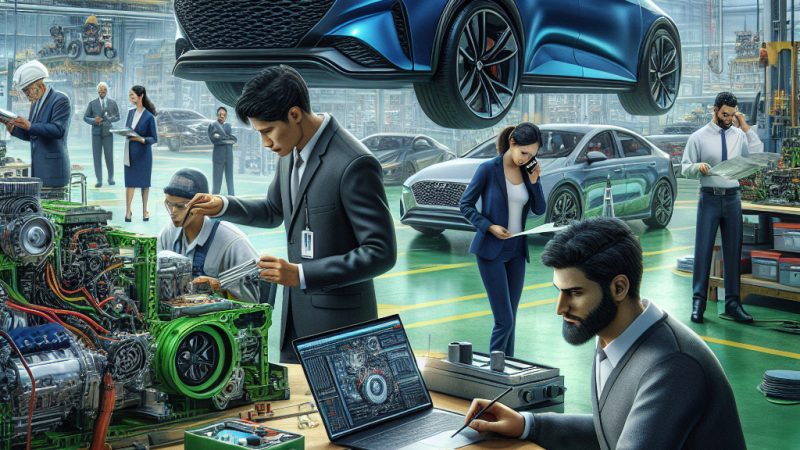
Control Systems in Vehicles
Introduction
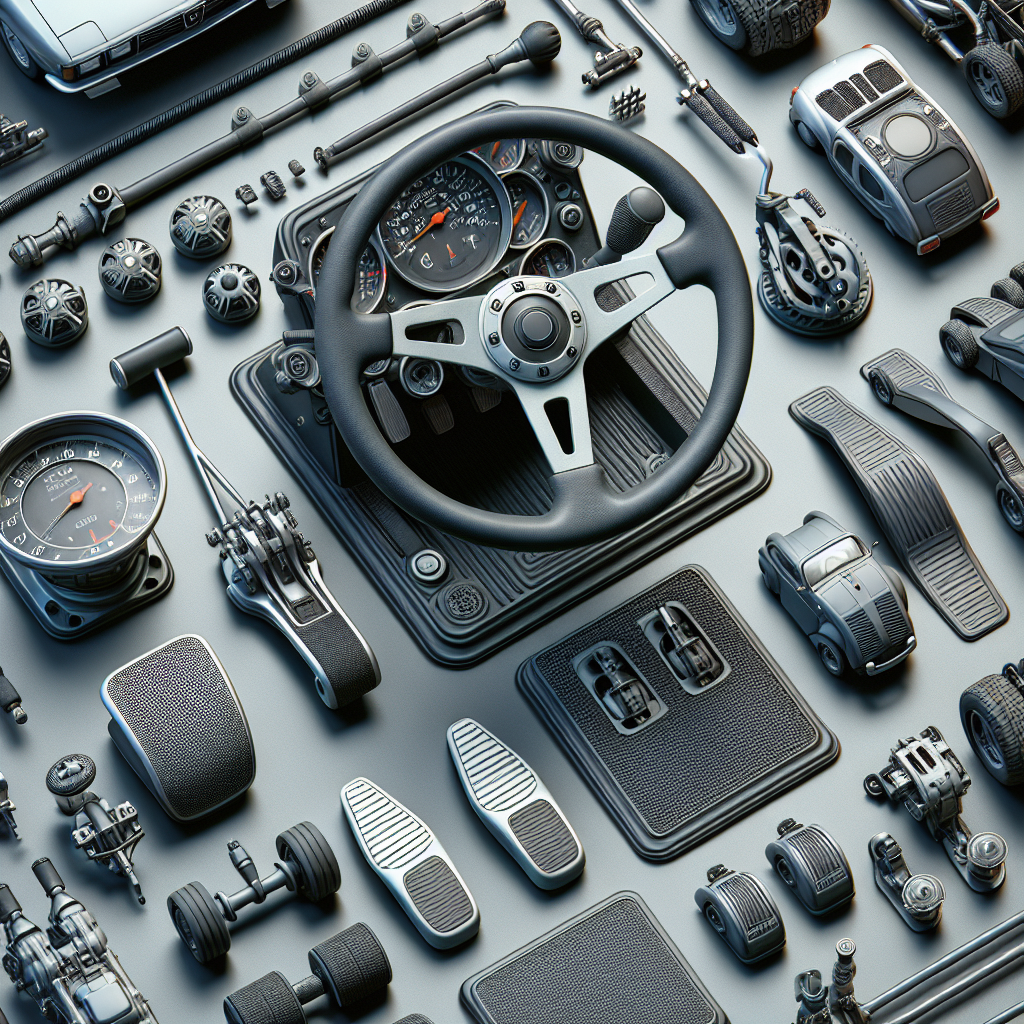
In the realm of automotive engineering, control systems play a pivotal role in ensuring the safety, efficiency, and performance of modern vehicles. These systems encompass a wide range of technologies and methodologies designed to manage and regulate various functions within a vehicle. From basic cruise control to advanced autonomous driving systems, control systems are integral to the operation of contemporary automobiles. This article delves into the intricacies of control systems in vehicles, exploring their fundamental principles, historical development, practical applications, advanced topics, challenges, and future trends.
Fundamentals
Basic Principles and Concepts
Control systems in vehicles are designed to manage and regulate the behavior of different vehicle components to achieve desired performance outcomes. At their core, these systems rely on feedback loops, sensors, actuators, and control algorithms to monitor and adjust various parameters.
Key Terms
- Feedback Loop: A system structure that uses feedback to control the state or output of a system.
- Sensor: A device that detects and measures physical properties and sends this information to other electronics, usually a computer processor.
- Actuator: A component of a machine that is responsible for moving or controlling a mechanism or system.
- Control Algorithm: A set of rules or calculations used to determine the control actions to be taken based on sensor inputs.
Theories
Control systems are often categorized into two main types: open-loop and closed-loop systems. Open-loop systems operate without feedback, meaning they do not adjust based on the output. In contrast, closed-loop systems use feedback to compare the actual output with the desired output and make necessary adjustments.
Historical Development
Early Innovations
The concept of control systems dates back to the early 20th century with the development of simple mechanical governors used in steam engines. These early systems laid the groundwork for more sophisticated control mechanisms.
Key Milestones
- 1950s: Introduction of the first cruise control system by Ralph Teetor, which used a mechanical governor to maintain a constant speed.
- 1980s: Development of anti-lock braking systems (ABS), which use electronic control units (ECUs) to prevent wheel lockup during braking.
- 1990s: Emergence of electronic stability control (ESC) systems, which help maintain vehicle stability by detecting and reducing loss of traction.
- 2000s: Advancements in adaptive cruise control (ACC) and lane-keeping assist systems, paving the way for semi-autonomous driving.
Notable Figures
Several individuals have made significant contributions to the development of control systems in vehicles. Ralph Teetor, for instance, is credited with inventing the first cruise control system. Similarly, engineers at Bosch and other automotive companies have played crucial roles in advancing ABS and ESC technologies.
Applications
Practical Applications in Automotive Engineering
Control systems are employed in various aspects of vehicle operation, enhancing safety, performance, and driver convenience. Some of the most common applications include:
- Cruise Control: Maintains a set speed without the need for constant driver input.
- Anti-lock Braking System (ABS): Prevents wheel lockup during braking, improving vehicle control.
- Electronic Stability Control (ESC): Helps maintain vehicle stability by detecting and reducing loss of traction.
- Adaptive Cruise Control (ACC): Adjusts vehicle speed to maintain a safe following distance from the vehicle ahead.
- Lane-Keeping Assist: Helps keep the vehicle within its lane by providing steering inputs.
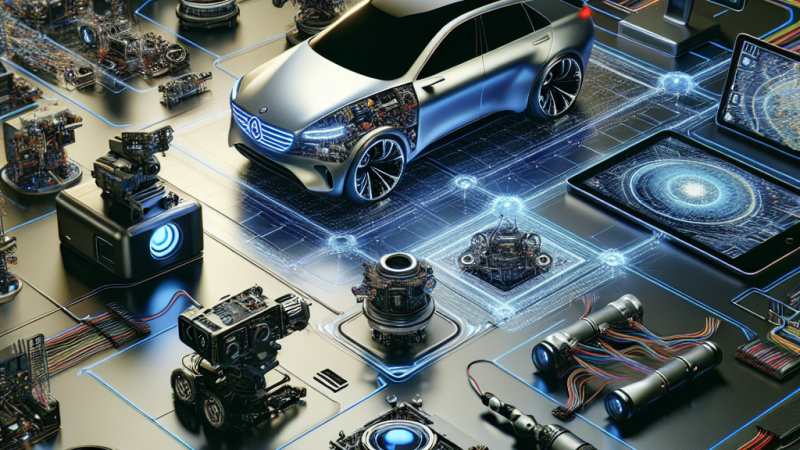
- Autonomous Driving Systems: Enable vehicles to operate without human intervention by using a combination of sensors, cameras, and advanced algorithms.
Case Studies
One notable case study is the development of Tesla’s Autopilot system. This advanced driver-assistance system (ADAS) uses a combination of cameras, radar, ultrasonic sensors, and powerful onboard computing to provide features such as automatic lane-keeping, adaptive cruise control, and self-parking. Another example is the implementation of Bosch’s ESP (Electronic Stability Program) in various vehicle models, which has significantly reduced the number of accidents caused by skidding and loss of control.
Advanced Topics
Recent Research and Innovations
Recent advancements in control systems have focused on enhancing the capabilities of autonomous vehicles. Researchers are exploring the use of artificial intelligence (AI) and machine learning to improve decision-making processes in real-time. Additionally, vehicle-to-everything (V2X) communication is being developed to enable vehicles to communicate with each other and with infrastructure, further enhancing safety and efficiency.
Future Trends
The future of control systems in vehicles is likely to be dominated by the continued development of fully autonomous driving technologies. This includes advancements in sensor fusion, where data from multiple sensors are combined to create a comprehensive understanding of the vehicle’s surroundings. Moreover, the integration of 5G technology is expected to enhance V2X communication, enabling faster and more reliable data exchange.
Challenges and Considerations
Technical Challenges
Despite the significant advancements, several challenges remain in the development and implementation of control systems in vehicles. These include:
- Sensor Reliability: Ensuring that sensors can operate accurately in various environmental conditions.
- Data Processing: Managing and processing the vast amounts of data generated by sensors in real-time.
- Cybersecurity: Protecting control systems from cyber-attacks and ensuring data integrity.
- Regulatory Compliance: Meeting the stringent safety and regulatory standards set by governing bodies.
Potential Solutions
To address these challenges, researchers and engineers are exploring several potential solutions:
- Advanced Sensor Technologies: Developing more robust and reliable sensors that can operate in diverse conditions.
- Edge Computing: Utilizing edge computing to process data closer to the source, reducing latency and improving real-time decision-making.
- Enhanced Cybersecurity Measures: Implementing advanced encryption and security protocols to protect control systems from cyber threats.
- Collaboration with Regulatory Bodies: Working closely with regulatory agencies to ensure compliance and promote the safe deployment of new technologies.
Conclusion
Control systems are a cornerstone of modern automotive engineering, playing a crucial role in enhancing vehicle safety, performance, and convenience. From their early beginnings with mechanical governors to the sophisticated autonomous driving systems of today, control systems have undergone significant evolution. As technology continues to advance, the future holds exciting possibilities for further innovations in this field. However, addressing the associated challenges will be essential to fully realize the potential of these systems. In conclusion, control systems in vehicles are not only vital for current automotive applications but also hold the key to the future of transportation.