Automotive Electronics
Introduction

Automotive electronics represent a critical and rapidly evolving segment within the field of Automotive Engineering. These systems encompass a wide range of electronic components and technologies that are integrated into vehicles to enhance performance, safety, comfort, and overall driving experience. From engine control units (ECUs) to advanced driver-assistance systems (ADAS), automotive electronics have revolutionized the way vehicles operate and interact with their environment. This article delves into the importance and relevance of automotive electronics, exploring their fundamental principles, historical development, practical applications, advanced topics, challenges, and future trends.
Fundamentals
Basic Principles and Concepts
Automotive electronics involve the integration of electronic systems and components into vehicles to control various functions and enhance performance. Key components include sensors, actuators, microcontrollers, and communication networks. These systems work together to monitor and control various aspects of the vehicle, such as engine performance, braking, steering, and infotainment.
Key Terms
- Engine Control Unit (ECU): A central component that manages engine performance by controlling fuel injection, ignition timing, and other parameters.
- Advanced Driver-Assistance Systems (ADAS): Systems designed to enhance vehicle safety and driving experience through features like adaptive cruise control, lane-keeping assist, and automatic emergency braking.
- Controller Area Network (CAN): A robust vehicle bus standard that allows microcontrollers and devices to communicate with each other without a host computer.
- Telematics: The integration of telecommunications and informatics to provide services such as navigation, vehicle tracking, and remote diagnostics.
Historical Development
Early Innovations
The journey of automotive electronics began in the early 20th century with the introduction of basic electrical systems for lighting and ignition. The 1960s marked a significant milestone with the advent of electronic fuel injection (EFI) systems, which replaced mechanical carburetors for better fuel efficiency and performance.
Key Milestones
- 1970s: The introduction of microprocessors in vehicles, leading to the development of the first ECUs.
- 1980s: The emergence of anti-lock braking systems (ABS) and electronic stability control (ESC) for enhanced safety.
- 1990s: The proliferation of onboard diagnostics (OBD) systems, enabling real-time monitoring and diagnostics of vehicle performance.
- 2000s: The rise of ADAS and telematics, paving the way for connected and autonomous vehicles.
Notable Figures
Several pioneers have made significant contributions to the field of automotive electronics. Robert Bosch GmbH, a leading global supplier of technology and services, has been at the forefront of innovations in automotive electronics. The company’s development of the first electronic fuel injection system and ABS are notable milestones. Additionally, engineers and researchers at companies like General Motors, Toyota, and Tesla have played crucial roles in advancing automotive electronics.
Applications
Engine Management
Modern vehicles rely on sophisticated ECUs to optimize engine performance, fuel efficiency, and emissions. These systems use data from various sensors to adjust fuel injection, ignition timing, and air intake, ensuring optimal engine operation under different driving conditions.
Safety Systems
Automotive electronics have significantly enhanced vehicle safety through the development of systems like ABS, ESC, and ADAS. These technologies help prevent accidents by providing real-time assistance to drivers, such as automatic braking, collision avoidance, and lane departure warnings.
Infotainment and Connectivity
Infotainment systems integrate multimedia, navigation, and communication features to provide a seamless and enjoyable driving experience. Telematics systems enable remote diagnostics, vehicle tracking, and over-the-air updates, enhancing vehicle maintenance and security.
Electric and Hybrid Vehicles
The rise of electric and hybrid vehicles has further underscored the importance of automotive electronics. Battery management systems (BMS), regenerative braking, and power electronics are critical components that ensure the efficient operation of these vehicles.
Case Studies
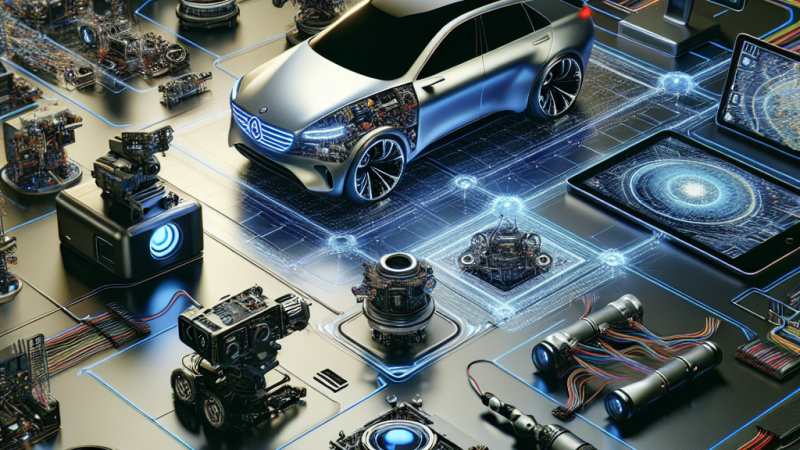
- Tesla Autopilot: Tesla’s Autopilot system is a prime example of advanced automotive electronics. It uses a combination of cameras, radar, ultrasonic sensors, and powerful onboard computers to provide semi-autonomous driving capabilities.
- Volvo City Safety: Volvo’s City Safety system uses radar and camera technology to detect potential collisions and automatically apply brakes to prevent or mitigate accidents.
Advanced Topics
Autonomous Vehicles
Autonomous vehicles represent the pinnacle of automotive electronics. These vehicles rely on a complex array of sensors, machine learning algorithms, and high-performance computing to navigate and operate without human intervention. Companies like Waymo, Uber, and Tesla are at the forefront of developing autonomous driving technologies.
Vehicle-to-Everything (V2X) Communication
V2X communication enables vehicles to communicate with each other and with infrastructure, such as traffic lights and road signs. This technology enhances safety and traffic efficiency by providing real-time information about road conditions, traffic congestion, and potential hazards.
Artificial Intelligence (AI) and Machine Learning
AI and machine learning are increasingly being integrated into automotive electronics to enhance vehicle performance and safety. These technologies enable predictive maintenance, adaptive cruise control, and personalized driving experiences by analyzing vast amounts of data from sensors and other sources.
Recent Research and Innovations
- Solid-State Batteries: Research into solid-state batteries promises to revolutionize electric vehicles by offering higher energy density, faster charging times, and improved safety compared to traditional lithium-ion batteries.
- 5G Connectivity: The deployment of 5G networks is expected to enhance V2X communication, enabling faster and more reliable data exchange between vehicles and infrastructure.
Challenges and Considerations
Technical Challenges
The development and integration of advanced automotive electronics pose several technical challenges. These include ensuring the reliability and robustness of electronic systems in harsh automotive environments, managing the complexity of software and hardware integration, and addressing cybersecurity threats.
Regulatory and Ethical Considerations
The deployment of autonomous vehicles and advanced driver-assistance systems raises regulatory and ethical questions. Ensuring the safety and reliability of these systems is paramount, and regulatory bodies must establish standards and guidelines to govern their use. Ethical considerations, such as decision-making in critical situations, also need to be addressed.
Potential Solutions
- Standardization: Developing industry-wide standards for automotive electronics can help ensure compatibility, reliability, and safety across different vehicle models and manufacturers.
- Collaboration: Collaboration between automakers, technology companies, and regulatory bodies can facilitate the development and deployment of advanced automotive electronics.
- Research and Development: Continued investment in research and development is essential to address technical challenges and drive innovation in automotive electronics.
Conclusion
Automotive electronics have transformed the automotive industry, enabling significant advancements in vehicle performance, safety, and connectivity. From the early days of basic electrical systems to the current era of autonomous vehicles and AI-driven technologies, automotive electronics continue to push the boundaries of what is possible. While challenges remain, ongoing research and innovation promise to address these issues and pave the way for a future where vehicles are safer, more efficient, and more connected than ever before. The importance of automotive electronics in the field of Automotive Engineering cannot be overstated, as they play a crucial role in shaping the future of transportation.