Automotive Engineering in Emerging Markets
Introduction
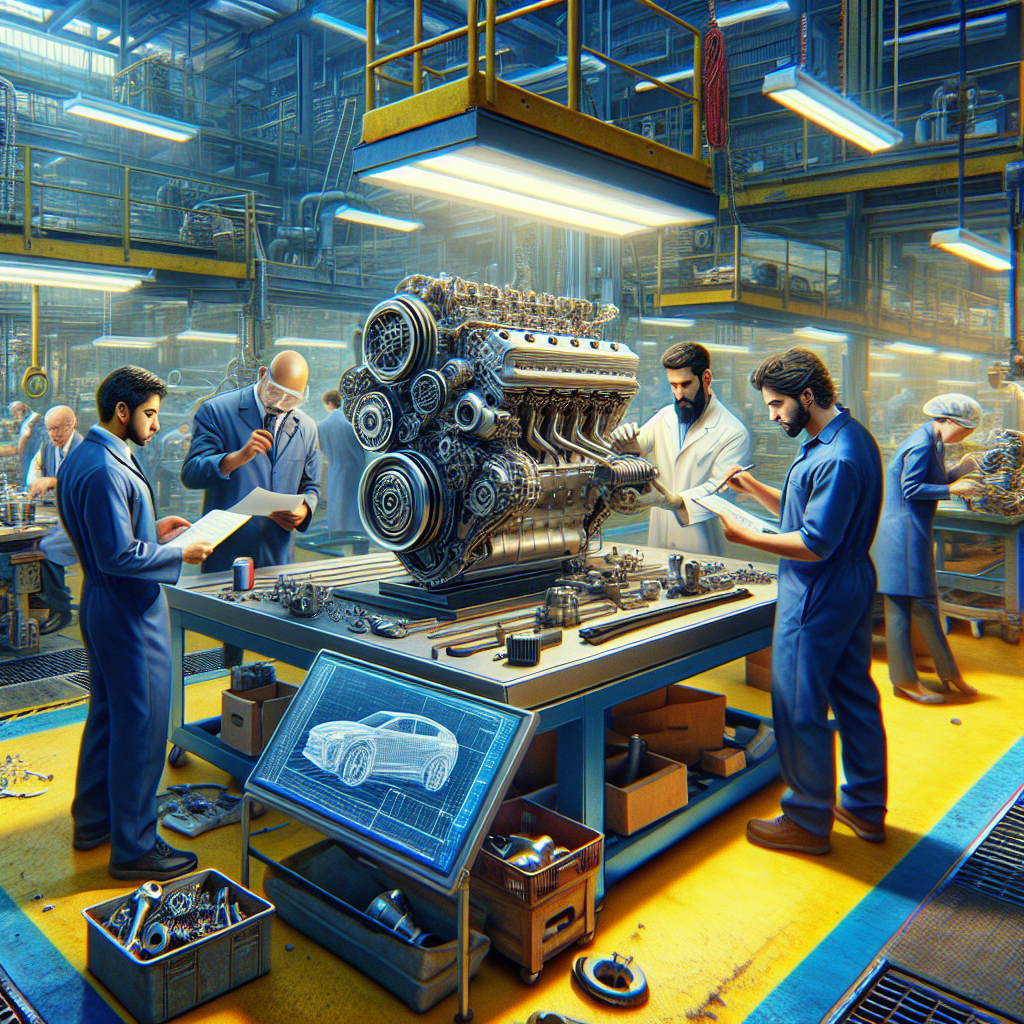
Automotive engineering is a dynamic and rapidly evolving field that plays a crucial role in the development and production of vehicles. In recent years, emerging markets have become significant players in the automotive industry, contributing to global innovation and economic growth. This article delves into the importance and relevance of automotive engineering in emerging markets, exploring its fundamentals, historical development, practical applications, advanced topics, challenges, and future prospects.
Fundamentals
Basic Principles and Concepts
Automotive engineering encompasses the design, development, manufacturing, and testing of vehicles. It integrates various engineering disciplines, including mechanical, electrical, electronic, software, and safety engineering. Key principles include:
- Vehicle Dynamics: The study of forces and motions in vehicles, including acceleration, braking, and cornering.
- Powertrain Engineering: Focuses on the design and optimization of engines, transmissions, and drivetrains.
- Chassis Engineering: Involves the design of the vehicle’s frame, suspension, and steering systems.
- Safety Engineering: Ensures that vehicles meet safety standards and regulations to protect occupants and pedestrians.
- Electronics and Software: Integration of electronic systems and software for vehicle control, infotainment, and connectivity.
Key Terms
- OEM (Original Equipment Manufacturer): Companies that produce parts and equipment that may be marketed by another manufacturer.
- EV (Electric Vehicle): A vehicle powered by electric motors using energy stored in batteries.
- ADAS (Advanced Driver Assistance Systems): Systems that provide automated assistance to drivers, enhancing safety and convenience.
- Telematics: The integration of telecommunications and informatics for vehicle data exchange and connectivity.
Historical Development
Early Innovations
The history of automotive engineering dates back to the late 19th century with the invention of the internal combustion engine. Karl Benz and Gottlieb Daimler were pioneers in this field, creating the first practical automobiles. The early 20th century saw the mass production of vehicles, spearheaded by Henry Ford’s assembly line innovation, which revolutionized the industry.
Growth in Emerging Markets
In the latter half of the 20th century, emerging markets such as China, India, Brazil, and South Korea began to play a more prominent role in the automotive industry. These countries invested heavily in infrastructure, research, and development, leading to the establishment of domestic automotive manufacturers and the attraction of foreign investments.
Key Milestones
- 1970s: Japan’s automotive industry gained global prominence with companies like Toyota and Honda leading the way in quality and innovation.
- 1990s: South Korea emerged as a significant player with Hyundai and Kia expanding their global footprint.
- 2000s: China became the world’s largest automotive market, with domestic manufacturers like Geely and BYD gaining international recognition.
- 2010s: India saw rapid growth in its automotive sector, with companies like Tata Motors and Mahindra & Mahindra making significant strides.
Applications
Automotive Manufacturing
Emerging markets have become hubs for automotive manufacturing due to their cost advantages, skilled labor, and growing domestic markets. For example, China is home to numerous manufacturing plants for global automakers like Volkswagen, General Motors, and Toyota. These facilities produce a wide range of vehicles, from economy cars to luxury models.
Electric Vehicles (EVs)
Emerging markets are also at the forefront of the electric vehicle revolution. China, in particular, has made significant investments in EV technology, with companies like NIO and Xpeng leading the charge. Government incentives and policies have further accelerated the adoption of EVs in these regions.
Advanced Driver Assistance Systems (ADAS)
ADAS technologies are being rapidly adopted in emerging markets to enhance vehicle safety and convenience. For instance, India’s automotive industry is integrating ADAS features such as adaptive cruise control, lane-keeping assist, and automatic emergency braking in new models to meet rising consumer expectations and regulatory requirements.
Case Studies
- China’s EV Market: China’s aggressive push for electric vehicles has resulted in a robust EV ecosystem, with extensive charging infrastructure and a wide range of affordable EV models.
- India’s Automotive Startups: Companies like Ather Energy and Ola Electric are driving innovation in India’s electric scooter and ride-sharing markets, respectively.
- Brazil’s Flex-Fuel Vehicles: Brazil has pioneered the development of flex-fuel vehicles that can run on both gasoline and ethanol, leveraging its abundant sugarcane resources.
Advanced Topics
Autonomous Vehicles
Autonomous vehicle technology is a cutting-edge area of research and development in automotive engineering. Emerging markets are investing in autonomous driving technologies to address traffic congestion, improve safety, and enhance mobility. For example, China’s Baidu is developing autonomous driving solutions through its Apollo project, while India’s Tata Elxsi is working on autonomous vehicle software.
Connected Vehicles
Connected vehicle technology involves the integration of telematics, IoT (Internet of Things), and V2X (Vehicle-to-Everything) communication. Emerging markets are leveraging these technologies to enhance vehicle connectivity, enabling features such as real-time traffic updates, remote diagnostics, and over-the-air software updates. South Korea’s Hyundai is a leader in connected vehicle technology, offering advanced infotainment and telematics systems in its vehicles.
Recent Research and Innovations
- Battery Technology: Research in emerging markets is focused on developing high-energy-density batteries with faster charging times and longer lifespans. Companies like CATL in China are at the forefront of battery innovation.
- Lightweight Materials: The use of lightweight materials such as carbon fiber and advanced composites is being explored to improve fuel efficiency and reduce emissions. India’s Tata Motors is incorporating lightweight materials in its vehicle designs.
- Artificial Intelligence (AI): AI is being integrated into various aspects of automotive engineering, from autonomous driving algorithms to predictive maintenance. Brazil’s Embraer is applying AI to enhance vehicle performance and safety.
Challenges and Considerations
Infrastructure Development
One of the primary challenges in emerging markets is the development of adequate infrastructure to support the growth of the automotive industry. This includes the construction of roads, charging stations for EVs, and manufacturing facilities. Governments and private sector stakeholders must collaborate to address these infrastructure needs.
Regulatory Compliance
Meeting regulatory standards and safety requirements is another significant challenge. Emerging markets must align their regulations with international standards to ensure vehicle safety and environmental sustainability. This requires continuous updates to policies and enforcement mechanisms.
Skilled Workforce
The availability of a skilled workforce is crucial for the success of the automotive industry. Emerging markets need to invest in education and training programs to develop a pool of skilled engineers, technicians, and researchers. Partnerships with academic institutions and industry players can help bridge the skills gap.
Environmental Concerns
The automotive industry in emerging markets must address environmental concerns related to emissions, waste management, and resource consumption. Adopting sustainable practices, such as recycling and the use of renewable energy sources, can mitigate the environmental impact of automotive manufacturing and operations.
Potential Solutions
- Public-Private Partnerships: Collaborations between governments and private companies can drive infrastructure development and regulatory compliance.
- Investment in R&D: Increased investment in research and development can lead to technological advancements and innovation in the automotive sector.
- Education and Training: Establishing specialized training programs and academic courses can develop a skilled workforce for the automotive industry.
- Sustainability Initiatives: Implementing sustainability initiatives, such as green manufacturing practices and the use of renewable energy, can address environmental concerns.
Conclusion
Automotive engineering in emerging markets is a vital and rapidly evolving field that holds immense potential for innovation and economic growth. By understanding the fundamentals, historical development, practical applications, advanced topics, challenges, and potential solutions, stakeholders can navigate the complexities of this dynamic industry. As emerging markets continue to invest in research, infrastructure, and workforce development, they will play an increasingly significant role in shaping the future of automotive engineering. The continued collaboration between governments, industry players, and academic institutions will be essential in driving progress and ensuring the sustainable growth of the automotive sector in these regions.