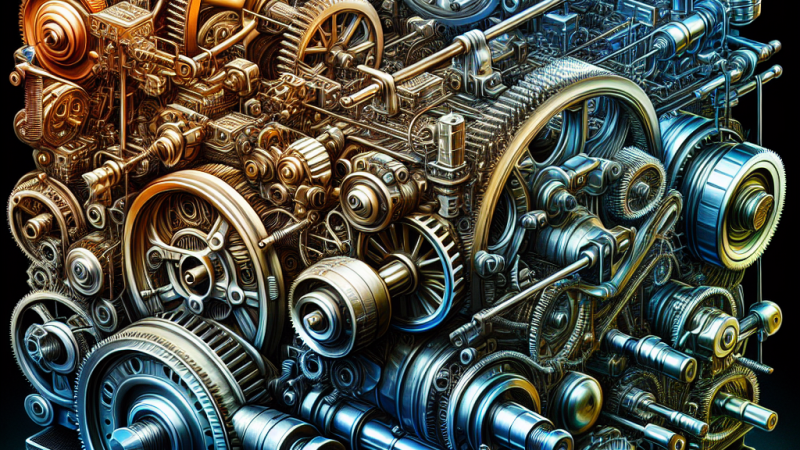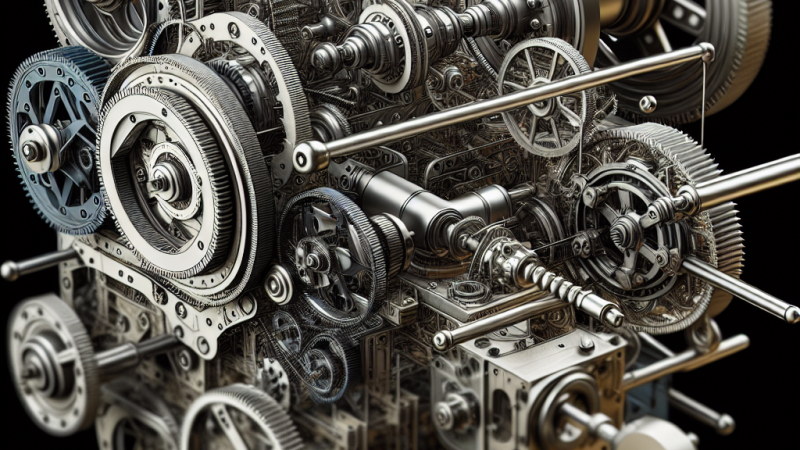
Computational Methods in Mechanics of Machines
Introduction
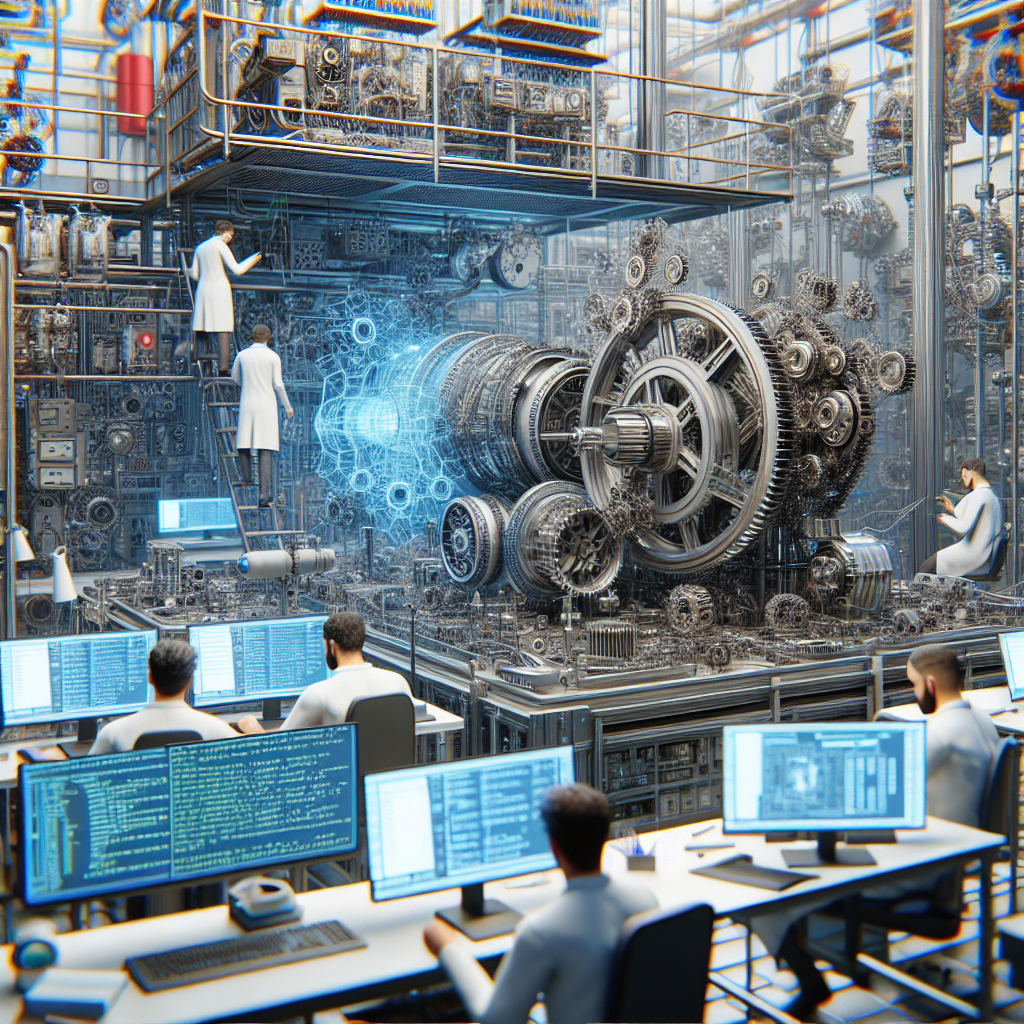
Computational methods in the mechanics of machines represent a cornerstone of modern engineering, enabling the analysis, design, and optimization of mechanical systems with unprecedented precision and efficiency. These methods leverage the power of computational algorithms and numerical techniques to solve complex mechanical problems that are often intractable through analytical means alone. The importance of computational methods in this field cannot be overstated, as they facilitate the development of more efficient, reliable, and innovative machines across various industries, from automotive and aerospace to robotics and manufacturing.
Fundamentals
Basic Principles and Concepts
At its core, the mechanics of machines involves the study of forces and motions in mechanical systems. Computational methods apply mathematical models and numerical techniques to simulate and analyze these systems. Key principles include:
- Newton’s Laws of Motion: Fundamental to understanding the behavior of mechanical systems, these laws describe the relationship between a body and the forces acting upon it.
- Dynamics: The study of forces and torques and their effect on motion.
- Kinematics: The study of motion without considering the forces that cause it.
- Finite Element Analysis (FEA): A numerical method for solving problems of engineering and mathematical physics by discretizing a large system into smaller, simpler parts called finite elements.
- Computational Fluid Dynamics (CFD): A branch of fluid mechanics that uses numerical analysis and algorithms to solve and analyze problems involving fluid flows.
Key Terms
- Degrees of Freedom (DOF): The number of independent movements a mechanical system can perform.
- Stiffness Matrix: A matrix that relates the forces and displacements in a mechanical system.
- Modal Analysis: The study of the natural vibration characteristics of a system.
- Boundary Conditions: Constraints that define how a system interacts with its environment.
Historical Development
The evolution of computational methods in the mechanics of machines is a testament to the progress of engineering and technology. Key milestones include:
- Early Analytical Methods: The foundations were laid by pioneers like Isaac Newton and Leonhard Euler, who developed the basic principles of mechanics.
- Development of Numerical Methods: In the 19th and early 20th centuries, mathematicians like Carl Friedrich Gauss and Joseph Fourier contributed to the development of numerical techniques.
- Advent of Computers: The mid-20th century saw the advent of digital computers, which revolutionized computational methods. John von Neumann and Alan Turing were instrumental in this transformation.
- Finite Element Method (FEM): Developed in the 1950s and 1960s by engineers like Richard Courant and J. H. Argyris, FEM became a critical tool for solving complex mechanical problems.
- Modern Computational Tools: The late 20th and early 21st centuries have seen the development of sophisticated software tools like ANSYS, Abaqus, and MATLAB, which have made computational methods more accessible and powerful.
Applications
Computational methods in the mechanics of machines have a wide range of applications across various industries:
Automotive Industry
In the automotive industry, computational methods are used to design and optimize vehicle components, such as engines, transmissions, and suspension systems. For example, FEA is used to analyze the structural integrity of car frames, while CFD is employed to improve aerodynamics and fuel efficiency.
Aerospace Industry
The aerospace industry relies heavily on computational methods to design and test aircraft and spacecraft. These methods are used to simulate aerodynamic performance, structural integrity, and thermal behavior under various conditions. For instance, NASA uses CFD to optimize the design of spacecraft re-entry vehicles.
Robotics
In robotics, computational methods are essential for designing and controlling robotic systems. Kinematic and dynamic analyses are used to ensure that robots can perform precise movements and tasks. Additionally, machine learning algorithms are increasingly being integrated with computational methods to enhance robotic capabilities.
Manufacturing
In manufacturing, computational methods are used to design and optimize production processes. For example, FEA is used to analyze the stresses and deformations in machine tools, while CFD is employed to optimize cooling and lubrication systems in machining processes.
Advanced Topics
Multiphysics Simulations
Multiphysics simulations involve the simultaneous simulation of multiple physical phenomena, such as structural mechanics, fluid dynamics, and thermal analysis. These simulations provide a more comprehensive understanding of complex systems and are increasingly used in advanced engineering applications.
Machine Learning and AI
Machine learning and artificial intelligence (AI) are being integrated with computational methods to enhance their capabilities. For example, AI algorithms can be used to optimize design parameters, predict system behavior, and identify potential failures in mechanical systems.
Topological Optimization
Topological optimization is an advanced computational technique used to optimize the material layout within a given design space. This method is particularly useful in additive manufacturing, where it can lead to the creation of lightweight and highly efficient structures.
Recent Research and Innovations
Recent research in computational methods has focused on improving the accuracy and efficiency of simulations. Innovations include the development of more sophisticated algorithms, the integration of real-time data, and the use of high-performance computing (HPC) to handle large-scale simulations.
Challenges and Considerations
Despite their many advantages, computational methods in the mechanics of machines face several challenges:
Computational Complexity
One of the primary challenges is the computational complexity of simulations, which can require significant processing power and time. High-fidelity simulations, in particular, can be resource-intensive and may necessitate the use of HPC resources.
Model Accuracy
The accuracy of computational models is another critical consideration. Inaccurate models can lead to erroneous results and potentially costly design errors. Ensuring model accuracy requires careful validation and verification against experimental data.
Data Management
The management of large volumes of data generated by simulations is a significant challenge. Efficient data storage, retrieval, and analysis are essential for making informed engineering decisions.
Interdisciplinary Collaboration
Effective use of computational methods often requires collaboration between experts in different fields, such as mechanical engineering, computer science, and materials science. Facilitating interdisciplinary collaboration can be challenging but is essential for successful outcomes.
Potential Solutions and Future Research
To address these challenges, ongoing research is focused on developing more efficient algorithms, improving model accuracy through better material characterization, and leveraging advancements in HPC and cloud computing. Additionally, the integration of machine learning and AI holds promise for further enhancing the capabilities of computational methods.
Conclusion
In conclusion, computational methods in the mechanics of machines are indispensable tools in modern engineering. They enable the analysis, design, and optimization of complex mechanical systems with a level of precision and efficiency that was previously unattainable. From their historical development to their wide-ranging applications and advanced topics, these methods continue to evolve and drive innovation across various industries. Despite the challenges they face, ongoing research and technological advancements promise to further enhance their capabilities, making them even more integral to the future of engineering. As such, a deep understanding of computational methods is essential for engineers seeking to push the boundaries of what is possible in the mechanics of machines.