Vehicle Aerodynamics
Introduction
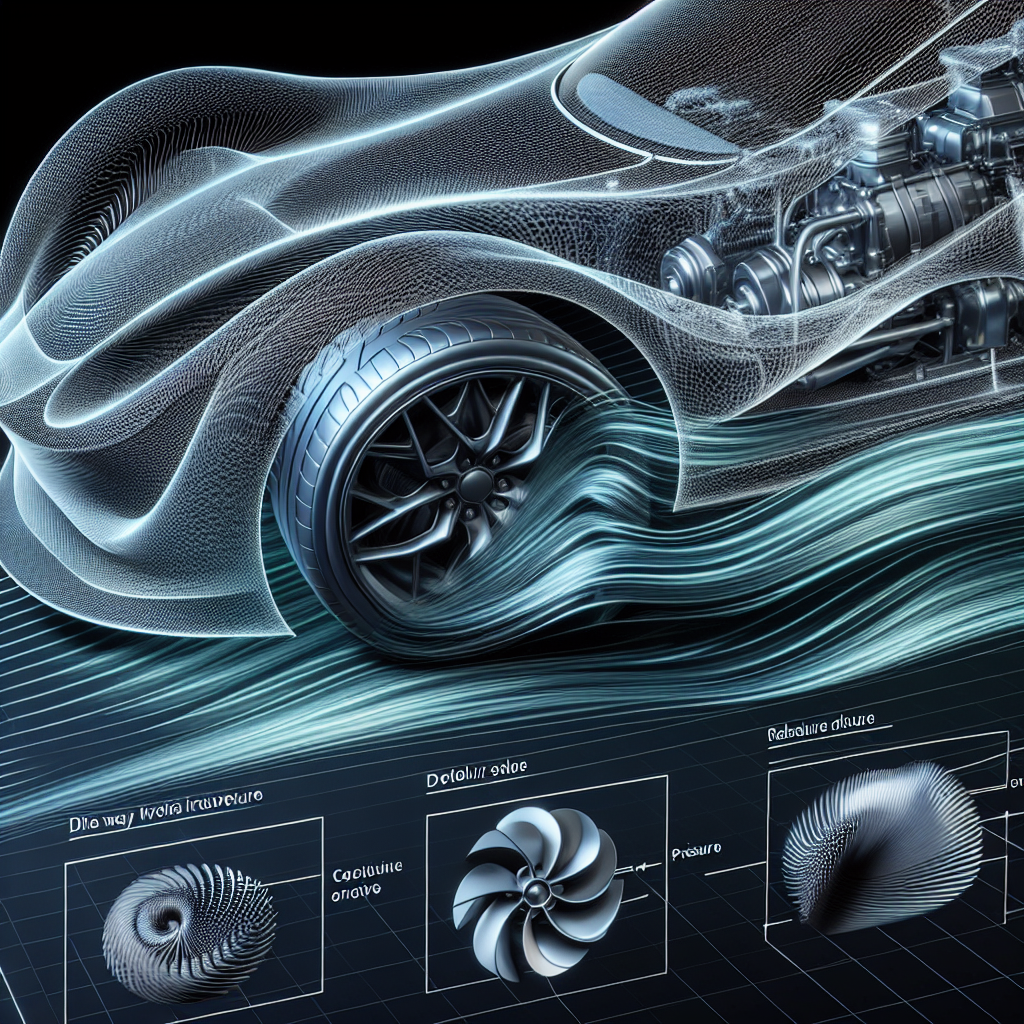
Vehicle aerodynamics is a critical aspect of automotive engineering that focuses on the study of how air interacts with moving vehicles. This field is essential for improving vehicle performance, fuel efficiency, and safety. Aerodynamics plays a pivotal role in reducing drag, enhancing stability, and optimizing the overall design of vehicles. In an era where environmental concerns and fuel economy are paramount, understanding and applying aerodynamic principles is more relevant than ever. This article delves into the fundamentals, historical development, applications, advanced topics, challenges, and considerations of vehicle aerodynamics in automotive engineering.
Fundamentals
Basic Principles and Concepts
Aerodynamics is the study of the behavior of air as it flows around objects. In the context of vehicles, it involves analyzing how air interacts with the vehicle’s surface and how this interaction affects performance. Key principles include:
- Drag: The resistance a vehicle faces as it moves through the air. Reducing drag is crucial for improving fuel efficiency and performance.
- Lift: The force that acts perpendicular to the direction of motion. In vehicles, minimizing lift is essential for maintaining stability.
- Downforce: A downward force generated by aerodynamic features, enhancing traction and stability, especially in high-performance vehicles.
- Coefficient of Drag (Cd): A dimensionless number that quantifies a vehicle’s aerodynamic efficiency. Lower Cd values indicate better aerodynamic performance.
Theories and Key Terms
Several theories and key terms are fundamental to understanding vehicle aerodynamics:
- Bernoulli’s Principle: States that an increase in the speed of a fluid occurs simultaneously with a decrease in pressure. This principle helps explain lift and downforce in vehicles.
- Reynolds Number: A dimensionless number used to predict flow patterns in different fluid flow situations. It helps determine whether the flow will be laminar or turbulent.
- Boundary Layer: The thin layer of air close to the vehicle’s surface where the air velocity changes from zero to the free stream velocity. Managing the boundary layer is crucial for reducing drag.
Historical Development
Early Innovations
The study of vehicle aerodynamics dates back to the early 20th century. One of the pioneers in this field was Paul Jaray, an engineer who worked on streamlining vehicle designs in the 1920s. His work led to the development of the “teardrop” shape, which significantly reduced drag.
Mid-20th Century Advances
During the mid-20th century, advancements in wind tunnel technology allowed for more precise aerodynamic testing. The introduction of computational fluid dynamics (CFD) in the 1970s revolutionized the field, enabling engineers to simulate airflow and optimize designs without relying solely on physical prototypes.
Modern Developments
In recent decades, the focus has shifted towards integrating aerodynamics with other vehicle systems. The development of active aerodynamic features, such as adjustable spoilers and air vents, has further enhanced vehicle performance. Notable figures like Adrian Newey in Formula 1 have made significant contributions to the field, pushing the boundaries of what is aerodynamically possible.
Applications
Automotive Industry
In the automotive industry, aerodynamics is applied to various types of vehicles, from passenger cars to commercial trucks. For passenger cars, reducing drag is essential for improving fuel efficiency and reducing emissions. Sports cars and high-performance vehicles benefit from aerodynamic features that enhance downforce and stability at high speeds.
Aerospace Industry
The principles of aerodynamics are also crucial in the aerospace industry. Aircraft design relies heavily on aerodynamic efficiency to ensure safe and efficient flight. The study of aerodynamics in vehicles often borrows concepts and techniques from aerospace engineering.
Case Studies
One notable case study is the development of the Tesla Model S. The vehicle’s design incorporates several aerodynamic features, such as a smooth underbody and a low drag coefficient of 0.24, making it one of the most aerodynamically efficient production cars. Another example is the use of aerodynamic trailers in the trucking industry, which can reduce fuel consumption by up to 10%.
Advanced Topics
Active Aerodynamics
Active aerodynamics involves the use of movable components that adjust in real-time to optimize aerodynamic performance. Examples include active grille shutters that close at high speeds to reduce drag and deployable spoilers that increase downforce during cornering.
Computational Fluid Dynamics (CFD)
CFD has become an indispensable tool in vehicle aerodynamics. It allows engineers to simulate airflow around a vehicle and make iterative design changes without the need for physical prototypes. Recent advancements in CFD include more accurate turbulence models and faster computational algorithms.
Future Trends
The future of vehicle aerodynamics is likely to see increased integration with other vehicle systems, such as electric powertrains and autonomous driving technologies. Innovations like shape-shifting materials and advanced airflow management systems are on the horizon, promising even greater improvements in efficiency and performance.
Challenges and Considerations
Complexity and Cost
One of the main challenges in vehicle aerodynamics is the complexity of accurately modeling and testing aerodynamic performance. Wind tunnel testing and CFD simulations can be expensive and time-consuming. Balancing cost with the need for precise data is a constant challenge.
Environmental Considerations
As environmental regulations become stricter, the need for aerodynamic efficiency is more critical than ever. However, achieving low drag coefficients often requires trade-offs with other design aspects, such as aesthetics and interior space.
Potential Solutions
To address these challenges, ongoing research is focused on developing more cost-effective testing methods and improving the accuracy of CFD simulations. Collaborative efforts between academia and industry are also essential for advancing the field.
Conclusion
Vehicle aerodynamics is a vital aspect of automotive engineering that significantly impacts vehicle performance, fuel efficiency, and safety. From its early beginnings to modern advancements, the field has evolved to incorporate sophisticated technologies and innovative designs. As we move towards a future of electric and autonomous vehicles, the importance of aerodynamics will only continue to grow. By understanding and applying aerodynamic principles, engineers can create vehicles that are not only more efficient but also more enjoyable to drive.