Robotics in Smart Homes
Introduction
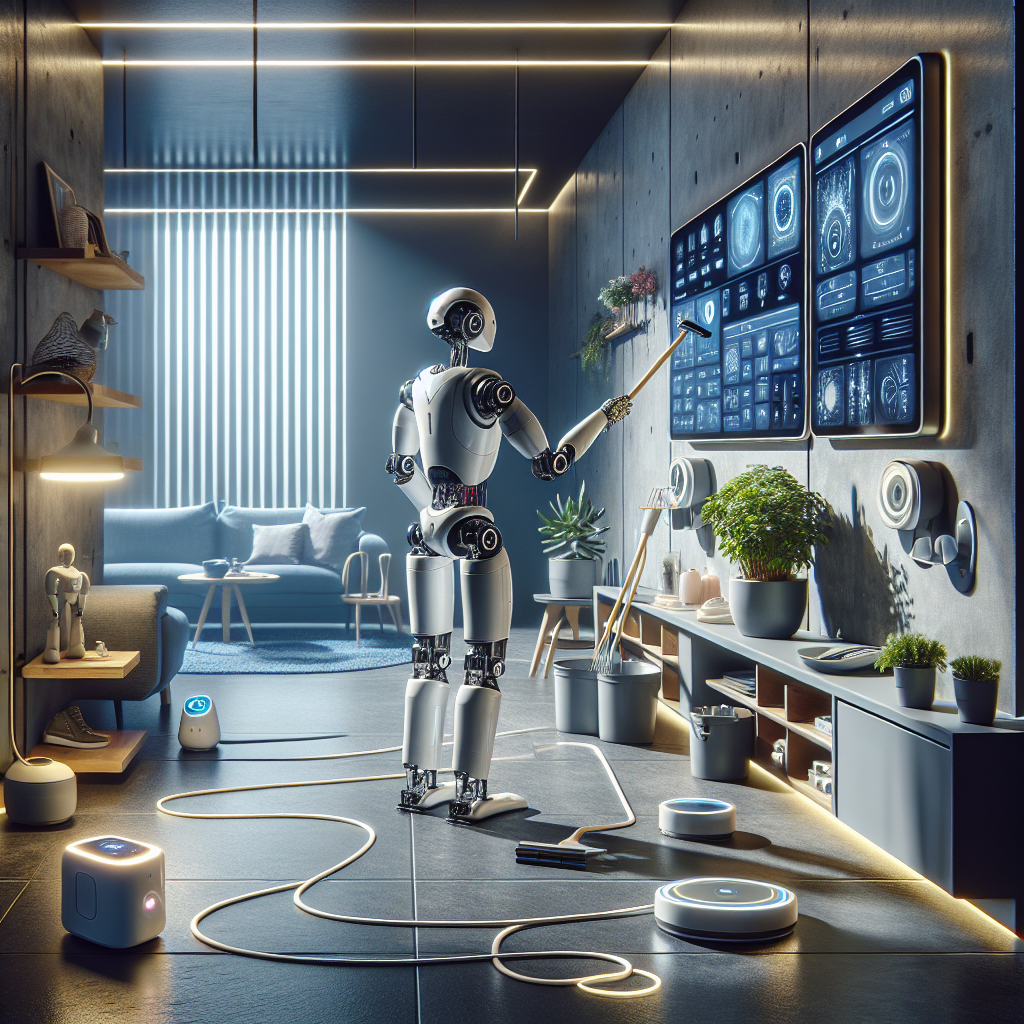
Robotics in smart homes represents a significant leap in the field of engineering, merging advanced robotics with the burgeoning domain of smart home technology. This integration aims to enhance the quality of life by automating household tasks, improving energy efficiency, and providing enhanced security. The importance of this topic lies in its potential to revolutionize daily living, making homes more intelligent, responsive, and adaptive to the needs of their inhabitants. As the world becomes increasingly interconnected, the role of robotics in smart homes is set to expand, offering innovative solutions to everyday challenges.
Fundamentals
To understand robotics in smart homes, it is essential to grasp some basic principles and concepts. At its core, a smart home is a residence equipped with devices that can be controlled remotely via a network, often through a smartphone or a central hub. These devices include lighting, heating, security systems, and appliances.
Key Terms
- Automation: The use of technology to perform tasks without human intervention.
- Internet of Things (IoT): A network of interconnected devices that communicate and exchange data.
- Artificial Intelligence (AI): The simulation of human intelligence in machines that are programmed to think and learn.
- Machine Learning: A subset of AI that involves the use of algorithms to enable machines to learn from data.
- Robotic Process Automation (RPA): The use of software robots to automate repetitive tasks.
In the context of smart homes, robotics involves the use of AI and IoT to create systems that can perform tasks such as cleaning, cooking, and monitoring security autonomously. These systems rely on sensors, actuators, and advanced algorithms to interact with their environment and make decisions.
Historical Development
The concept of smart homes dates back to the early 20th century, with the introduction of labor-saving devices such as washing machines and vacuum cleaners. However, the integration of robotics into smart homes is a more recent development, driven by advances in AI, IoT, and sensor technology.
Key Milestones
- 1960s: The first home automation systems were developed, primarily for lighting and heating control.
- 1980s: The advent of personal computers and microcontrollers enabled more sophisticated home automation systems.
- 1990s: The rise of the internet facilitated remote control of home devices.
- 2000s: The development of wireless communication technologies such as Wi-Fi and Bluetooth expanded the capabilities of smart home systems.
- 2010s: The proliferation of smartphones and the emergence of AI and IoT technologies led to the creation of more advanced and interconnected smart home systems.
Notable figures in the field include Mark Weiser, who coined the term “ubiquitous computing,” and Joseph Engelberger, known as the “father of robotics,” who envisioned the use of robots in everyday life.
Applications
Robotics in smart homes has a wide range of practical applications, enhancing convenience, safety, and efficiency. Here are some notable examples:
Cleaning Robots
Robotic vacuum cleaners, such as the Roomba, have become increasingly popular. These devices use sensors and algorithms to navigate and clean floors autonomously. Some models can even be controlled via smartphone apps, allowing users to schedule cleaning sessions remotely.
Security Systems
Smart home security systems often incorporate robotic elements, such as surveillance drones and robotic cameras. These devices can patrol the premises, detect intruders, and alert homeowners or authorities. Advanced systems use AI to analyze video footage and identify suspicious activity.
Assistive Robots
For elderly or disabled individuals, assistive robots can provide valuable support. These robots can help with tasks such as medication management, mobility assistance, and emergency response. Examples include robotic exoskeletons and companion robots like the Jibo.
Energy Management
Smart thermostats and energy management systems use AI and IoT to optimize energy consumption. These systems can learn user preferences, monitor energy usage, and make adjustments to reduce waste and lower utility bills.
Case Study: Amazon Echo and Alexa
The Amazon Echo, powered by the AI assistant Alexa, is a prime example of robotics in smart homes. Alexa can control various smart home devices, answer questions, play music, and even order groceries. The Echo’s success has spurred the development of similar devices from other companies, further advancing the integration of robotics in smart homes.
Advanced Topics
As the field of robotics in smart homes continues to evolve, several advanced concepts and techniques are emerging. These include:
Machine Learning and Predictive Analytics
Machine learning algorithms enable smart home systems to learn from user behavior and make predictions. For example, a smart thermostat can learn a household’s schedule and adjust the temperature accordingly. Predictive analytics can also be used for maintenance, alerting homeowners to potential issues before they become serious problems.
Natural Language Processing (NLP)
NLP allows smart home devices to understand and respond to spoken commands. This technology is crucial for voice-activated assistants like Alexa and Google Assistant. Advances in NLP are making these systems more accurate and capable of understanding complex queries.
Edge Computing
Edge computing involves processing data locally on devices rather than relying on centralized cloud servers. This approach reduces latency and improves the responsiveness of smart home systems. It also enhances privacy by keeping sensitive data within the home network.
Blockchain Technology
Blockchain can enhance the security and transparency of smart home systems. By creating a decentralized ledger of transactions, blockchain can prevent unauthorized access and ensure the integrity of data. This technology is particularly relevant for smart contracts and secure communication between devices.
Future Trends
The future of robotics in smart homes is likely to be shaped by several trends:
- Increased Interoperability: Efforts are underway to create standardized protocols that allow different smart home devices to work together seamlessly.
- Enhanced AI Capabilities: Advances in AI will enable smarter, more autonomous systems that can anticipate user needs and adapt to changing conditions.
- Greater Focus on Sustainability: Smart home systems will increasingly prioritize energy efficiency and environmental sustainability.
- Integration with Smart Cities: Smart homes will become part of larger smart city ecosystems, contributing to urban efficiency and quality of life.
Challenges and Considerations
Despite the many benefits, there are several challenges and considerations associated with robotics in smart homes:
Security and Privacy
The interconnected nature of smart home devices makes them vulnerable to cyberattacks. Ensuring the security and privacy of user data is a critical concern. Solutions include robust encryption, regular software updates, and user education on best practices.
Cost and Accessibility
The cost of smart home devices can be prohibitive for some households. Making these technologies more affordable and accessible is essential for widespread adoption. This may involve government incentives, subsidies, or the development of lower-cost alternatives.
Complexity and Usability
Smart home systems can be complex to set up and use, particularly for individuals who are not tech-savvy. Simplifying the user interface and providing comprehensive support can help address this issue.
Interoperability
The lack of standardized protocols can lead to compatibility issues between different devices. Industry collaboration and the development of universal standards are necessary to ensure seamless integration.
Ethical Considerations
The use of AI and robotics in smart homes raises ethical questions related to privacy, autonomy, and the potential for job displacement. Addressing these concerns requires careful consideration and the development of ethical guidelines.
Conclusion
Robotics in smart homes represents a transformative development in the field of engineering, offering numerous benefits in terms of convenience, efficiency, and security. By understanding the fundamentals, historical development, and practical applications, we can appreciate the potential of this technology to enhance our daily lives. As advanced concepts and techniques continue to emerge, the future of smart homes looks promising, with increased interoperability, enhanced AI capabilities, and a greater focus on sustainability. However, addressing challenges related to security, cost, complexity, and ethics is crucial for realizing the full potential of robotics in smart homes. Ultimately, this field holds the promise of creating more intelligent, responsive, and adaptive living environments, significantly improving our quality of life.