Historical Development of Robotics
Introduction
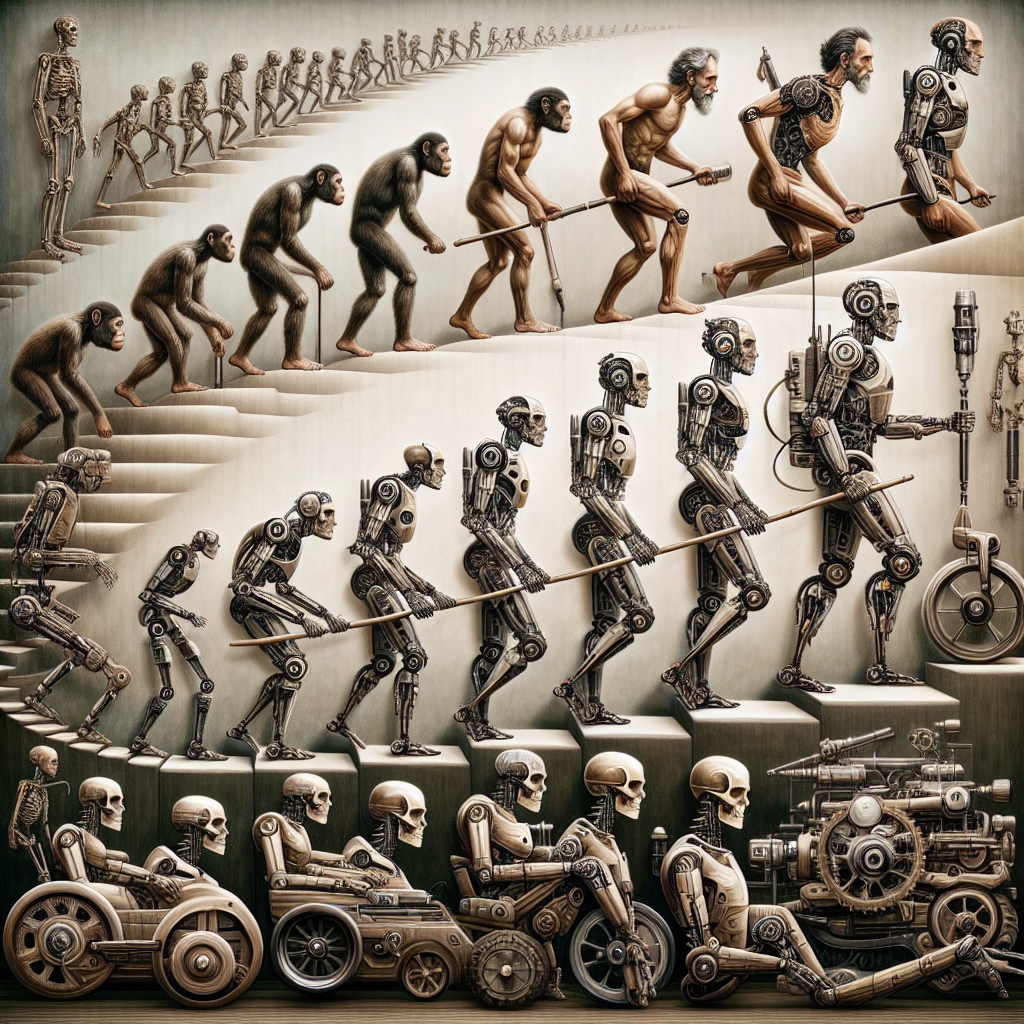
Robotics, a multidisciplinary field that integrates engineering, computer science, and artificial intelligence, has revolutionized various industries by automating tasks, enhancing precision, and improving efficiency. The historical development of robotics is a fascinating journey that reflects human ingenuity and the relentless pursuit of innovation. Understanding the evolution of robotics is crucial for engineers, researchers, and enthusiasts as it provides insights into the technological advancements that have shaped modern robotics. This article delves into the historical development of robotics, exploring its fundamental principles, key milestones, practical applications, advanced topics, and the challenges faced in this dynamic field.
Fundamentals
Basic Principles and Concepts
Robotics is the branch of engineering and science that involves the design, construction, operation, and use of robots. A robot is a programmable machine capable of carrying out a series of actions autonomously or semi-autonomously. The fundamental principles of robotics include:
- Actuation: The mechanism that enables a robot to move or manipulate objects. Actuators can be electric motors, hydraulic systems, or pneumatic systems.
- Sensing: The ability of a robot to perceive its environment using sensors such as cameras, LIDAR, ultrasonic sensors, and touch sensors.
- Control: The algorithms and software that govern the robot’s actions, ensuring it performs tasks accurately and efficiently.
- Autonomy: The degree to which a robot can perform tasks without human intervention. This ranges from simple pre-programmed actions to complex decision-making processes.
Key Terms
- Artificial Intelligence (AI): The simulation of human intelligence in machines, enabling them to perform tasks that typically require human intelligence.
- Machine Learning (ML): A subset of AI that involves training algorithms to learn from and make predictions based on data.
- End Effector: The component of a robot that interacts with the environment, such as a gripper, tool, or sensor.
- Degrees of Freedom (DOF): The number of independent movements a robot can make, typically referring to its joints and axes of rotation.
Historical Development
Early Beginnings
The concept of automated machines dates back to ancient civilizations. The Greek engineer Hero of Alexandria (10-70 AD) designed early automata, including a programmable cart and a mechanical theater. These early inventions laid the groundwork for future developments in robotics.
Industrial Revolution
The Industrial Revolution in the 18th and 19th centuries marked a significant turning point in the development of robotics. The advent of steam power and mechanization led to the creation of automated machines for manufacturing. In 1801, Joseph Marie Jacquard invented the Jacquard loom, a programmable weaving machine that used punched cards to control the pattern of the weave. This innovation is considered a precursor to modern programmable machines.
20th Century Advancements
The 20th century witnessed rapid advancements in robotics, driven by developments in electronics, computing, and control theory. Key milestones include:
- 1942: Isaac Asimov, a science fiction writer, introduced the “Three Laws of Robotics” in his short story “Runaround,” which influenced ethical considerations in robotics.
- 1954: George Devol and Joseph Engelberger developed the first industrial robot, Unimate, which was used in General Motors’ assembly line to handle hot metal parts.
- 1966: Shakey the Robot, developed by the Stanford Research Institute, became the first mobile robot capable of reasoning about its actions.
- 1980s: The introduction of microprocessors and advancements in AI led to the development of more sophisticated robots, including autonomous vehicles and robotic arms for surgery.
Applications
Manufacturing
Robotics has transformed the manufacturing industry by automating repetitive and hazardous tasks, improving precision, and increasing production efficiency. Industrial robots are used for welding, painting, assembly, and material handling. For example, automotive manufacturers use robotic arms to assemble vehicles with high precision and speed.
Healthcare
In healthcare, robots assist in surgeries, rehabilitation, and patient care. Surgical robots, such as the da Vinci Surgical System, enable minimally invasive procedures with enhanced precision and control. Rehabilitation robots help patients recover mobility and strength through guided exercises.
Agriculture
Robots are increasingly used in agriculture for tasks such as planting, harvesting, and monitoring crops. Autonomous tractors and drones equipped with sensors and AI algorithms optimize farming practices, reduce labor costs, and increase crop yields.
Logistics and Warehousing
Robotic systems streamline logistics and warehousing operations by automating tasks such as sorting, packing, and transporting goods. Amazon’s use of Kiva robots in its fulfillment centers is a notable example, where robots navigate the warehouse to retrieve and deliver items efficiently.
Exploration
Robots play a crucial role in space and underwater exploration. NASA’s Mars rovers, such as Curiosity and Perseverance, explore the Martian surface, collecting data and conducting experiments. Underwater robots, like the remotely operated vehicle (ROV) Jason, explore deep-sea environments that are inaccessible to humans.
Advanced Topics
Artificial Intelligence and Machine Learning
Recent advancements in AI and ML have significantly enhanced the capabilities of robots. Machine learning algorithms enable robots to learn from data, adapt to new situations, and improve their performance over time. For example, AI-powered robots can recognize objects, understand natural language, and make complex decisions.
Human-Robot Interaction
Human-robot interaction (HRI) focuses on developing intuitive and effective ways for humans to interact with robots. This includes natural language processing, gesture recognition, and haptic feedback. Advances in HRI aim to make robots more user-friendly and capable of collaborating with humans in various tasks.
Swarm Robotics
Swarm robotics involves the coordination of multiple robots to perform tasks collectively. Inspired by the behavior of social insects like ants and bees, swarm robots communicate and collaborate to achieve complex objectives. Applications include search and rescue missions, environmental monitoring, and agricultural tasks.
Soft Robotics
Soft robotics explores the design and construction of robots using flexible and deformable materials. These robots can adapt to complex and unstructured environments, making them suitable for tasks that require delicate handling or navigation through tight spaces. Soft robotic grippers, for example, can manipulate fragile objects without causing damage.
Challenges and Considerations
Technical Challenges
Despite significant advancements, robotics faces several technical challenges:
- Perception: Developing robust perception systems that can accurately interpret complex and dynamic environments remains a challenge.
- Autonomy: Achieving full autonomy in robots, especially in unstructured environments, requires advanced AI algorithms and reliable decision-making processes.
- Energy Efficiency: Improving the energy efficiency of robots, particularly mobile robots, is essential for extending their operational time and reducing costs.
Ethical and Social Considerations
The widespread adoption of robots raises ethical and social considerations:
- Job Displacement: The automation of tasks may lead to job displacement in certain industries, necessitating workforce retraining and education programs.
- Privacy: The use of robots equipped with cameras and sensors raises concerns about privacy and data security.
- Ethical Decision-Making: Ensuring that robots make ethical decisions, especially in critical applications like healthcare and autonomous vehicles, is a complex challenge.
Regulatory and Safety Considerations
Establishing regulatory frameworks and safety standards is crucial for the responsible deployment of robots. This includes guidelines for the design, testing, and operation of robots to ensure they operate safely and reliably in various environments.
Conclusion
The historical development of robotics is a testament to human creativity and technological progress. From ancient automata to modern AI-powered robots, the field has evolved significantly, transforming industries and improving the quality of life. Understanding the fundamentals, historical milestones, practical applications, advanced topics, and challenges in robotics provides valuable insights for engineers, researchers, and enthusiasts. As robotics continues to advance, addressing technical, ethical, and regulatory considerations will be essential for harnessing its full potential and ensuring its positive impact on society.