
Robotics in Autonomous Vehicles
Introduction
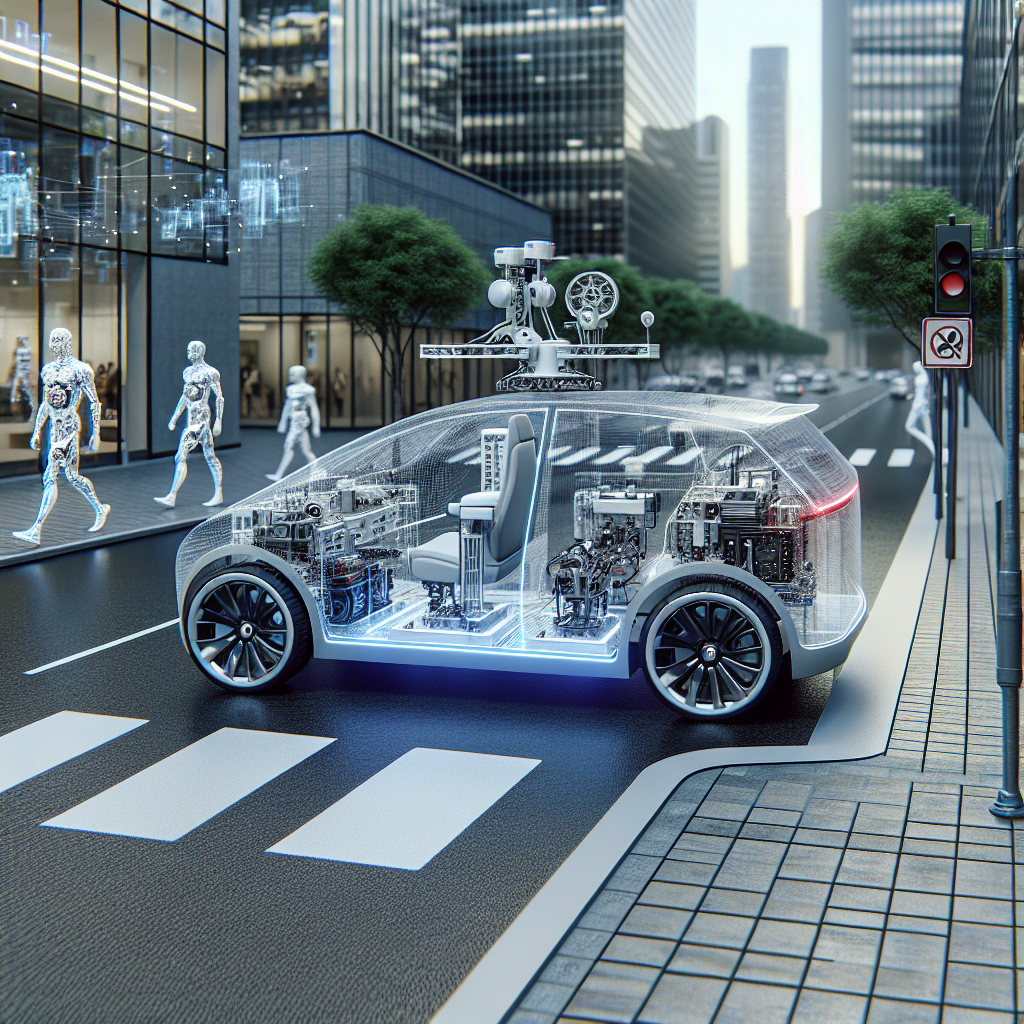
Robotics in autonomous vehicles represents a groundbreaking intersection of engineering disciplines, including mechanical, electrical, and computer engineering. This field is pivotal in the development of self-driving cars, drones, and other autonomous systems that promise to revolutionize transportation, logistics, and numerous other industries. The importance of robotics in autonomous vehicles cannot be overstated, as it holds the potential to enhance safety, efficiency, and convenience in our daily lives. This article delves into the various aspects of this fascinating topic, providing a comprehensive overview of its fundamentals, historical development, applications, advanced topics, challenges, and future prospects.
Fundamentals
Basic Principles and Concepts
At its core, robotics in autonomous vehicles involves the integration of sensors, actuators, and control systems to enable a machine to navigate and perform tasks without human intervention. Key components include:
- Sensors: Devices that collect data from the environment, such as cameras, LiDAR, radar, and ultrasonic sensors.
- Actuators: Mechanisms that convert electrical signals into physical movement, such as motors and servos.
- Control Systems: Algorithms and software that process sensor data and make decisions to control the actuators.
Key Terms
- Autonomy: The ability of a system to perform tasks without human intervention.
- Perception: The process of interpreting sensor data to understand the environment.
- Localization: Determining the vehicle’s position within its environment.
- Path Planning: Creating a route for the vehicle to follow.
- Control: Executing the planned path by controlling the vehicle’s actuators.
Historical Development
Early Innovations
The concept of autonomous vehicles dates back to the early 20th century. In the 1920s, radio-controlled cars were demonstrated, showcasing the potential for remote operation. However, it wasn’t until the 1980s that significant progress was made, thanks to advancements in computing and sensor technology.
Key Milestones
- 1980s: Carnegie Mellon University’s Navlab project developed one of the first autonomous vehicles, capable of navigating complex environments.
- 2004: The DARPA Grand Challenge spurred innovation by offering a prize for autonomous vehicles that could navigate a desert course. Although no vehicle completed the course, it marked a significant step forward.
- 2010s: Companies like Google (now Waymo) began testing autonomous vehicles on public roads, demonstrating the feasibility of self-driving cars.
Notable Figures
- Hans Moravec: A pioneer in robotics and artificial intelligence, known for his work on autonomous robots.
- Sebastian Thrun: A key figure in the development of Google’s self-driving car project and a leader in the field of artificial intelligence.
Applications
Transportation
Autonomous vehicles have the potential to transform transportation by reducing accidents, improving traffic flow, and providing mobility to those unable to drive. Examples include:
- Self-Driving Cars: Companies like Waymo, Tesla, and Uber are developing cars that can navigate urban environments without human intervention.
- Autonomous Buses: Public transportation systems are exploring autonomous buses to improve efficiency and reduce costs.
Logistics and Delivery
Autonomous vehicles are also making an impact in logistics and delivery services. Examples include:
- Delivery Drones: Companies like Amazon and UPS are testing drones for package delivery, promising faster and more efficient service.
- Autonomous Trucks: Self-driving trucks are being developed to transport goods over long distances, potentially reducing the need for human drivers.
Other Industries
Beyond transportation and logistics, autonomous vehicles have applications in various other fields:
- Agriculture: Autonomous tractors and harvesters can perform tasks with precision, increasing efficiency and reducing labor costs.
- Construction: Autonomous construction equipment can operate in hazardous environments, improving safety and productivity.
Advanced Topics
Recent Research and Innovations
Recent advancements in artificial intelligence, machine learning, and sensor technology are driving the development of more sophisticated autonomous vehicles. Key areas of research include:
- Deep Learning: Using neural networks to improve perception and decision-making capabilities.
- Sensor Fusion: Combining data from multiple sensors to create a more accurate understanding of the environment.
- V2X Communication: Enabling vehicles to communicate with each other and with infrastructure to improve safety and efficiency.
Future Trends
The future of autonomous vehicles is promising, with several trends emerging:
- Increased Autonomy: Vehicles will become more capable of handling complex environments and scenarios.
- Integration with Smart Cities: Autonomous vehicles will be integrated into smart city infrastructure, improving traffic management and reducing congestion.
- Shared Mobility: Autonomous ride-sharing services will become more prevalent, reducing the need for personal vehicle ownership.
Challenges and Considerations
Technical Challenges
Despite significant progress, several technical challenges remain:
- Perception: Accurately interpreting sensor data in diverse and dynamic environments is challenging.
- Localization: Maintaining precise location information in GPS-denied environments is difficult.
- Decision-Making: Developing algorithms that can make safe and ethical decisions in complex scenarios is an ongoing challenge.
Regulatory and Ethical Considerations
Beyond technical challenges, there are regulatory and ethical considerations:
- Regulation: Developing and implementing regulations for autonomous vehicles is complex and varies by region.
- Ethics: Addressing ethical dilemmas, such as decision-making in unavoidable accident scenarios, is critical.
Potential Solutions
Researchers and engineers are exploring various solutions to these challenges:
- Improved Algorithms: Developing more robust algorithms for perception, localization, and decision-making.
- Collaboration: Encouraging collaboration between industry, academia, and regulators to address regulatory and ethical issues.
- Public Engagement: Engaging with the public to build trust and understanding of autonomous vehicle technology.
Conclusion
Robotics in autonomous vehicles is a rapidly evolving field with the potential to transform numerous industries and improve our daily lives. From self-driving cars to delivery drones, the applications are vast and varied. While significant progress has been made, challenges remain, particularly in the areas of perception, localization, decision-making, regulation, and ethics. Continued research, innovation, and collaboration will be essential to overcome these challenges and realize the full potential of autonomous vehicles. As we look to the future, the importance of robotics in engineering will only continue to grow, driving advancements that will shape the way we live, work, and move.