Robotics in Hospitality
Introduction
Robotics in hospitality is an emerging field that combines the principles of robotics and automation with the service-oriented nature of the hospitality industry. This integration is transforming how hotels, restaurants, and other hospitality businesses operate, offering enhanced efficiency, improved customer experiences, and innovative solutions to traditional challenges. The importance of this topic in the field of engineering cannot be overstated, as it represents a convergence of mechanical engineering, computer science, and human-centered design. By leveraging robotics, the hospitality industry can achieve new levels of service excellence, operational efficiency, and customer satisfaction.
Fundamentals
To understand robotics in hospitality, it is essential to grasp some basic principles and concepts. Robotics is a branch of engineering that involves the design, construction, operation, and use of robots. A robot is a programmable machine capable of carrying out a series of actions autonomously or semi-autonomously. Key terms in this field include:
- Automation: The use of technology to perform tasks without human intervention.
- Artificial Intelligence (AI): The simulation of human intelligence in machines that are programmed to think and learn.
- Machine Learning: A subset of AI that involves the use of algorithms and statistical models to enable machines to improve their performance on tasks through experience.
- Human-Robot Interaction (HRI): The study of interactions between humans and robots, focusing on improving the usability and effectiveness of robotic systems.
In the context of hospitality, these principles are applied to create robots that can perform tasks such as greeting guests, delivering room service, cleaning, and providing information. The goal is to enhance the guest experience while optimizing operational efficiency.
Historical Development
The concept of using robots in hospitality is relatively new, but it has roots in the broader history of robotics and automation. The development of robotics began in the mid-20th century with the advent of industrial robots designed for manufacturing. Notable milestones include:
- 1954: George Devol invents the first programmable robot, Unimate, which is later used in General Motors’ assembly line.
- 1961: Unimate becomes the first industrial robot to be used in a factory, revolutionizing manufacturing processes.
- 1980s: The development of AI and machine learning technologies begins to accelerate, laying the groundwork for more sophisticated robots.
- 2000s: The introduction of service robots, such as the Roomba vacuum cleaner, demonstrates the potential for robots in non-industrial settings.
- 2015: The Henn-na Hotel in Japan becomes the world’s first hotel staffed by robots, showcasing the potential for robotics in hospitality.
These milestones highlight the evolution of robotics from industrial applications to service-oriented roles, paving the way for their use in hospitality.
Applications
Robotics in hospitality has a wide range of practical applications, each aimed at enhancing the guest experience and improving operational efficiency. Some notable applications include:
Guest Services
Robots can be used to greet guests, check them in, and provide information about the hotel and local attractions. For example, the Henn-na Hotel in Japan uses humanoid robots to assist with check-in and concierge services, offering a unique and efficient guest experience.
Room Service
Robots can deliver food, beverages, and other items to guest rooms, reducing the need for human staff and ensuring timely service. The Aloft Hotel in Cupertino, California, uses a robot named Botlr to deliver amenities to guests, enhancing convenience and efficiency.
Cleaning and Maintenance
Robots can perform cleaning tasks such as vacuuming, mopping, and sanitizing surfaces. This not only improves cleanliness but also frees up human staff to focus on more complex tasks. The use of UV-C light-emitting robots for disinfection has become particularly relevant during the COVID-19 pandemic.
Food and Beverage Service
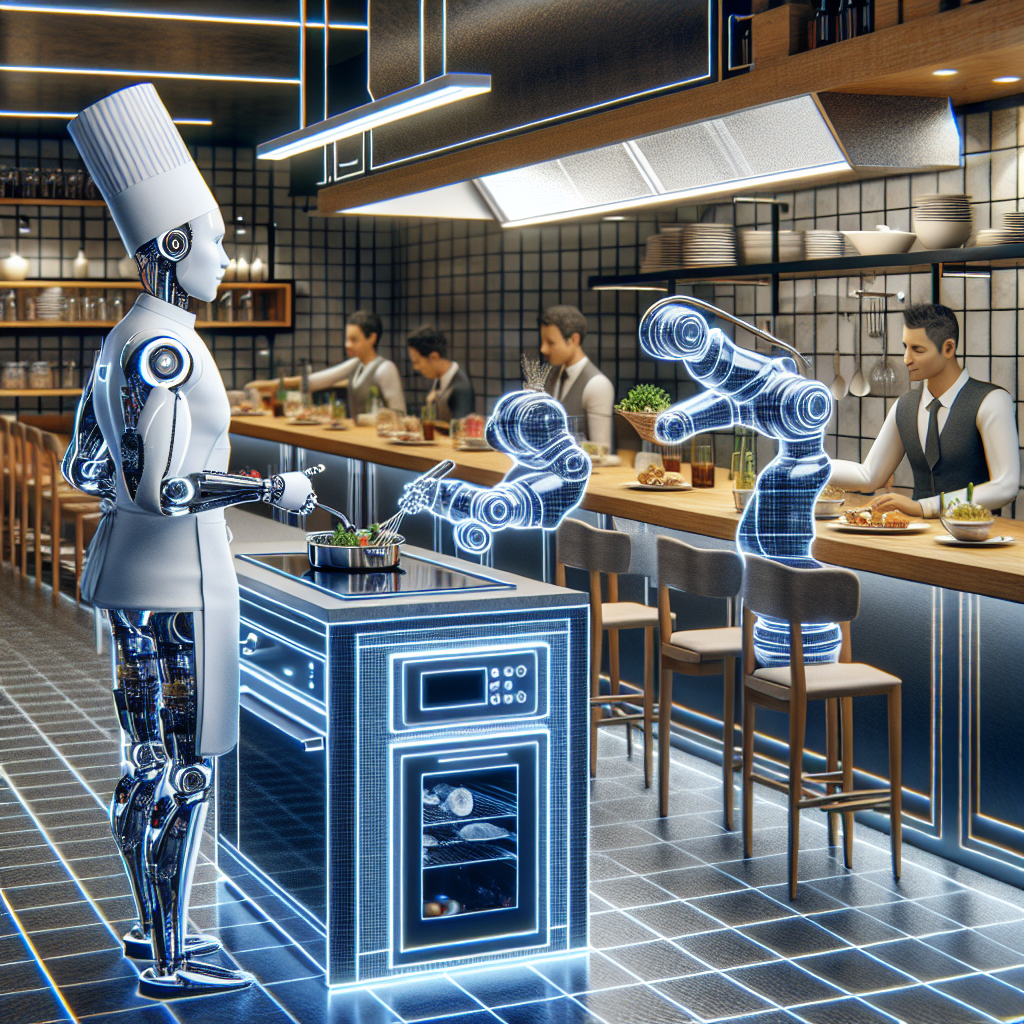
Robots can assist in food preparation, cooking, and serving in restaurants. For example, Spyce, a restaurant in Boston, uses robotic technology to prepare and cook meals, ensuring consistency and efficiency.
Entertainment
Robots can provide entertainment for guests, such as performing dances, playing music, or engaging in interactive activities. This adds a unique and memorable element to the guest experience.
Advanced Topics
The field of robotics in hospitality is continually evolving, with ongoing research and innovations driving new possibilities. Some advanced topics include:
Artificial Intelligence and Machine Learning
AI and machine learning are being used to enhance the capabilities of hospitality robots. For example, AI algorithms can enable robots to understand and respond to natural language, recognize faces, and learn from interactions with guests. This allows for more personalized and intuitive service.
Human-Robot Interaction (HRI)
Research in HRI focuses on improving the interactions between humans and robots, making them more natural and effective. This includes developing robots with human-like gestures, expressions, and communication skills, as well as designing interfaces that are easy for guests to use.
Autonomous Navigation
Advancements in autonomous navigation technology enable robots to move around hotels and restaurants safely and efficiently. This involves the use of sensors, cameras, and mapping algorithms to navigate complex environments and avoid obstacles.
Collaborative Robots (Cobots)
Cobots are designed to work alongside human staff, assisting with tasks that require a combination of human judgment and robotic precision. This collaborative approach can enhance productivity and improve the overall guest experience.
Challenges and Considerations
While the integration of robotics in hospitality offers numerous benefits, it also presents several challenges and considerations:
Cost
The initial investment in robotic technology can be significant, including the cost of purchasing, installing, and maintaining robots. Hospitality businesses must weigh these costs against the potential benefits and return on investment.
Technical Limitations
Robots are still limited in their ability to perform complex tasks that require human judgment, creativity, and empathy. Ensuring that robots can effectively handle a wide range of tasks and interactions remains a challenge.
Guest Acceptance
The acceptance of robots by guests can vary, with some individuals embracing the technology and others feeling uncomfortable or skeptical. Hospitality businesses must consider guest preferences and ensure that robots enhance rather than detract from the guest experience.
Ethical and Privacy Concerns
The use of robots equipped with cameras and sensors raises concerns about privacy and data security. Hospitality businesses must implement measures to protect guest data and address ethical considerations related to surveillance and data collection.
Regulatory and Safety Issues
The deployment of robots in hospitality settings must comply with regulatory standards and safety guidelines. Ensuring that robots operate safely and do not pose risks to guests or staff is a critical consideration.
Conclusion
Robotics in hospitality represents a significant advancement in the field of engineering, offering innovative solutions to enhance guest experiences and improve operational efficiency. By leveraging automation, AI, and advanced robotics technologies, the hospitality industry can achieve new levels of service excellence and operational effectiveness. However, the successful integration of robotics in hospitality requires careful consideration of costs, technical limitations, guest acceptance, ethical concerns, and regulatory compliance. As research and innovation continue to drive advancements in this field, the future of robotics in hospitality holds exciting possibilities for transforming the way we experience and interact with hospitality services.