Mechanics of Machines in Transportation Engineering
Introduction
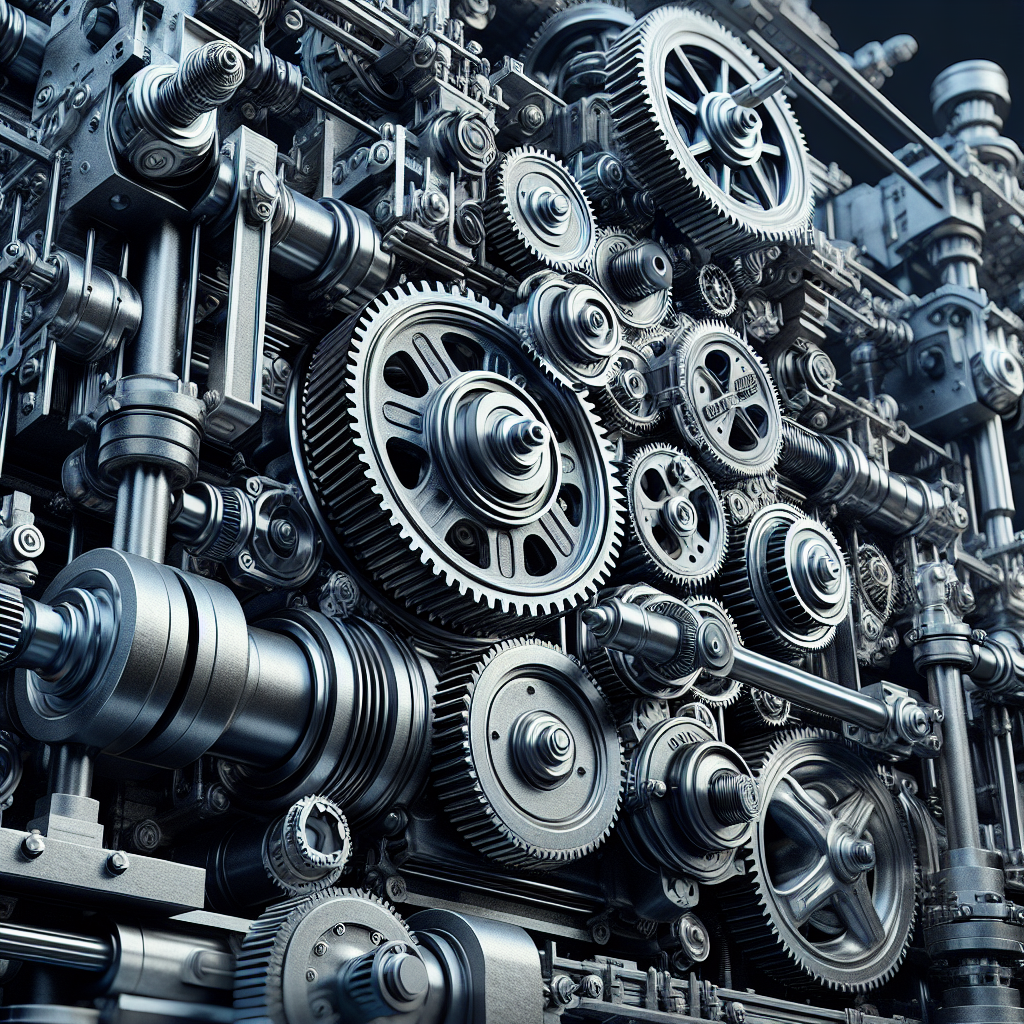
The field of Mechanics of Machines in Transportation Engineering is a cornerstone of modern engineering, playing a pivotal role in the design, analysis, and optimization of transportation systems. This discipline encompasses the study of mechanical systems and their applications in various modes of transportation, including automobiles, trains, aircraft, and ships. The importance of this field cannot be overstated, as it directly impacts the efficiency, safety, and sustainability of transportation infrastructure. By understanding the mechanics of machines, engineers can develop innovative solutions to complex transportation challenges, ultimately enhancing the quality of life for people around the world.
Fundamentals
Basic Principles and Concepts
The Mechanics of Machines in Transportation Engineering is grounded in several fundamental principles and concepts. At its core, this field involves the study of forces, motion, and energy as they pertain to mechanical systems. Key terms and definitions include:
- Force: A push or pull exerted on an object, measured in Newtons (N).
- Motion: The change in position of an object over time, described by parameters such as velocity and acceleration.
- Energy: The capacity to do work, which can exist in various forms such as kinetic, potential, and thermal energy.
- Work: The transfer of energy through force applied over a distance, measured in Joules (J).
- Power: The rate at which work is done, measured in Watts (W).
Theories and Key Terms
Several theories underpin the Mechanics of Machines in Transportation Engineering:
- Newton’s Laws of Motion: These three laws describe the relationship between the motion of an object and the forces acting on it.
- Conservation of Energy: This principle states that energy cannot be created or destroyed, only transformed from one form to another.
- Dynamics: The study of forces and their effects on motion.
- Kinematics: The study of motion without considering the forces that cause it.
- Mechanisms: Assemblies of moving parts designed to perform a specific function, such as gears, levers, and linkages.
Historical Development
The development of the Mechanics of Machines in Transportation Engineering has a rich history, marked by significant milestones and contributions from notable figures.
Early Innovations
One of the earliest known mechanical devices is the wheel, invented around 3500 BCE. The wheel revolutionized transportation by enabling the creation of carts and chariots, which facilitated the movement of goods and people over long distances.
Industrial Revolution
The Industrial Revolution (18th to 19th century) was a period of rapid technological advancement that saw the development of steam engines, which powered trains and ships. James Watt’s improvements to the steam engine in the late 18th century were particularly influential, leading to more efficient and powerful machines.
20th Century and Beyond
The 20th century witnessed the advent of internal combustion engines, which became the backbone of modern automobiles and aircraft. Pioneers like Karl Benz and Henry Ford made significant contributions to the automotive industry, while the Wright brothers’ successful flight in 1903 marked the beginning of modern aviation.
Applications
The principles of Mechanics of Machines are applied across various industries and fields, with transportation being one of the most prominent areas.
Automotive Engineering
In the automotive industry, the Mechanics of Machines is crucial for designing and optimizing engines, transmissions, suspension systems, and braking systems. For example, the development of hybrid and electric vehicles relies heavily on understanding mechanical principles to improve energy efficiency and performance.
Railway Engineering
Railway systems benefit from the application of mechanical principles in the design of locomotives, tracks, and signaling systems. High-speed trains, such as Japan’s Shinkansen and France’s TGV, are prime examples of advanced mechanical engineering in action.
Aerospace Engineering
The aerospace industry leverages the Mechanics of Machines to design aircraft and spacecraft. This includes the study of aerodynamics, propulsion systems, and structural integrity. Innovations such as jet engines and composite materials have significantly advanced the field.
Maritime Engineering
In maritime engineering, mechanical principles are applied to the design of ships and submarines. This includes the study of hydrodynamics, propulsion systems, and hull design. Modern cruise ships and naval vessels are testaments to the advancements in this field.
Advanced Topics
The field of Mechanics of Machines in Transportation Engineering continues to evolve, with ongoing research and innovations driving new advancements.
Mechatronics and Robotics
Mechatronics, the integration of mechanical, electrical, and computer engineering, is a rapidly growing field. In transportation, mechatronics is used in the development of autonomous vehicles, advanced driver-assistance systems (ADAS), and intelligent transportation systems (ITS).
Computational Mechanics
Computational mechanics involves the use of computer simulations to analyze and optimize mechanical systems. Finite element analysis (FEA) and computational fluid dynamics (CFD) are powerful tools used to model complex interactions and improve the design of transportation systems.
Sustainable Transportation
With increasing concerns about environmental impact, sustainable transportation has become a key focus. This includes the development of energy-efficient vehicles, alternative fuels, and renewable energy sources. Research in this area aims to reduce emissions and promote sustainable mobility.
Challenges and Considerations
Despite the advancements in the field, there are several challenges and considerations that engineers must address.
Safety and Reliability
Ensuring the safety and reliability of transportation systems is paramount. This involves rigorous testing, quality control, and adherence to safety standards. Engineers must also consider the potential for mechanical failures and design systems with redundancy and fail-safes.
Cost and Efficiency
Balancing cost and efficiency is a constant challenge. Engineers must design systems that are not only effective but also economically viable. This requires careful consideration of materials, manufacturing processes, and maintenance requirements.
Environmental Impact
Reducing the environmental impact of transportation systems is a critical consideration. This includes minimizing emissions, reducing energy consumption, and promoting the use of sustainable materials. Engineers must also consider the lifecycle impact of transportation systems, from production to disposal.
Regulatory Compliance
Transportation systems must comply with a myriad of regulations and standards. Engineers must stay abreast of changing regulations and ensure that their designs meet all necessary requirements. This includes safety standards, environmental regulations, and industry-specific guidelines.
Conclusion
The Mechanics of Machines in Transportation Engineering is a vital field that underpins the design and optimization of modern transportation systems. From the early innovations of the wheel and steam engine to the advanced technologies of autonomous vehicles and sustainable transportation, this field has continually evolved to meet the needs of society. By understanding the fundamental principles, historical development, practical applications, and advanced topics, engineers can develop innovative solutions to complex transportation challenges. Despite the challenges and considerations, the ongoing research and advancements in this field promise a future of safer, more efficient, and sustainable transportation systems. The importance of the Mechanics of Machines in Engineering cannot be overstated, as it continues to drive progress and improve the quality of life for people around the world.