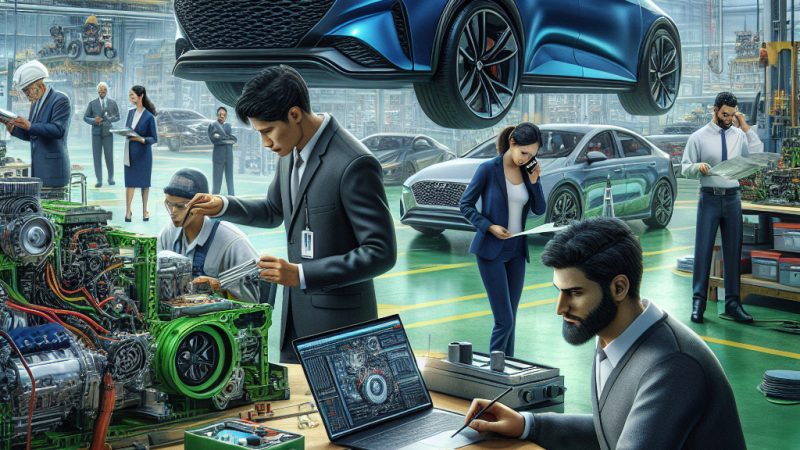
Internal Combustion Engines
Introduction
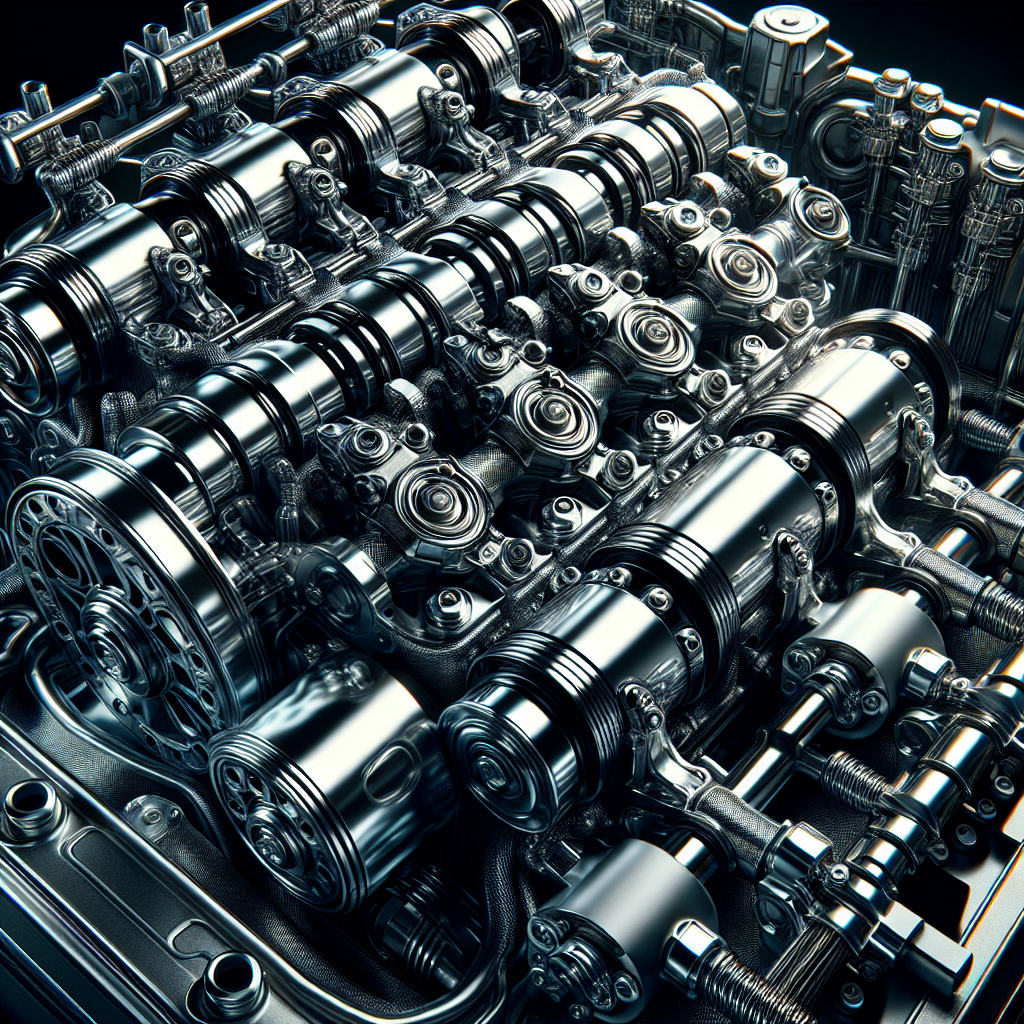
Internal Combustion Engines (ICEs) are a cornerstone of modern automotive engineering, playing a pivotal role in the development and operation of vehicles. These engines convert chemical energy stored in fuel into mechanical energy, which powers a wide range of machinery, from cars and trucks to motorcycles and boats. The importance of ICEs in engineering cannot be overstated, as they have revolutionized transportation, enabling rapid movement of goods and people, and have significantly contributed to economic growth and globalization. This article delves into the fundamentals, historical development, applications, advanced topics, challenges, and future trends of internal combustion engines in the field of automotive engineering.
Fundamentals
Basic Principles and Concepts
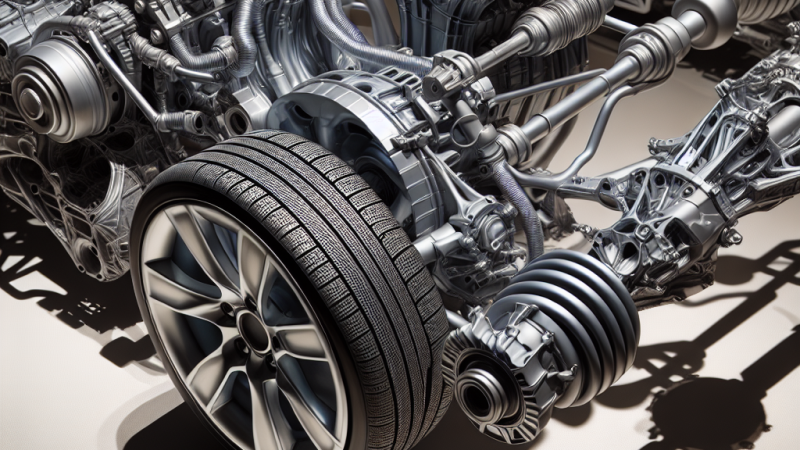
At its core, an internal combustion engine operates on the principle of converting the energy released from burning fuel into mechanical work. This process involves several key components and stages:
- Combustion Chamber: The space where the fuel-air mixture is ignited.
- Piston: A cylindrical component that moves up and down within the combustion chamber, driven by the expanding gases from combustion.
- Crankshaft: Converts the linear motion of the piston into rotational motion, which ultimately drives the vehicle’s wheels.
- Valves: Control the intake of the air-fuel mixture and the exhaust of combustion gases.
- Spark Plug: Ignites the air-fuel mixture in gasoline engines.
Key Terms
- Compression Ratio: The ratio of the volume of the combustion chamber from its largest capacity to its smallest capacity.
- Four-Stroke Cycle: The most common type of internal combustion engine cycle, consisting of intake, compression, power, and exhaust strokes.
- Thermal Efficiency: A measure of how well an engine converts the energy in fuel into useful work.
- Knocking: A phenomenon where fuel-air mixture ignites prematurely, causing a knocking sound and potential engine damage.
Historical Development
Early Innovations
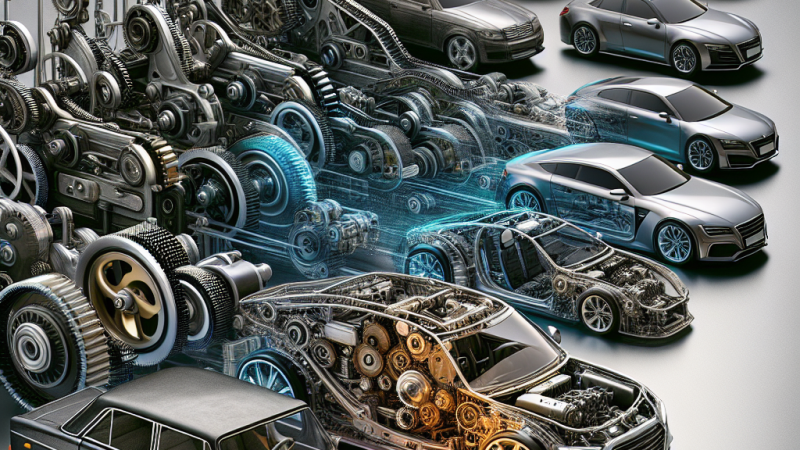
The development of internal combustion engines dates back to the 17th century, with early experiments by inventors like Christiaan Huygens and Samuel Morey. However, it was not until the 19th century that significant advancements were made. In 1860, Jean Joseph Étienne Lenoir developed the first commercially successful internal combustion engine, which ran on coal gas.
Key Milestones
- 1876: Nikolaus Otto developed the four-stroke engine, also known as the Otto cycle, which became the foundation for modern gasoline engines.
- 1885: Gottlieb Daimler and Wilhelm Maybach built the first high-speed liquid petroleum-fueled engine.
- 1892: Rudolf Diesel invented the diesel engine, which operates on a different principle than gasoline engines and is known for its higher efficiency.
- 1908: Henry Ford introduced the Model T, the first mass-produced car, which popularized the use of internal combustion engines in automobiles.
Applications
Automotive Industry
The most prominent application of internal combustion engines is in the automotive industry. ICEs power a vast majority of vehicles on the road today, including cars, trucks, motorcycles, and buses. Their ability to provide high power output and reliability makes them ideal for transportation purposes.
Aerospace and Marine Industries
Internal combustion engines are also used in the aerospace and marine industries. In aviation, they power small aircraft and helicopters, while in the marine sector, they are used in boats, ships, and submarines. The adaptability of ICEs to different fuels and operating conditions makes them versatile for various applications.
Industrial Machinery
Beyond transportation, internal combustion engines are employed in industrial machinery such as generators, pumps, and compressors. Their ability to provide consistent and reliable power output is crucial for industrial operations.
Advanced Topics
Recent Research and Innovations
Recent advancements in internal combustion engine technology focus on improving efficiency, reducing emissions, and enhancing performance. Some notable innovations include:
- Turbocharging and Supercharging: Techniques to increase the amount of air entering the combustion chamber, thereby boosting power output.
- Variable Valve Timing (VVT): Technology that optimizes the timing of valve opening and closing to improve efficiency and performance.
- Direct Fuel Injection: A method of injecting fuel directly into the combustion chamber, leading to better fuel atomization and combustion efficiency.
- Hybrid Systems: Combining internal combustion engines with electric motors to create hybrid vehicles that offer improved fuel efficiency and reduced emissions.
Future Trends
The future of internal combustion engines is likely to be shaped by ongoing research into alternative fuels, such as hydrogen and biofuels, as well as advancements in engine design and materials. The integration of digital technologies, such as advanced sensors and control systems, is expected to further enhance engine performance and efficiency.
Challenges and Considerations
Environmental Impact
One of the primary challenges associated with internal combustion engines is their environmental impact. The combustion process produces pollutants such as carbon dioxide (CO2), nitrogen oxides (NOx), and particulate matter, which contribute to air pollution and climate change. Efforts to mitigate these impacts include the development of cleaner-burning fuels, advanced emission control technologies, and stricter regulatory standards.
Efficiency Limitations
While internal combustion engines have made significant strides in efficiency, they are still limited by thermodynamic constraints. The maximum theoretical efficiency of an ICE is governed by the Carnot cycle, and real-world engines typically achieve only a fraction of this efficiency. Research into advanced materials, such as ceramics and composites, as well as novel engine designs, aims to push the boundaries of ICE efficiency.
Economic Considerations
The cost of developing and manufacturing internal combustion engines is another important consideration. While ICEs are generally more affordable than alternative powertrains, such as electric motors, the rising cost of fuel and the need for advanced emission control systems can impact their economic viability. Balancing performance, cost, and environmental impact remains a key challenge for engineers and manufacturers.
Conclusion
Internal combustion engines have been a driving force in the field of automotive engineering, enabling the development of modern transportation and industrial machinery. From their early innovations to recent advancements, ICEs have continually evolved to meet the demands of efficiency, performance, and environmental sustainability. While challenges remain, ongoing research and innovation promise to further enhance the capabilities and applications of internal combustion engines. As we look to the future, the continued relevance of ICEs in automotive engineering underscores their importance in shaping the way we move and power our world.