Experimental Methods in Mechanics of Machines
Introduction
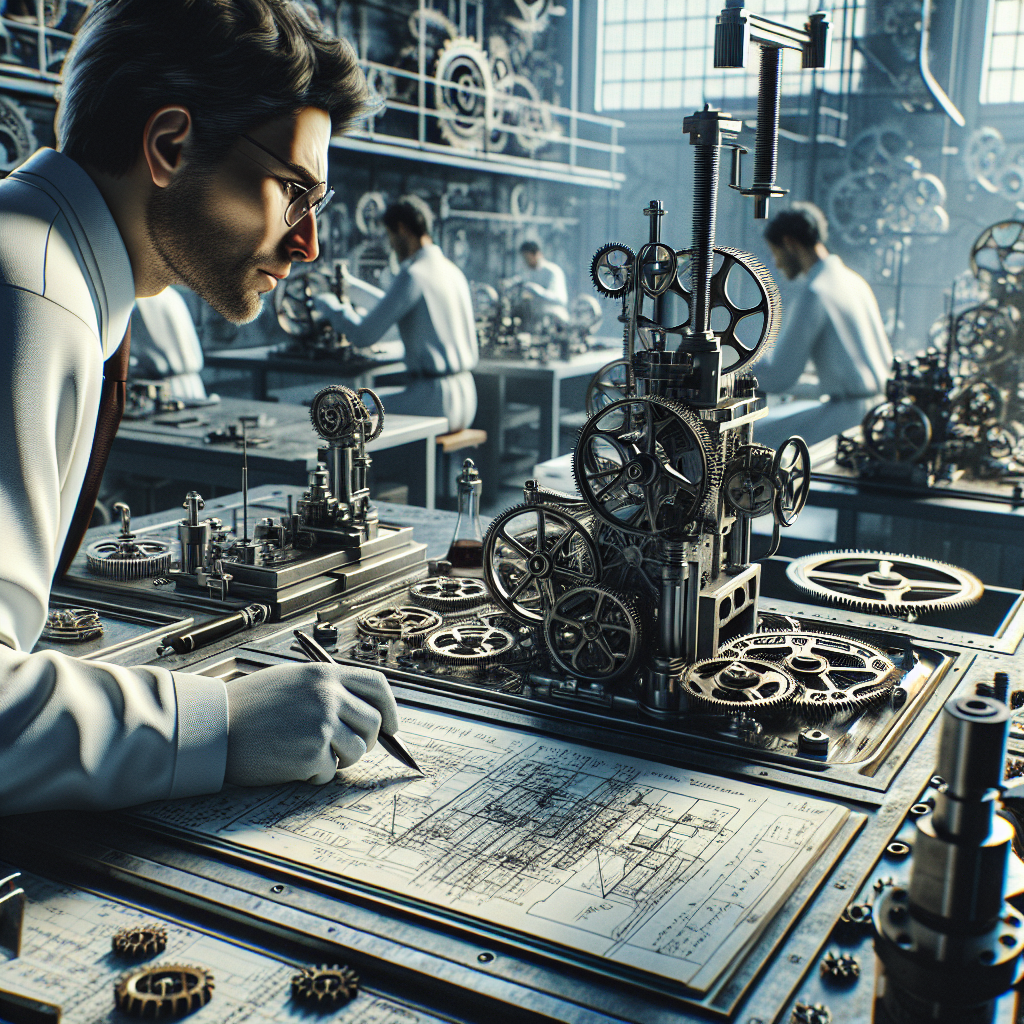
The field of Mechanics of Machines is a cornerstone of engineering, encompassing the study of mechanical systems and their behavior under various conditions. One of the critical aspects of this field is the use of experimental methods to analyze, design, and optimize machines. These methods are essential for validating theoretical models, understanding complex phenomena, and ensuring the reliability and efficiency of mechanical systems. This article delves into the importance and relevance of experimental methods in the Mechanics of Machines, providing a comprehensive overview of the fundamental principles, historical development, practical applications, advanced topics, and associated challenges.
Fundamentals
Basic Principles and Concepts
Experimental methods in the Mechanics of Machines involve the systematic investigation of mechanical systems through controlled experiments. These methods are used to measure various parameters such as force, displacement, velocity, acceleration, and stress. The primary goal is to understand the behavior of machines under different operating conditions and to validate theoretical models.
Key Terms and Definitions
- Force: A vector quantity that causes an object to undergo a change in motion.
- Displacement: The change in position of a point in a mechanical system.
- Velocity: The rate of change of displacement with respect to time.
- Acceleration: The rate of change of velocity with respect to time.
- Stress: The internal resistance offered by a material to an external force, measured in units of force per area.
- Strain: The deformation of a material in response to an applied stress.
Theories and Models
Several theories and models underpin the experimental methods in the Mechanics of Machines. These include:
- Newton’s Laws of Motion: Fundamental principles that describe the relationship between the motion of an object and the forces acting on it.
- Hooke’s Law: A principle that states that the strain in a material is proportional to the applied stress, within the elastic limit of that material.
- Euler-Bernoulli Beam Theory: A model that describes the relationship between the bending of a beam and the applied load.
- Finite Element Analysis (FEA): A numerical method used to predict how a product reacts to real-world forces, vibration, heat, and other physical effects.
Historical Development
Early Contributions
The study of mechanics dates back to ancient civilizations, with notable contributions from figures such as Archimedes and Leonardo da Vinci. Archimedes’ principles of lever and buoyancy laid the groundwork for understanding mechanical advantage and fluid mechanics. Leonardo da Vinci’s extensive studies on the mechanics of machines provided valuable insights into the design and operation of various mechanical systems.
Industrial Revolution
The Industrial Revolution marked a significant milestone in the development of experimental methods in mechanics. The invention of the steam engine by James Watt and the subsequent advancements in machinery necessitated a deeper understanding of mechanical systems. This period saw the emergence of experimental techniques to measure forces, stresses, and other parameters in machines.
Modern Era
In the 20th century, the advent of digital technology revolutionized experimental methods in mechanics. The development of sensors, data acquisition systems, and computational tools enabled more precise and comprehensive analysis of mechanical systems. Notable figures such as Stephen Timoshenko and Richard Feynman made significant contributions to the field, advancing both theoretical and experimental approaches.
Applications
Automotive Industry
Experimental methods are extensively used in the automotive industry to test and optimize vehicle components. For example, crash testing involves the use of sensors and high-speed cameras to analyze the impact forces and deformation of vehicles during collisions. This data is crucial for improving safety features and designing more resilient structures.
Aerospace Industry
In the aerospace industry, experimental methods are employed to test the performance and reliability of aircraft components. Wind tunnel testing, for instance, is used to study the aerodynamic properties of aircraft models. Strain gauges and accelerometers are used to measure the stresses and vibrations experienced by aircraft during flight.
Manufacturing Industry
Experimental methods play a vital role in the manufacturing industry for quality control and process optimization. Techniques such as tensile testing and hardness testing are used to evaluate the mechanical properties of materials. Additionally, vibration analysis is used to monitor the condition of machinery and prevent failures.
Case Studies
One notable case study involves the use of experimental methods in the design of the Boeing 787 Dreamliner. Extensive wind tunnel testing and structural analysis were conducted to optimize the aircraft’s performance and ensure its safety. Another example is the use of experimental methods in the development of Formula 1 cars, where aerodynamic testing and stress analysis are critical for achieving high performance and reliability.
Advanced Topics
Recent Research and Innovations
Recent advancements in experimental methods have focused on the integration of digital technologies and advanced materials. For instance, the use of digital image correlation (DIC) techniques allows for non-contact measurement of strain and deformation in materials. Additionally, the development of smart materials with self-sensing capabilities has opened new avenues for real-time monitoring and control of mechanical systems.
Future Trends
The future of experimental methods in the Mechanics of Machines is likely to be shaped by several emerging trends. These include the use of artificial intelligence (AI) and machine learning (ML) for data analysis and predictive modeling. The integration of Internet of Things (IoT) technologies is also expected to enhance the monitoring and control of mechanical systems. Furthermore, advancements in additive manufacturing (3D printing) are likely to revolutionize the design and testing of mechanical components.
Challenges and Considerations
Technical Challenges
One of the primary challenges in experimental methods is the accurate measurement of parameters under dynamic conditions. High-speed events such as impacts and vibrations require specialized sensors and data acquisition systems. Additionally, the complexity of mechanical systems often necessitates the use of advanced computational tools for data analysis and interpretation.
Limitations
Experimental methods are often limited by the availability of resources and the constraints of the testing environment. For example, wind tunnel testing can be expensive and time-consuming. Additionally, the results obtained from experiments may be influenced by various factors such as environmental conditions and measurement errors.
Potential Solutions
To address these challenges, researchers are exploring several potential solutions. The use of advanced sensors and data acquisition systems can improve the accuracy and reliability of measurements. Additionally, the development of hybrid experimental-computational approaches can enhance the analysis and interpretation of experimental data. Collaborative efforts between academia, industry, and government agencies are also essential for advancing the field and addressing its challenges.
Conclusion
Experimental methods in the Mechanics of Machines are indispensable for understanding, designing, and optimizing mechanical systems. These methods provide valuable insights into the behavior of machines under various conditions and are essential for validating theoretical models. The historical development of experimental methods has been marked by significant contributions from notable figures and technological advancements. Today, these methods find applications in various industries, including automotive, aerospace, and manufacturing. Recent research and innovations are driving the field forward, with emerging trends such as AI, IoT, and additive manufacturing poised to shape its future. Despite the challenges and limitations, experimental methods remain a critical aspect of engineering, contributing to the reliability, efficiency, and safety of mechanical systems.