Engineering Design of Fluid Systems
Introduction
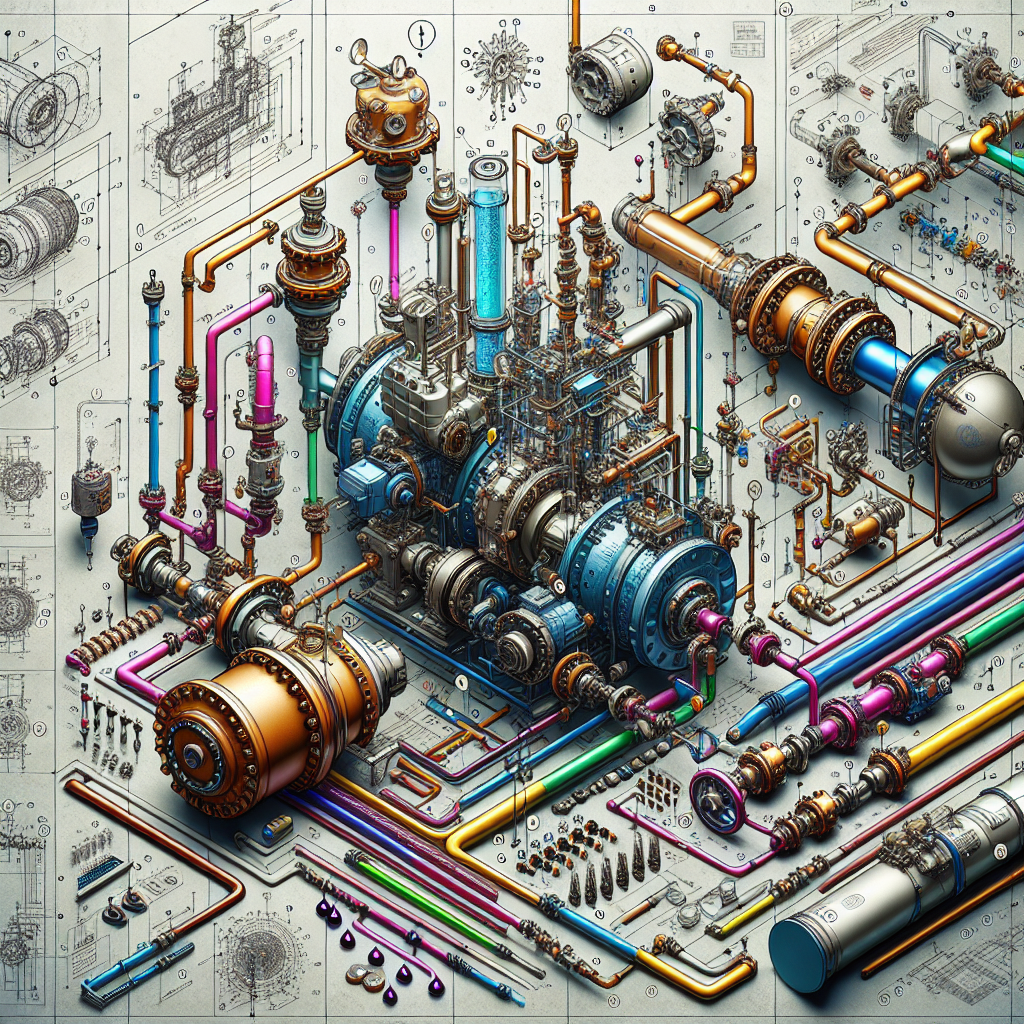
Engineering design of fluid systems is a critical aspect of engineering that involves the planning, analysis, and implementation of systems that manage and utilize fluids. These systems are integral to a wide range of industries, including aerospace, automotive, chemical processing, and water treatment. The importance of fluid systems in engineering cannot be overstated, as they are essential for the efficient and safe operation of various processes and machinery. This article delves into the fundamentals, historical development, applications, advanced topics, challenges, and considerations associated with the engineering design of fluid systems.
Fundamentals
Basic Principles and Concepts
Fluid systems encompass the study and application of fluids (liquids and gases) in motion and at rest. The fundamental principles governing fluid systems include fluid dynamics, fluid statics, and thermodynamics. Key concepts include:
- Fluid Dynamics: The study of fluids in motion, governed by the Navier-Stokes equations, which describe the behavior of fluid flow.
- Fluid Statics: The study of fluids at rest, focusing on pressure distribution within a fluid and buoyancy.
- Thermodynamics: The study of energy transfer within fluid systems, including heat transfer and work done by or on the fluid.
Key Terms
- Viscosity: A measure of a fluid’s resistance to deformation or flow.
- Reynolds Number: A dimensionless number used to predict flow patterns in different fluid flow situations.
- Bernoulli’s Principle: A principle that describes the relationship between the velocity and pressure of a fluid in motion.
- Laminar and Turbulent Flow: Types of fluid flow characterized by smooth, orderly motion (laminar) or chaotic, irregular motion (turbulent).
Historical Development
The study and application of fluid systems have a rich history, with significant contributions from various scientists and engineers over the centuries. Key milestones include:
- Archimedes (287-212 BC): Known for his work on buoyancy and the principle of displacement.
- Leonardo da Vinci (1452-1519): Conducted extensive studies on fluid flow and turbulence.
- Isaac Newton (1643-1727): Formulated the laws of motion and viscosity, laying the groundwork for fluid mechanics.
- Daniel Bernoulli (1700-1782): Developed Bernoulli’s principle, which describes the behavior of fluid flow.
- Claude-Louis Navier (1785-1836) and George Gabriel Stokes (1819-1903): Formulated the Navier-Stokes equations, which are fundamental to fluid dynamics.
These contributions have paved the way for modern advancements in the engineering design of fluid systems, enabling more efficient and effective solutions across various industries.
Applications
The engineering design of fluid systems has a wide range of practical applications in various industries. Some notable examples include:
Aerospace
In the aerospace industry, fluid systems are crucial for the design and operation of aircraft and spacecraft. Applications include fuel systems, hydraulic systems for control surfaces, and environmental control systems for maintaining cabin pressure and temperature.
Automotive
The automotive industry relies on fluid systems for engine cooling, lubrication, fuel injection, and braking systems. Proper design and maintenance of these systems are essential for vehicle performance and safety.
Chemical Processing
Fluid systems are integral to chemical processing plants, where they are used for transporting, mixing, and reacting chemicals. Examples include pipelines, reactors, and heat exchangers.
Water Treatment
In water treatment facilities, fluid systems are used for the purification, distribution, and management of water. This includes pumps, filtration systems, and distribution networks.
Case Studies
One notable case study is the design of the hydraulic system for the Airbus A380, which required innovative solutions to manage the large volume of hydraulic fluid needed for the aircraft’s control surfaces. Another example is the development of advanced cooling systems for electric vehicles, which involve complex fluid dynamics to ensure efficient heat dissipation.
Advanced Topics
Computational Fluid Dynamics (CFD)
Computational Fluid Dynamics (CFD) is an advanced technique used to simulate and analyze fluid flow using numerical methods and algorithms. CFD allows engineers to model complex fluid systems and predict their behavior under various conditions, leading to more efficient and optimized designs.
Microfluidics
Microfluidics is the study and application of fluid systems at the microscale. This field has gained significant attention in recent years due to its potential in medical diagnostics, drug delivery, and lab-on-a-chip technologies. Microfluidic devices manipulate small volumes of fluids with high precision, enabling new possibilities in biomedical engineering.
Recent Research and Innovations
Recent research in fluid systems has focused on improving efficiency, sustainability, and performance. Innovations include the development of smart fluids that change properties in response to external stimuli, advanced materials for fluid system components, and energy-efficient pumping technologies. Future trends point towards the integration of artificial intelligence and machine learning to optimize fluid system design and operation.
Challenges and Considerations
Despite the advancements in the engineering design of fluid systems, several challenges and considerations remain:
Complexity
Fluid systems can be highly complex, involving multiple interacting components and variables. Accurate modeling and analysis require sophisticated tools and expertise, making the design process challenging.
Environmental Impact
The environmental impact of fluid systems, particularly in terms of energy consumption and emissions, is a significant concern. Engineers must consider sustainability and environmental regulations when designing fluid systems.
Maintenance and Reliability
Ensuring the reliability and longevity of fluid systems is crucial, as failures can lead to costly downtime and safety hazards. Regular maintenance and monitoring are essential to prevent issues and extend the lifespan of fluid systems.
Potential Solutions
To address these challenges, ongoing research and development are focused on improving simulation tools, developing more sustainable materials and technologies, and implementing predictive maintenance strategies. Collaboration between academia, industry, and regulatory bodies is also essential to drive innovation and address emerging challenges.
Conclusion
The engineering design of fluid systems is a vital aspect of engineering that plays a crucial role in various industries. From aerospace to water treatment, fluid systems are essential for the efficient and safe operation of numerous processes and machinery. Understanding the fundamentals, historical development, applications, advanced topics, and challenges associated with fluid systems is essential for engineers to design and implement effective solutions. As technology continues to advance, the field of fluid systems engineering will continue to evolve, offering new opportunities and addressing emerging challenges. The importance of fluid systems in engineering design cannot be overstated, as they are integral to the progress and sustainability of modern society.