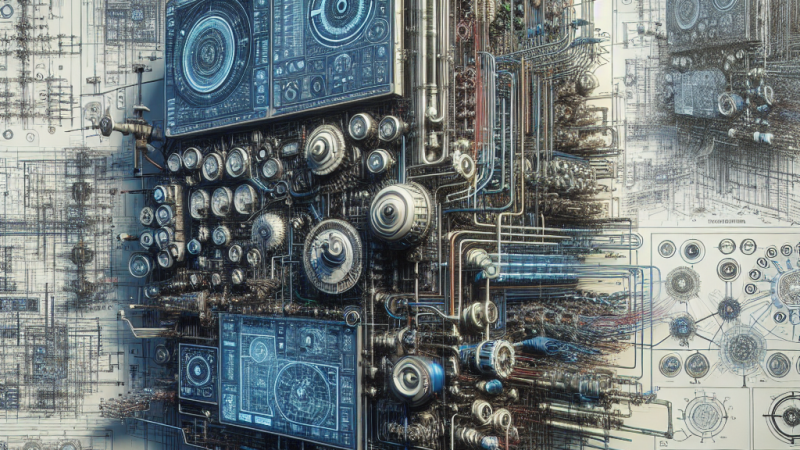
Engineering Design in Robotics
Introduction
Engineering design in robotics is a multidisciplinary field that combines principles from mechanical engineering, electrical engineering, computer science, and systems engineering to create robots capable of performing a variety of tasks. The importance of this field cannot be overstated, as robotics has become integral to numerous industries, including manufacturing, healthcare, agriculture, and even space exploration. The relevance of engineering design in robotics lies in its ability to innovate and improve the efficiency, safety, and capabilities of robotic systems, thereby transforming how tasks are performed and enhancing human life.
Fundamentals
Basic Principles and Concepts
At its core, engineering design in robotics involves the application of engineering principles to develop robots that can sense, think, and act. The fundamental concepts include:
- Mechanics: This involves the design of the robot’s physical structure, including its joints, actuators, and end-effectors. The goal is to ensure that the robot can move and interact with its environment effectively.
- Electronics: This encompasses the design of the robot’s electrical systems, including sensors, power supplies, and control circuits. These components are crucial for the robot’s ability to perceive its surroundings and execute tasks.
- Control Systems: These are algorithms and software that govern the robot’s behavior. Control systems ensure that the robot performs tasks accurately and efficiently by processing sensor data and sending commands to actuators.
- Artificial Intelligence (AI): AI techniques, such as machine learning and computer vision, enable robots to make decisions and adapt to new situations. This is particularly important for tasks that require a high degree of autonomy.
Key Terms
- Actuator: A component that converts electrical signals into physical movement.
- End-Effector: The part of the robot that interacts with the environment, such as a gripper or a tool.
- Sensor: A device that detects changes in the environment and sends this information to the robot’s control system.
- Degrees of Freedom (DoF): The number of independent movements a robot can perform.
- Autonomy: The ability of a robot to perform tasks without human intervention.
Historical Development
The field of robotics has a rich history that dates back to ancient times, but significant advancements have been made in the last century. Key milestones include:
- 1940s-1950s: The development of early autonomous machines and the first programmable robots, such as the Unimate, which was used in manufacturing.
- 1960s-1970s: The introduction of more sophisticated robots with enhanced capabilities, including the Stanford Arm and Shakey the robot, which could navigate and manipulate objects.
- 1980s-1990s: The rise of industrial robots in manufacturing, particularly in the automotive industry. This period also saw the development of mobile robots and advancements in AI.
- 2000s-Present: The proliferation of robots in various fields, including healthcare, agriculture, and space exploration. Recent advancements include collaborative robots (cobots) that work alongside humans and robots with advanced AI capabilities.
Notable figures in the field include George Devol, who invented the first industrial robot, and Joseph Engelberger, known as the “father of robotics,” who commercialized robotic technology.
Applications
Engineering design in robotics has led to numerous practical applications across various industries:
Manufacturing
Robots are extensively used in manufacturing for tasks such as assembly, welding, painting, and quality control. For example, automotive companies use robots to assemble cars with high precision and efficiency.
Healthcare
In healthcare, robots assist in surgeries, rehabilitation, and patient care. Surgical robots, like the da Vinci Surgical System, enable minimally invasive procedures with greater accuracy.
Agriculture
Agricultural robots perform tasks such as planting, harvesting, and monitoring crop health. Drones equipped with sensors can survey large fields and provide valuable data to farmers.
Space Exploration
Robots play a crucial role in space missions. NASA’s Mars rovers, such as Curiosity and Perseverance, explore the Martian surface, conduct experiments, and send data back to Earth.
Service Industry
Service robots are used in hospitality, retail, and domestic settings. Examples include robotic vacuum cleaners, customer service robots, and automated kiosks.
Advanced Topics
Recent Research and Innovations
Recent advancements in robotics include:
- Soft Robotics: The development of robots made from flexible materials that can adapt to their environment. These robots are particularly useful in delicate tasks, such as handling soft fruits or performing medical procedures.
- Swarm Robotics: The study of how large groups of robots can work together to perform complex tasks. This approach is inspired by the behavior of social insects like ants and bees.
- Human-Robot Interaction (HRI): Research focused on improving the ways humans and robots communicate and collaborate. This includes the development of intuitive interfaces and safety protocols.
- Machine Learning and AI: The integration of advanced AI techniques to enable robots to learn from experience and improve their performance over time. This is particularly important for tasks that require adaptability and decision-making.
Future Trends
The future of engineering design in robotics is likely to be shaped by several trends:
- Increased Autonomy: Robots will become more autonomous, capable of performing complex tasks with minimal human intervention.
- Enhanced Collaboration: Collaborative robots will work more seamlessly with humans, enhancing productivity and safety in various settings.
- Integration with IoT: Robots will be integrated with the Internet of Things (IoT), enabling them to communicate and coordinate with other devices and systems.
- Ethical and Social Considerations: As robots become more prevalent, there will be increased focus on ethical and social implications, including job displacement and privacy concerns.
Challenges and Considerations
Despite the advancements, there are several challenges and considerations in the field of engineering design in robotics:
Technical Challenges
- Complexity: Designing robots that can perform complex tasks reliably is a significant challenge. This requires advanced algorithms, robust hardware, and precise control systems.
- Safety: Ensuring the safety of humans working alongside robots is crucial. This involves developing fail-safe mechanisms and safety protocols.
- Energy Efficiency: Robots often require significant power to operate, which can limit their autonomy and range. Research is ongoing to develop more energy-efficient systems.
Ethical and Social Considerations
- Job Displacement: The increasing use of robots in various industries raises concerns about job displacement and the need for workforce retraining.
- Privacy: Robots equipped with sensors and cameras can collect vast amounts of data, raising privacy concerns.
- Ethical Use: Ensuring that robots are used ethically and responsibly is a critical consideration, particularly in areas like surveillance and law enforcement.
Potential Solutions
Addressing these challenges requires a multifaceted approach:
- Interdisciplinary Collaboration: Collaboration between engineers, computer scientists, ethicists, and policymakers is essential to address technical and ethical challenges.
- Regulation and Standards: Developing regulations and standards can help ensure the safe and ethical use of robots.
- Public Engagement: Engaging with the public to address concerns and educate them about the benefits and limitations of robotics is crucial.
Conclusion
Engineering design in robotics is a dynamic and rapidly evolving field that holds immense potential to transform various industries and improve human life. From manufacturing and healthcare to agriculture and space exploration, the applications of robotics are vast and varied. While there are significant challenges and considerations, ongoing research and innovation continue to push the boundaries of what is possible. As we look to the future, the importance of interdisciplinary collaboration, ethical considerations, and public engagement cannot be overstated. The field of engineering design in robotics will undoubtedly play a pivotal role in shaping the future of technology and society.