Educational Tools for Mechanics of Machines
Introduction
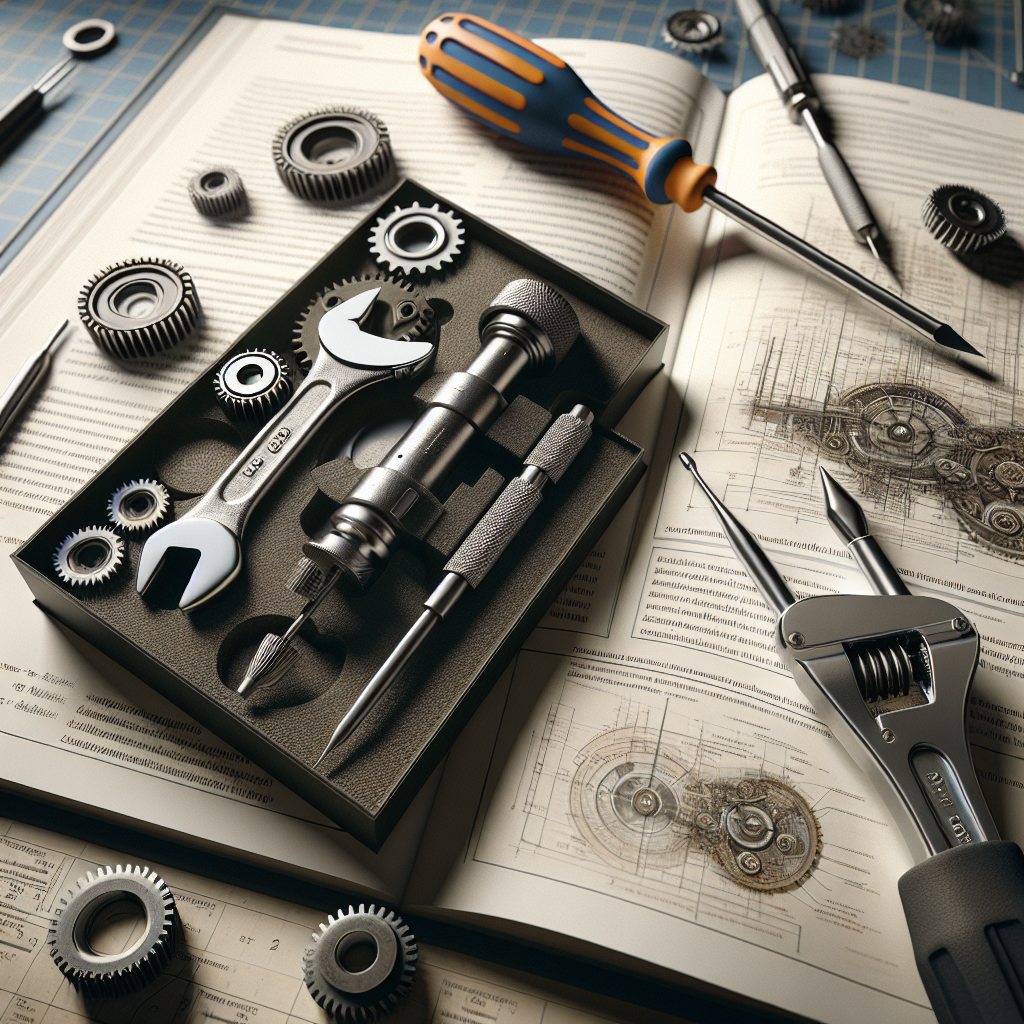
The field of Mechanics of Machines is a cornerstone of engineering, encompassing the study of mechanical systems and their motion. This discipline is crucial for designing, analyzing, and optimizing machines that are integral to various industries, from automotive to aerospace. Educational tools for Mechanics of Machines play a pivotal role in equipping engineers with the knowledge and skills necessary to innovate and improve mechanical systems. These tools range from traditional textbooks and laboratory equipment to advanced simulation software and online resources. This article delves into the importance, fundamentals, historical development, applications, advanced topics, challenges, and considerations associated with educational tools in the Mechanics of Machines.
Fundamentals
Basic Principles and Concepts
Mechanics of Machines involves the study of forces and their effects on motion. Key principles include:
- Kinematics: The study of motion without considering the forces that cause it. It involves parameters such as velocity, acceleration, and displacement.
- Kinetics: The study of forces and torques and their effect on motion. It includes concepts like Newton’s laws of motion, work, energy, and power.
- Dynamics: The study of forces and their impact on motion, combining both kinematics and kinetics.
- Statics: The study of forces in systems that are in equilibrium, where the sum of forces and moments is zero.
Key Terms and Definitions
- Linkage: A mechanical system of links connected by joints to form a closed chain or series of closed chains.
- Cam: A rotating or sliding piece in a mechanical linkage used to transform rotary motion into linear motion or vice versa.
- Gear: A rotating machine part having cut teeth that mesh with another toothed part to transmit torque.
- Flywheel: A mechanical device specifically designed to efficiently store rotational energy.
Historical Development
The study of Mechanics of Machines has a rich history, with significant contributions from various cultures and notable figures:
- Ancient Civilizations: Early machines like the lever, pulley, and wheel were developed by ancient civilizations such as the Egyptians and Greeks.
- Leonardo da Vinci (1452-1519): Da Vinci’s sketches and designs laid the groundwork for many modern machines, including gears and flywheels.
- Isaac Newton (1643-1727): Newton’s laws of motion and universal gravitation provided a theoretical foundation for the study of mechanics.
- James Watt (1736-1819): Watt’s improvements to the steam engine revolutionized mechanical engineering and industrial machinery.
- Franz Reuleaux (1829-1905): Known as the father of kinematics, Reuleaux developed the concept of the kinematic chain and contributed significantly to the study of mechanisms.
Applications
The principles of Mechanics of Machines are applied across various industries, enhancing efficiency and innovation:
Automotive Industry
Mechanics of Machines is fundamental in designing and optimizing engines, transmissions, and suspension systems. For example, the development of variable valve timing systems in modern engines relies on advanced kinematic and dynamic analysis to improve performance and fuel efficiency.
Aerospace Industry
In aerospace engineering, the study of Mechanics of Machines is crucial for designing control systems, landing gear, and propulsion systems. The development of fly-by-wire systems, which replace traditional mechanical controls with electronic interfaces, is a testament to the application of advanced mechanics principles.
Robotics
Robotics heavily relies on the principles of Mechanics of Machines for designing manipulators, actuators, and control systems. The development of robotic arms used in manufacturing and medical surgery showcases the practical application of kinematics and dynamics.
Manufacturing
In manufacturing, machines such as CNC (Computer Numerical Control) machines, conveyors, and automated assembly lines are designed using the principles of Mechanics of Machines. These machines enhance precision, efficiency, and productivity in production processes.
Advanced Topics
Recent Research and Innovations
Recent advancements in the field have led to the development of more sophisticated educational tools:
- Simulation Software: Tools like MATLAB, Simulink, and ANSYS allow for complex simulations of mechanical systems, enabling students to visualize and analyze machine behavior under various conditions.
- Virtual Labs: Online platforms provide virtual laboratory experiences, allowing students to conduct experiments and interact with mechanical systems in a simulated environment.
- 3D Printing: The advent of 3D printing technology has revolutionized prototyping and testing, enabling the rapid creation of mechanical components for educational and research purposes.
Future Trends
The future of educational tools in Mechanics of Machines is likely to be shaped by advancements in artificial intelligence (AI) and machine learning. These technologies can enhance simulation accuracy, optimize machine design, and provide personalized learning experiences for students.
Challenges and Considerations
Challenges
Despite the advancements, there are several challenges associated with educational tools in Mechanics of Machines:
- Cost: High-quality simulation software and laboratory equipment can be expensive, limiting access for some educational institutions.
- Complexity: Advanced tools may have steep learning curves, requiring significant time and effort for students and educators to master.
- Integration: Integrating new technologies into existing curricula can be challenging, requiring updates to course materials and teaching methods.
Considerations
To address these challenges, several considerations should be taken into account:
- Accessibility: Efforts should be made to develop affordable and user-friendly educational tools to ensure broad access.
- Training: Providing adequate training for educators and students can help mitigate the complexity of advanced tools.
- Curriculum Development: Updating curricula to incorporate new technologies and methodologies can enhance the learning experience and keep pace with industry advancements.
Conclusion
Educational tools for Mechanics of Machines are essential for preparing the next generation of engineers to tackle complex mechanical challenges. From understanding fundamental principles to exploring advanced topics, these tools provide invaluable resources for learning and innovation. While there are challenges associated with cost, complexity, and integration, ongoing advancements in technology and education hold promise for overcoming these obstacles. As the field continues to evolve, the importance of robust educational tools in Mechanics of Machines will only grow, driving progress and innovation in engineering.