Combined Modes of Heat Transfer: Analysis and Design
Introduction
Heat transfer is a fundamental concept in engineering, playing a crucial role in the design and analysis of various systems and processes. The study of heat transfer involves understanding how thermal energy moves from one place to another, which can occur through three primary modes: conduction, convection, and radiation. In many practical applications, these modes do not occur in isolation but rather in combination, leading to complex interactions that must be carefully analyzed and designed for optimal performance. This article delves into the topic of combined modes of heat transfer, exploring its importance, fundamental principles, historical development, practical applications, advanced topics, challenges, and considerations.
Fundamentals
Basic Principles and Concepts
Heat transfer is the process by which thermal energy is exchanged between physical systems. The three primary modes of heat transfer are:
- Conduction: The transfer of heat through a solid material or between materials in direct contact. It occurs due to the temperature gradient within the material, with heat flowing from the hotter region to the cooler region.
- Convection: The transfer of heat through a fluid (liquid or gas) due to the movement of the fluid itself. Convection can be natural (driven by buoyancy forces) or forced (driven by external means such as a pump or fan).
- Radiation: The transfer of heat in the form of electromagnetic waves, primarily in the infrared spectrum. Unlike conduction and convection, radiation does not require a medium and can occur in a vacuum.
In many engineering applications, these modes of heat transfer occur simultaneously, leading to combined modes of heat transfer. Understanding and analyzing these combined modes is essential for designing efficient thermal systems.
Key Terms
- Thermal Conductivity: A measure of a material’s ability to conduct heat.
- Heat Transfer Coefficient: A parameter used in convection to quantify the heat transfer rate per unit area per unit temperature difference.
- Emissivity: A measure of a material’s ability to emit thermal radiation.
- Thermal Resistance: The opposition to heat flow through a material or system.
Historical Development
The study of heat transfer has a rich history, with significant contributions from many notable figures:
- Joseph Fourier (1768-1830): Fourier’s work on heat conduction laid the foundation for the mathematical analysis of heat transfer. His Fourier’s Law describes the rate of heat conduction through a material.
- Isaac Newton (1643-1727): Newton’s Law of Cooling describes the rate of heat loss from a body due to convection.
- Max Planck (1858-1947): Planck’s work on blackbody radiation and quantum theory provided a deeper understanding of thermal radiation.
- Ludwig Prandtl (1875-1953): Prandtl’s boundary layer theory significantly advanced the understanding of convective heat transfer.
Over the years, advancements in computational methods and experimental techniques have furthered our understanding of combined modes of heat transfer, enabling more accurate analysis and design of thermal systems.
Applications
Combined modes of heat transfer are prevalent in various industries and fields. Some notable applications include:
Heat Exchangers
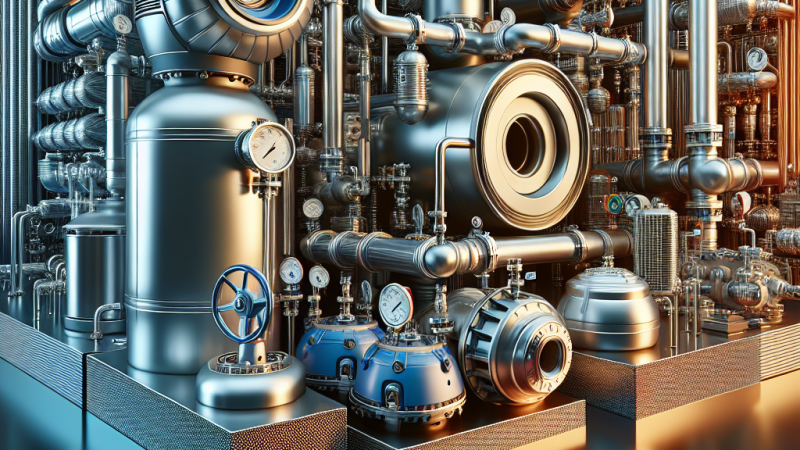
Heat exchangers are devices designed to transfer heat between two or more fluids. They are widely used in power plants, chemical processing, HVAC systems, and automotive applications. In heat exchangers, conduction, convection, and radiation often occur simultaneously, requiring careful analysis to optimize performance.
Electronic Cooling
With the increasing power density of electronic devices, efficient cooling is essential to prevent overheating and ensure reliable operation. Combined modes of heat transfer are critical in designing heat sinks, thermal interface materials, and cooling systems for electronic components.
Building Insulation
In building design, effective insulation is crucial for energy efficiency and occupant comfort. Combined modes of heat transfer must be considered when selecting insulation materials and designing building envelopes to minimize heat loss or gain.
Spacecraft Thermal Control
In the vacuum of space, radiation is the primary mode of heat transfer. However, conduction and convection also play roles within the spacecraft. Designing thermal control systems for spacecraft involves managing these combined modes to maintain optimal temperatures for instruments and equipment.
Advanced Topics
Multiphysics Simulation
Recent advancements in computational methods have enabled the development of multiphysics simulation tools that can model combined modes of heat transfer with high accuracy. These tools integrate various physical phenomena, such as fluid flow, heat transfer, and electromagnetic fields, providing a comprehensive analysis of complex thermal systems.
Nanoscale Heat Transfer
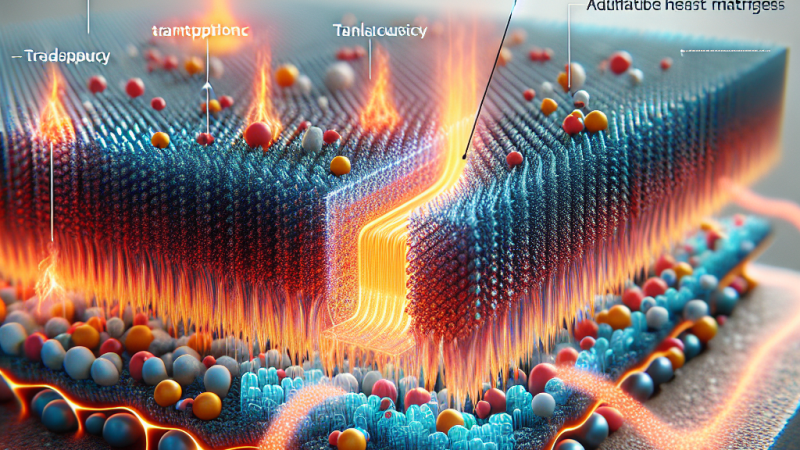
At the nanoscale, heat transfer mechanisms can differ significantly from those at the macroscale. Understanding combined modes of heat transfer at this scale is essential for developing advanced materials and devices, such as thermoelectric generators and nanoscale heat sinks.
Phase Change Materials
Phase change materials (PCMs) can absorb or release large amounts of latent heat during phase transitions. Incorporating PCMs into thermal systems can enhance heat transfer performance by leveraging combined modes of heat transfer, particularly in applications such as thermal energy storage and temperature regulation.
Challenges and Considerations
Analyzing and designing systems with combined modes of heat transfer present several challenges:
Complex Interactions
The interactions between conduction, convection, and radiation can be highly complex, making it difficult to develop accurate models and predict system behavior. Advanced computational methods and experimental techniques are often required to address these complexities.
Material Properties
The thermal properties of materials, such as thermal conductivity, heat capacity, and emissivity, can vary with temperature and other factors. Accurately characterizing these properties is essential for reliable analysis and design.
Boundary Conditions
Defining appropriate boundary conditions is critical for accurate heat transfer analysis. In many cases, boundary conditions can be uncertain or difficult to measure, leading to potential errors in predictions.
Optimization
Designing systems with combined modes of heat transfer often involves trade-offs between different performance criteria, such as efficiency, cost, and reliability. Optimization techniques are essential for finding the best design solutions that meet multiple objectives.
Conclusion
Combined modes of heat transfer are a fundamental aspect of many engineering applications, requiring a deep understanding of the interactions between conduction, convection, and radiation. This article has provided an overview of the basic principles, historical development, practical applications, advanced topics, challenges, and considerations associated with combined modes of heat transfer. As technology continues to advance, ongoing research and innovation will further enhance our ability to analyze and design efficient thermal systems, underscoring the importance of this topic in the field of Heat Transfer in Engineering.