Reliability Engineering in Heat Transfer Systems
Introduction

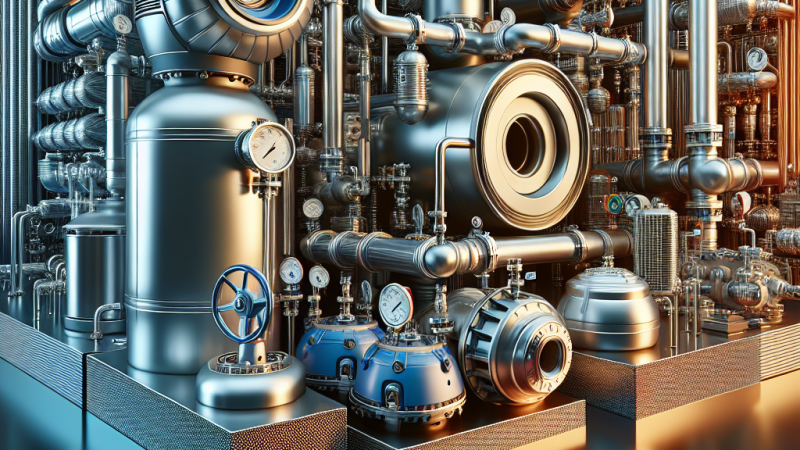
Reliability engineering in heat transfer systems is a critical aspect of engineering that ensures the efficient and safe operation of thermal systems. Heat transfer systems are integral to various industrial processes, including power generation, chemical processing, and HVAC (Heating, Ventilation, and Air Conditioning). The reliability of these systems directly impacts operational efficiency, safety, and cost-effectiveness. This article delves into the importance and relevance of reliability engineering in heat transfer systems, providing a comprehensive overview of the fundamental principles, historical development, practical applications, advanced topics, challenges, and future trends in this field.
Fundamentals
Basic Principles and Concepts
Reliability engineering focuses on ensuring that systems perform their intended functions without failure over a specified period. In the context of heat transfer systems, reliability engineering involves the application of principles and techniques to design, analyze, and maintain systems that transfer heat efficiently and safely.
Key Terms and Definitions
- Heat Transfer: The movement of thermal energy from one object or material to another.
- Reliability: The probability that a system will perform its intended function without failure for a specified period under stated conditions.
- Failure Modes and Effects Analysis (FMEA): A systematic method for evaluating processes to identify where and how they might fail and assessing the relative impact of different failures.
- Mean Time Between Failures (MTBF): A measure of how reliable a hardware product or component is, calculated as the average time between failures.
- Redundancy: The inclusion of extra components that are not strictly necessary to functioning, intended to increase reliability.
Theories and Models
Several theories and models underpin reliability engineering in heat transfer systems. These include:
- Thermodynamic Principles: The laws of thermodynamics govern the transfer of heat and energy within systems.
- Heat Exchanger Design: The design and analysis of heat exchangers, which are critical components in many heat transfer systems, are based on principles of fluid dynamics and heat transfer.
- Reliability Block Diagrams (RBD): A graphical representation of the components of a system and their reliability relationships.
Historical Development
Early Developments
The field of heat transfer has a rich history, with early contributions from scientists such as Joseph Fourier, who formulated the Fourier’s law of heat conduction in the early 19th century. The development of thermodynamics in the 19th century by figures like Sadi Carnot and Rudolf Clausius laid the groundwork for modern heat transfer theories.
Advancements in Reliability Engineering
Reliability engineering as a distinct discipline emerged in the mid-20th century, driven by the need for more reliable systems in aerospace, military, and nuclear industries. The introduction of statistical methods and reliability modeling techniques significantly advanced the field.
Key Milestones
- 1950s: The formalization of reliability engineering principles and the development of FMEA.
- 1960s: The application of reliability engineering in the aerospace industry, leading to significant advancements in reliability modeling and analysis.
- 1980s: The integration of computer-aided design (CAD) and simulation tools in reliability engineering.
- 2000s: The emergence of advanced diagnostic and prognostic techniques for real-time monitoring and maintenance of heat transfer systems.
Applications
Industrial Applications
Reliability engineering in heat transfer systems has widespread applications across various industries:
- Power Generation: Ensuring the reliability of heat exchangers, boilers, and condensers in power plants to maintain efficient energy production.
- Chemical Processing: Designing reliable heat transfer systems for reactors, distillation columns, and other process equipment to ensure consistent product quality and safety.
- HVAC Systems: Enhancing the reliability of heating and cooling systems in residential, commercial, and industrial buildings to provide comfortable and energy-efficient environments.
- Automotive Industry: Developing reliable cooling systems for engines and battery packs in electric vehicles to prevent overheating and ensure optimal performance.
Case Studies
Several case studies highlight the practical applications of reliability engineering in heat transfer systems:
- Nuclear Power Plants: The implementation of reliability-centered maintenance (RCM) strategies to enhance the reliability and safety of heat exchangers and cooling systems.
- Petrochemical Industry: The use of advanced diagnostic tools to monitor the performance of heat exchangers and identify potential failure modes before they lead to costly downtime.
- Data Centers: The design of redundant cooling systems to ensure continuous operation and prevent overheating of critical IT infrastructure.
Advanced Topics
Recent Research and Innovations
Recent advancements in reliability engineering and heat transfer systems have focused on the integration of advanced technologies and methodologies:
- Predictive Maintenance: The use of machine learning algorithms and IoT sensors to predict and prevent failures in heat transfer systems.
- Advanced Materials: The development of new materials with enhanced thermal conductivity and corrosion resistance to improve the reliability of heat exchangers.
- Simulation and Modeling: The use of computational fluid dynamics (CFD) and finite element analysis (FEA) to simulate and optimize the performance of heat transfer systems.
Future Trends
The future of reliability engineering in heat transfer systems is likely to be shaped by several emerging trends:
- Digital Twins: The creation of digital replicas of physical systems to enable real-time monitoring, analysis, and optimization.
- Artificial Intelligence: The application of AI techniques to enhance predictive maintenance and fault diagnosis in heat transfer systems.
- Sustainability: The development of eco-friendly heat transfer systems that minimize energy consumption and environmental impact.
Challenges and Considerations
Challenges
Despite the advancements in reliability engineering, several challenges remain:
- Complexity: The increasing complexity of heat transfer systems makes it challenging to accurately model and predict their behavior.
- Data Quality: The reliability of predictive maintenance techniques depends on the quality and accuracy of the data collected from sensors and monitoring devices.
- Cost: Implementing advanced reliability engineering techniques and technologies can be costly, particularly for small and medium-sized enterprises.
Potential Solutions
Addressing these challenges requires a multifaceted approach:
- Standardization: Developing standardized methodologies and best practices for reliability engineering in heat transfer systems.
- Collaboration: Encouraging collaboration between industry, academia, and research institutions to share knowledge and develop innovative solutions.
- Training and Education: Providing training and education programs to equip engineers with the skills and knowledge needed to implement advanced reliability engineering techniques.
Conclusion
Reliability engineering in heat transfer systems is a vital aspect of modern engineering that ensures the efficient, safe, and cost-effective operation of thermal systems. By understanding the fundamental principles, historical development, practical applications, advanced topics, and challenges associated with this field, engineers can develop and maintain reliable heat transfer systems that meet the demands of various industries. As technology continues to advance, the integration of predictive maintenance, advanced materials, and digital twins will further enhance the reliability and performance of heat transfer systems, contributing to a more sustainable and efficient future.