Heat Transfer in Food Processing
Introduction

Heat transfer in food processing is a critical aspect of engineering that ensures the safety, quality, and efficiency of food production. This process involves the transfer of thermal energy from one medium to another, which is essential for various food processing operations such as cooking, pasteurization, sterilization, drying, and freezing. Understanding the principles of heat transfer is vital for engineers to design and optimize food processing equipment and systems. This article delves into the importance and relevance of heat transfer in food processing, exploring its fundamentals, historical development, applications, advanced topics, challenges, and considerations.
Fundamentals
Basic Principles and Concepts
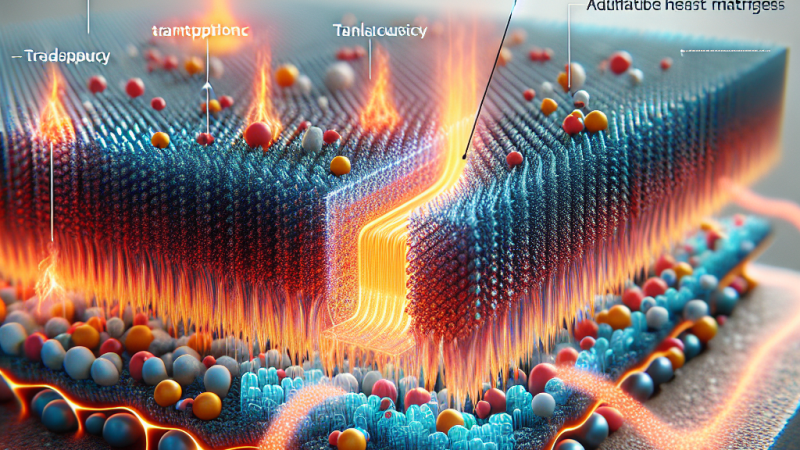
Heat transfer is the movement of thermal energy from a region of higher temperature to a region of lower temperature. In food processing, this can occur through three primary mechanisms: conduction, convection, and radiation.
- Conduction: This is the transfer of heat through a solid material without any movement of the material itself. It occurs due to the vibration and interaction of molecules within the material. An example in food processing is the heating of a metal pan on a stove.
- Convection: This involves the transfer of heat through a fluid (liquid or gas) caused by the fluid’s movement. Natural convection occurs due to density differences, while forced convection involves external forces like fans or pumps. An example is the heating of soup in a pot, where the hot liquid rises and the cooler liquid descends.
- Radiation: This is the transfer of heat through electromagnetic waves without the need for a medium. An example is the use of infrared heaters in food processing to cook or dry food products.
Key Terms
- Thermal Conductivity: A measure of a material’s ability to conduct heat.
- Heat Flux: The rate of heat energy transfer per unit area.
- Specific Heat Capacity: The amount of heat required to raise the temperature of a unit mass of a substance by one degree Celsius.
- Thermal Resistance: The opposition to heat flow through a material.
Historical Development
The study of heat transfer has a rich history, with significant contributions from various scientists and engineers. The development of heat transfer principles can be traced back to the 18th and 19th centuries.
- Joseph Fourier (1768-1830): Fourier’s work on heat conduction laid the foundation for the field. His Fourier’s Law describes the rate of heat transfer through a material.
- James Prescott Joule (1818-1889): Joule’s experiments on the mechanical equivalent of heat helped establish the relationship between heat and work, leading to the first law of thermodynamics.
- William Thomson (Lord Kelvin) (1824-1907): Kelvin’s work on thermodynamics and temperature scales contributed to the understanding of heat transfer processes.
- Max Jakob (1879-1955): Jakob made significant contributions to the study of heat transfer in fluids and the development of heat exchangers.
These pioneers and many others have paved the way for modern advancements in heat transfer, particularly in the field of food processing.
Applications
Heat transfer plays a crucial role in various food processing applications, ensuring the safety, quality, and efficiency of food products. Some key applications include:
Cooking
Cooking involves the transfer of heat to food to achieve desired sensory and nutritional qualities. Methods such as baking, frying, boiling, and grilling rely on different heat transfer mechanisms to cook food evenly and thoroughly.
Pasteurization and Sterilization
These processes involve heating food to specific temperatures to kill harmful microorganisms and extend shelf life. Pasteurization typically uses lower temperatures for a shorter time, while sterilization uses higher temperatures for a longer duration. Both processes require precise control of heat transfer to ensure food safety without compromising quality.
Drying
Drying removes moisture from food products to prevent spoilage and extend shelf life. This process involves the transfer of heat to evaporate water from the food. Techniques such as hot air drying, freeze-drying, and spray drying are commonly used in the food industry.
Freezing
Freezing involves the removal of heat from food to lower its temperature and preserve it for extended periods. This process requires efficient heat transfer to achieve rapid freezing and maintain the quality of the food.
Case Studies
One notable case study is the development of microwave ovens, which use electromagnetic radiation to heat food quickly and efficiently. Another example is the use of heat exchangers in dairy processing, where precise control of heat transfer is essential for pasteurization and homogenization.
Advanced Topics
Recent Research and Innovations
Recent advancements in heat transfer in food processing include the development of novel heating techniques and materials. Some notable innovations are:
- Ohmic Heating: This technique involves passing an electric current through food to generate heat internally. It offers rapid and uniform heating, reducing processing time and preserving food quality.
- Microwave-Assisted Thermal Sterilization (MATS): MATS combines microwave heating with conventional thermal processing to achieve rapid and uniform heating, improving the quality and safety of sterilized foods.
- Nanotechnology: The use of nanomaterials in food processing equipment can enhance heat transfer efficiency and improve the performance of heat exchangers and other thermal systems.
Future Trends
Future trends in heat transfer in food processing include the integration of smart technologies and automation. The use of sensors, data analytics, and artificial intelligence can optimize heat transfer processes, improve energy efficiency, and ensure consistent product quality.
Challenges and Considerations
Challenges
Despite advancements, several challenges remain in the field of heat transfer in food processing:
- Energy Efficiency: Achieving efficient heat transfer while minimizing energy consumption is a significant challenge. Engineers must design systems that balance energy use with processing requirements.
- Product Quality: Maintaining the sensory and nutritional qualities of food during heat processing is crucial. Overheating or uneven heating can lead to quality degradation.
- Equipment Design: Designing equipment that ensures uniform heat distribution and minimizes heat losses is essential for effective food processing.
Considerations
Engineers must consider several factors when designing and optimizing heat transfer systems in food processing:
- Material Properties: The thermal conductivity, specific heat capacity, and thermal resistance of materials used in food processing equipment affect heat transfer efficiency.
- Process Parameters: Temperature, pressure, and flow rates must be carefully controlled to achieve desired processing outcomes.
- Food Properties: The composition, moisture content, and thermal properties of food products influence heat transfer behavior and must be considered in process design.
Conclusion
Heat transfer in food processing is a vital aspect of engineering that ensures the safety, quality, and efficiency of food production. Understanding the principles of heat transfer and their applications in cooking, pasteurization, sterilization, drying, and freezing is essential for engineers in the food industry. Historical developments and recent innovations have advanced the field, offering new techniques and materials to improve heat transfer processes. However, challenges such as energy efficiency, product quality, and equipment design remain. By addressing these challenges and considering key factors, engineers can optimize heat transfer systems and contribute to the advancement of food processing technology.
In conclusion, the study of heat transfer in food processing is crucial for ensuring the safety and quality of food products. It is an interdisciplinary field that combines principles of thermodynamics, fluid mechanics, and material science to design and optimize food processing systems. As technology continues to evolve, the integration of smart technologies and automation will further enhance the efficiency and effectiveness of heat transfer processes in the food industry.