Aerodynamics in Aerospace Engineering
Introduction
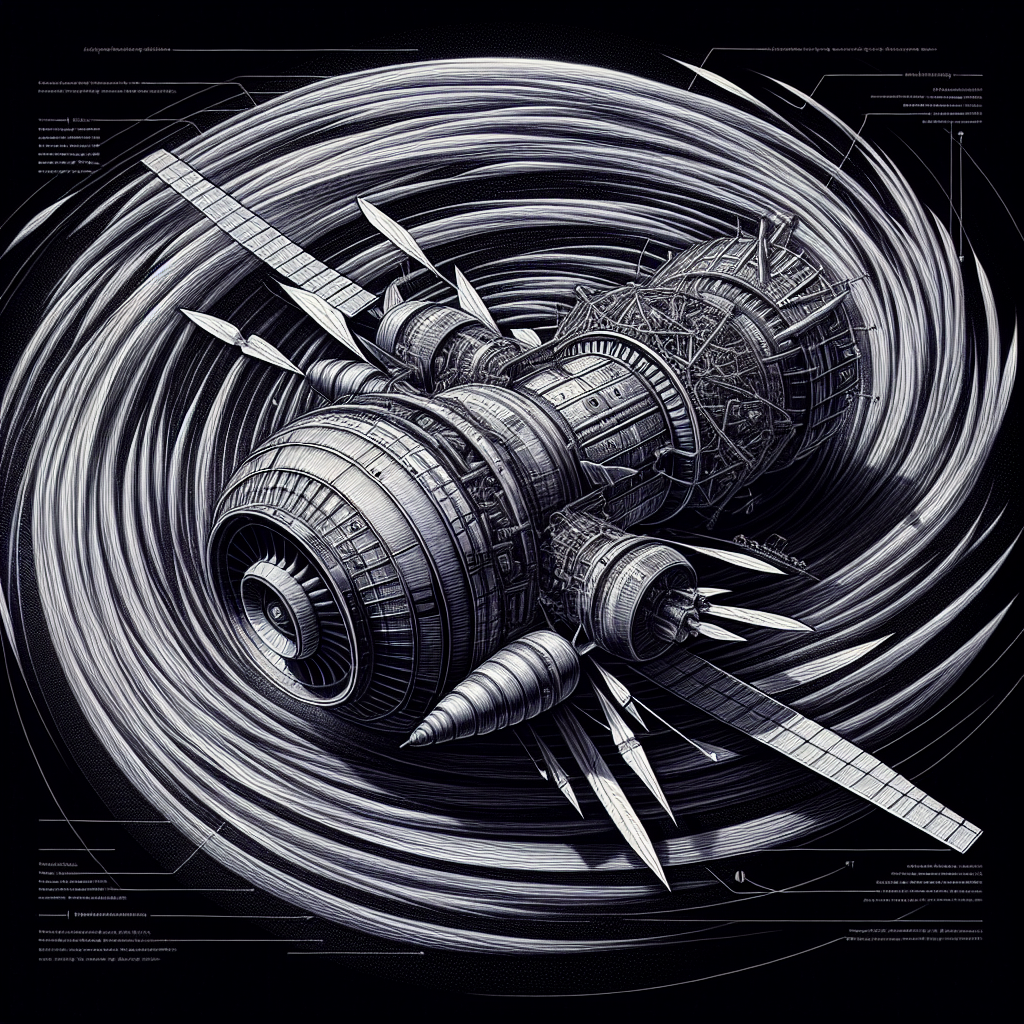
Aerodynamics is a cornerstone of Aerospace Engineering, playing a pivotal role in the design, development, and operation of aircraft and spacecraft. It involves the study of the behavior of air as it interacts with solid objects, such as wings, fuselages, and other components of an aircraft. Understanding aerodynamics is crucial for optimizing performance, enhancing safety, and improving fuel efficiency. This article delves into the importance and relevance of aerodynamics in Aerospace Engineering, exploring its fundamental principles, historical development, practical applications, advanced topics, and associated challenges.
Fundamentals
Basic Principles and Concepts
Aerodynamics is governed by several fundamental principles and concepts, which are essential for understanding how air interacts with solid objects. These include:
- Lift: The force that acts perpendicular to the relative motion of the object through the air. It is primarily generated by the pressure difference between the upper and lower surfaces of an airfoil.
- Drag: The force that opposes the relative motion of the object through the air. It is caused by friction and pressure differences.
- Thrust: The force that propels an object forward, counteracting drag. In aircraft, thrust is typically generated by engines.
- Weight: The force due to gravity acting on the mass of the object.
Theories and Key Terms
Several theories and key terms are integral to the study of aerodynamics:
- Bernoulli’s Principle: This principle states that an increase in the speed of a fluid occurs simultaneously with a decrease in pressure. It is fundamental in explaining how lift is generated.
- Reynolds Number: A dimensionless number that helps predict flow patterns in different fluid flow situations. It is used to determine whether the flow will be laminar or turbulent.
- Mach Number: The ratio of the speed of an object to the speed of sound in the surrounding medium. It is crucial for understanding supersonic and hypersonic flight.
- Angle of Attack: The angle between the chord line of an airfoil and the direction of the oncoming airflow. It significantly affects lift and drag.
Historical Development
Early Beginnings
The study of aerodynamics dates back to ancient times, with early contributions from figures like Leonardo da Vinci, who sketched designs for flying machines. However, significant progress began in the 18th and 19th centuries with the work of scientists like Sir George Cayley, who is often referred to as the “father of aerodynamics.” Cayley identified the four aerodynamic forces and built the first successful glider.
20th Century Advances
The 20th century saw rapid advancements in aerodynamics, driven by the demands of World War I and II. Notable figures like Ludwig Prandtl developed the boundary layer theory, which revolutionized the understanding of fluid flow. The development of wind tunnels and computational methods further accelerated progress.
Modern Era
In the modern era, aerodynamics has become a highly sophisticated field, with contributions from numerous researchers and engineers. The advent of computational fluid dynamics (CFD) has enabled detailed simulations of aerodynamic phenomena, leading to more efficient and innovative designs.
Applications
Aerospace Industry
The primary application of aerodynamics is in the aerospace industry, where it is essential for the design and operation of aircraft and spacecraft. Key applications include:
- Aircraft Design: Aerodynamics is crucial for designing wings, fuselages, and control surfaces to optimize performance, stability, and fuel efficiency.
- Spacecraft Re-entry: Understanding aerodynamic heating and forces is vital for designing heat shields and ensuring safe re-entry into the Earth’s atmosphere.
- Unmanned Aerial Vehicles (UAVs): Aerodynamics plays a significant role in the design and operation of drones, affecting their range, endurance, and maneuverability.
Automotive Industry
Aerodynamics is also critical in the automotive industry, where it influences the design of vehicles to reduce drag and improve fuel efficiency. High-performance cars, in particular, rely on aerodynamic principles to enhance speed and stability.
Wind Energy
In the field of renewable energy, aerodynamics is essential for the design of wind turbines. Understanding the aerodynamic forces on turbine blades helps optimize their efficiency and energy output.
Sports Engineering
Aerodynamics is applied in sports engineering to improve the performance of athletes and equipment. Examples include the design of streamlined bicycles, helmets, and even golf balls to reduce drag and enhance performance.
Advanced Topics
Computational Fluid Dynamics (CFD)
CFD is a powerful tool that uses numerical methods and algorithms to solve and analyze problems involving fluid flows. It allows engineers to simulate complex aerodynamic phenomena, leading to more accurate predictions and optimized designs.
Supersonic and Hypersonic Flight
Supersonic and hypersonic flight involve speeds greater than the speed of sound. These regimes present unique aerodynamic challenges, such as shock waves and high-temperature effects. Recent research focuses on developing materials and designs to withstand these extreme conditions.
Bio-inspired Aerodynamics
Bio-inspired aerodynamics involves studying the flight mechanisms of birds, insects, and other natural flyers to develop innovative designs. This field has led to advancements in micro air vehicles (MAVs) and other small-scale flying devices.
Flow Control Techniques
Advanced flow control techniques aim to manipulate airflow to reduce drag, increase lift, or delay flow separation. These techniques include active methods like synthetic jets and passive methods like vortex generators.
Challenges and Considerations
Complexity of Fluid Dynamics
One of the primary challenges in aerodynamics is the inherent complexity of fluid dynamics. Accurately predicting and controlling airflow requires sophisticated models and simulations, which can be computationally intensive.
Environmental Impact
The environmental impact of aerodynamic designs is a growing concern. Engineers must balance performance improvements with considerations for noise reduction, emissions, and sustainability.
Material Limitations
The materials used in aerodynamic applications must withstand extreme conditions, such as high temperatures and pressures. Developing materials that meet these requirements while remaining lightweight and cost-effective is a significant challenge.
Regulatory Constraints
Aerodynamic designs must comply with stringent regulatory standards to ensure safety and performance. Navigating these regulations can be complex and time-consuming.
Potential Solutions and Future Research
Ongoing research aims to address these challenges through innovations in materials science, advanced simulation techniques, and interdisciplinary collaboration. Future trends include the development of more efficient propulsion systems, sustainable aviation technologies, and autonomous flight systems.
Conclusion
Aerodynamics is a fundamental aspect of Aerospace Engineering, with wide-ranging applications and significant implications for the design and operation of aircraft, spacecraft, and other vehicles. Understanding the basic principles, historical development, and advanced topics in aerodynamics is essential for engineers to innovate and optimize performance. Despite the challenges, ongoing research and technological advancements continue to push the boundaries of what is possible, making aerodynamics a dynamic and exciting field within Aerospace Engineering.