Fundamentals of Aerospace Engineering
Introduction

Aerospace Engineering is a multidisciplinary field that encompasses the design, development, testing, and production of aircraft, spacecraft, and related systems and equipment. It is a branch of engineering that has significantly contributed to advancements in transportation, defense, and space exploration. The importance of Aerospace Engineering cannot be overstated, as it plays a crucial role in enhancing our understanding of the universe, improving global connectivity, and ensuring national security. This article delves into the fundamentals of Aerospace Engineering, exploring its basic principles, historical development, practical applications, advanced topics, and the challenges it faces.
Fundamentals
Basic Principles and Concepts
Aerospace Engineering is grounded in several fundamental principles and concepts that are essential for the design and operation of aircraft and spacecraft. These include:
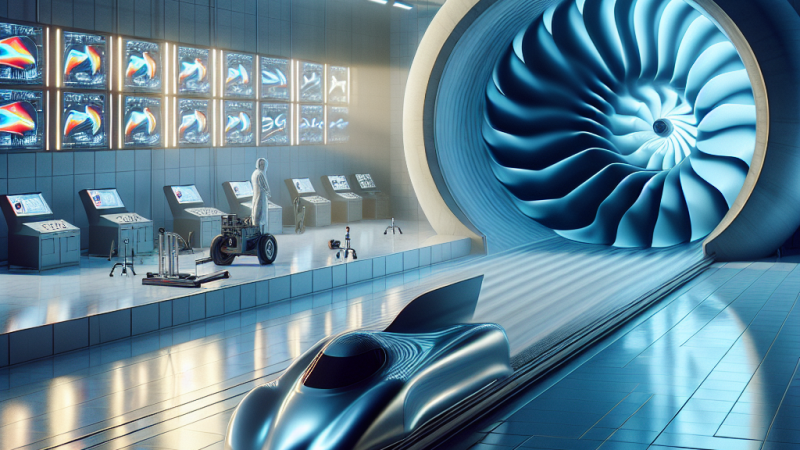
- Aerodynamics: The study of the behavior of air as it interacts with solid objects, such as an aircraft wing. Key concepts include lift, drag, and thrust.
- Propulsion: The mechanisms by which aircraft and spacecraft are moved forward. This includes jet engines, rocket engines, and other propulsion systems.
- Structures and Materials: The study of the physical properties of materials and their behavior under various conditions. This includes the design of lightweight, strong structures that can withstand the stresses of flight.
- Flight Mechanics: The study of the forces and moments acting on an aircraft or spacecraft and the resulting motion. This includes stability, control, and performance analysis.
- Avionics: The electronic systems used in aviation, including navigation, communication, and control systems.
Key Terms
- Lift: The force that directly opposes the weight of an aircraft and holds it in the air.
- Drag: The resistance force caused by the motion of an object through a fluid (air or water).
- Thrust: The force that propels an aircraft or spacecraft forward.
- Stability: The ability of an aircraft to maintain its flight path without constant control input.
- Control Surfaces: Movable surfaces on an aircraft, such as ailerons, elevators, and rudders, used to control its attitude and flight path.
Historical Development
The history of Aerospace Engineering is rich with innovation and discovery. Key milestones include:
- Early Flight: The Wright brothers’ first powered flight in 1903 marked the beginning of modern aviation.
- World War I and II: These periods saw rapid advancements in aircraft technology, including the development of faster, more maneuverable fighter planes and long-range bombers.
- Jet Age: The introduction of jet engines in the 1940s revolutionized air travel, making it faster and more efficient.
- Space Race: The competition between the United States and the Soviet Union in the 1950s and 1960s led to significant advancements in rocket technology and space exploration, culminating in the Apollo moon landings.
- Modern Era: Recent decades have seen the development of advanced materials, unmanned aerial vehicles (UAVs), and reusable spacecraft, such as SpaceX’s Falcon 9.
Notable figures in the field include:
- Orville and Wilbur Wright: Pioneers of powered flight.
- Robert H. Goddard: Known as the father of modern rocketry.
- Wernher von Braun: A key figure in the development of rocket technology and space exploration.
- Neil Armstrong: The first human to set foot on the moon.
Applications
Aerospace Engineering has a wide range of practical applications across various industries:
Commercial Aviation
The design and production of commercial aircraft, such as the Boeing 737 and Airbus A320, are central to the field. These aircraft are used for passenger and cargo transport, connecting people and goods across the globe.
Military Aviation
Aerospace Engineering plays a crucial role in the development of military aircraft, including fighter jets, bombers, and reconnaissance planes. These aircraft are essential for national defense and security.
Space Exploration
The design and development of spacecraft, such as the Space Shuttle, Mars rovers, and satellites, are key applications of Aerospace Engineering. These missions enhance our understanding of the universe and enable technologies like GPS and satellite communication.
Unmanned Aerial Vehicles (UAVs)
UAVs, or drones, are used in various applications, including surveillance, agriculture, and disaster response. Aerospace engineers design these systems to be efficient, reliable, and capable of performing complex tasks autonomously.
Case Studies
One notable case study is the development of the Boeing 787 Dreamliner. This aircraft incorporates advanced materials, such as carbon-fiber-reinforced polymer, to reduce weight and improve fuel efficiency. Another example is the Mars Curiosity Rover, which was designed to explore the Martian surface and conduct scientific experiments, providing valuable data about the planet’s geology and climate.
Advanced Topics
Recent Research and Innovations
Recent advancements in Aerospace Engineering include:
- Hypersonic Flight: Research into aircraft capable of traveling at speeds greater than Mach 5, which could revolutionize air travel and military applications.
- Electric Propulsion: The development of electric and hybrid-electric aircraft to reduce emissions and improve efficiency.
- Reusable Spacecraft: Innovations like SpaceX’s Falcon 9 and Starship aim to reduce the cost of space travel by making spacecraft reusable.
- Advanced Materials: The use of new materials, such as graphene and advanced composites, to improve the performance and durability of aerospace structures.
Future Trends
The future of Aerospace Engineering is likely to be shaped by several trends:
- Urban Air Mobility: The development of electric vertical takeoff and landing (eVTOL) aircraft for urban transportation.
- Space Tourism: Companies like Blue Origin and Virgin Galactic are working to make space travel accessible to private individuals.
- Artificial Intelligence: The integration of AI and machine learning to improve the design, operation, and maintenance of aerospace systems.
Challenges and Considerations
Aerospace Engineering faces several challenges and considerations:
Technical Challenges
Designing and building aircraft and spacecraft that are safe, reliable, and efficient is inherently complex. Engineers must consider factors such as aerodynamics, structural integrity, propulsion, and avionics, often working with cutting-edge technologies and materials.
Environmental Impact
The aerospace industry is a significant contributor to greenhouse gas emissions. Developing more sustainable technologies, such as electric propulsion and biofuels, is a critical challenge for the field.
Regulatory and Safety Considerations
Aerospace engineers must navigate a complex regulatory environment to ensure that their designs meet stringent safety standards. This includes compliance with organizations like the Federal Aviation Administration (FAA) and the European Union Aviation Safety Agency (EASA).
Potential Solutions
Addressing these challenges requires ongoing research and innovation. Potential solutions include:
- Investing in Research: Continued investment in research and development to advance technologies and materials.
- Collaboration: Collaboration between industry, academia, and government to address regulatory and environmental challenges.
- Education and Training: Ensuring that the next generation of aerospace engineers is well-equipped with the knowledge and skills needed to tackle future challenges.
Conclusion
The field of Aerospace Engineering is a dynamic and essential discipline within engineering, driving advancements in aviation, space exploration, and defense. By understanding its fundamental principles, historical development, practical applications, advanced topics, and the challenges it faces, we can appreciate the critical role it plays in shaping our world. As technology continues to evolve, Aerospace Engineering will undoubtedly remain at the forefront of innovation, pushing the boundaries of what is possible and inspiring future generations of engineers.