
Robotics in Renewable Energy
Introduction
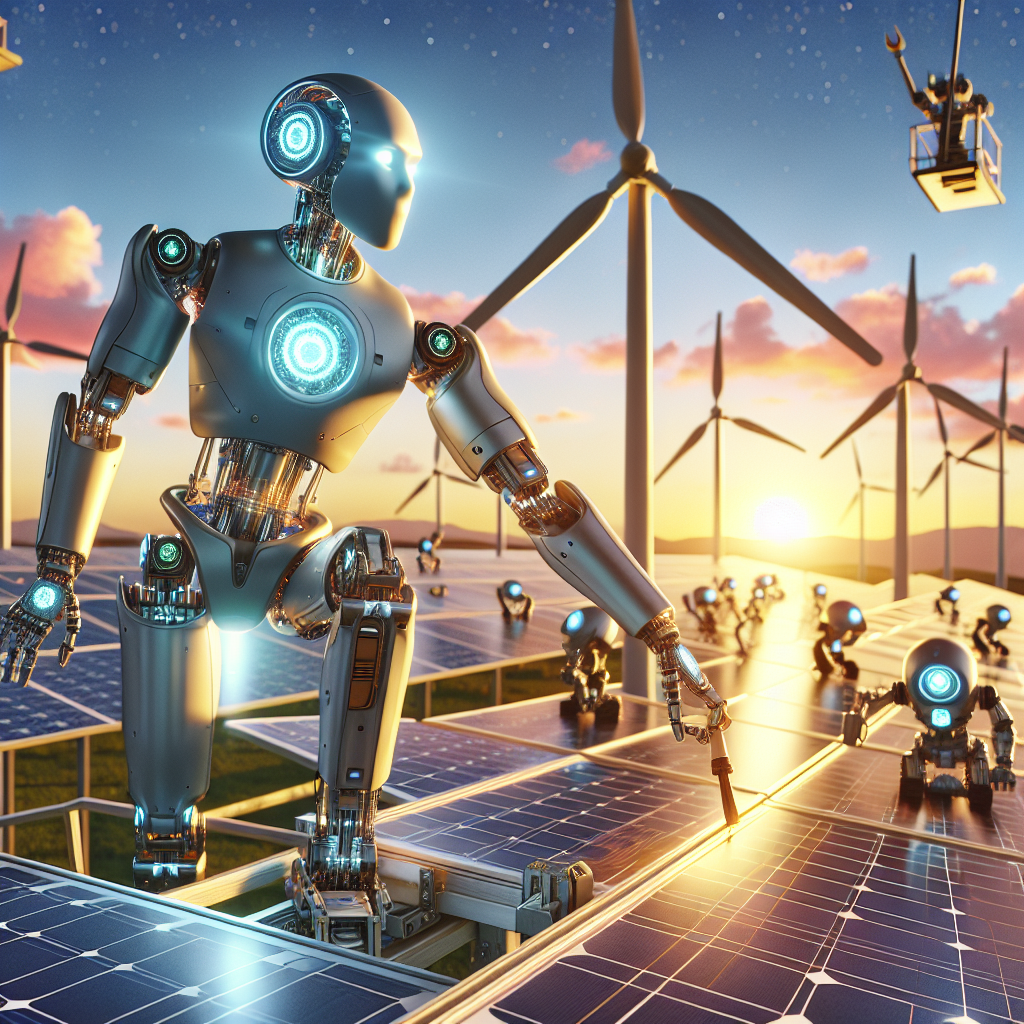
Robotics in renewable energy represents a convergence of two transformative fields in engineering. As the world grapples with the dual challenges of climate change and energy security, the integration of robotics into renewable energy systems offers promising solutions. This article delves into the significance of robotics in renewable energy, exploring its fundamental principles, historical development, practical applications, advanced topics, and the challenges it faces. By understanding these aspects, we can appreciate the role of robotics in advancing sustainable energy solutions and its broader impact on engineering.
Fundamentals
Basic Principles and Concepts
Robotics in renewable energy involves the use of automated systems and machines to enhance the efficiency, reliability, and scalability of renewable energy technologies. Key principles include:
- Automation: The use of robots to perform tasks without human intervention, increasing efficiency and reducing human error.
- Artificial Intelligence (AI): The application of AI algorithms to optimize the performance of renewable energy systems, such as predicting energy output and managing energy storage.
- Machine Learning: A subset of AI that enables robots to learn from data and improve their performance over time.
- Sensor Integration: The use of sensors to collect data on environmental conditions, energy production, and system performance, which is then used to inform robotic actions.
Key Terms
- Photovoltaic (PV) Systems: Solar power systems that convert sunlight into electricity using semiconductor materials.
- Wind Turbines: Devices that convert kinetic energy from wind into mechanical power, which is then converted into electricity.
- Energy Storage: Technologies that store energy for later use, such as batteries and pumped hydro storage.
- Autonomous Robots: Robots capable of performing tasks without human intervention, often using AI and machine learning.
Historical Development
Early Innovations
The integration of robotics into renewable energy began in the late 20th century, driven by the need for more efficient and reliable energy systems. Early innovations focused on automating maintenance tasks for solar panels and wind turbines. For example, in the 1990s, researchers developed robotic systems for cleaning and inspecting solar panels, which significantly improved their efficiency and lifespan.
Key Milestones
- 1990s: Development of robotic systems for solar panel maintenance and wind turbine inspection.
- 2000s: Introduction of AI and machine learning algorithms to optimize energy production and storage.
- 2010s: Advances in sensor technology and data analytics, enabling more sophisticated robotic systems for renewable energy applications.
- 2020s: Emergence of fully autonomous robots capable of performing complex tasks in renewable energy systems, such as predictive maintenance and real-time optimization.
Applications
Solar Energy
In the solar energy sector, robotics plays a crucial role in enhancing the efficiency and reliability of photovoltaic (PV) systems. Robotic systems are used for:
- Cleaning: Autonomous robots equipped with brushes and water jets clean solar panels, removing dust and debris that can reduce their efficiency.
- Inspection: Drones and ground-based robots equipped with cameras and sensors inspect solar panels for damage and defects, enabling timely maintenance and repairs.
- Installation: Robotic systems assist in the installation of solar panels, reducing labor costs and improving installation speed and accuracy.
Wind Energy
In the wind energy sector, robotics is used to improve the maintenance and operation of wind turbines. Applications include:
- Inspection: Drones equipped with high-resolution cameras and sensors inspect wind turbine blades for damage and wear, reducing the need for manual inspections.
- Maintenance: Autonomous robots perform maintenance tasks such as cleaning and repairing turbine blades, reducing downtime and improving efficiency.
- Monitoring: Sensor-equipped robots monitor the performance of wind turbines in real-time, enabling predictive maintenance and optimizing energy production.
Energy Storage
Robotics also plays a role in the management and optimization of energy storage systems. Applications include:
- Battery Management: AI-powered robots monitor and manage battery storage systems, optimizing charging and discharging cycles to extend battery life and improve efficiency.
- Grid Integration: Robotic systems assist in integrating energy storage with the grid, ensuring a stable and reliable supply of renewable energy.
Advanced Topics
Recent Research and Innovations
Recent research in robotics and renewable energy has focused on developing more advanced and autonomous systems. Innovations include:
- Swarm Robotics: The use of multiple robots working together to perform complex tasks, such as large-scale solar panel cleaning and wind turbine maintenance.
- AI-Driven Optimization: The application of advanced AI algorithms to optimize the performance of renewable energy systems in real-time, improving efficiency and reducing costs.
- Robotic Fabrication: The use of robots to manufacture and assemble renewable energy components, such as solar panels and wind turbine blades, with greater precision and efficiency.
Future Trends
Future trends in robotics and renewable energy include:
- Increased Autonomy: The development of fully autonomous robots capable of performing complex tasks without human intervention.
- Integration with Smart Grids: The integration of robotic systems with smart grids to optimize energy production, storage, and distribution.
- Advanced Materials: The use of advanced materials, such as lightweight composites and nanomaterials, to improve the performance and durability of robotic systems.
Challenges and Considerations
Technical Challenges
Despite the potential benefits, the integration of robotics into renewable energy systems faces several technical challenges:
- Complexity: The complexity of designing and implementing robotic systems that can operate in diverse and challenging environments.
- Cost: The high cost of developing and deploying advanced robotic systems, which can be a barrier for widespread adoption.
- Reliability: Ensuring the reliability and robustness of robotic systems, particularly in harsh environmental conditions.
Potential Solutions
To address these challenges, researchers and engineers are exploring several potential solutions:
- Standardization: Developing standardized protocols and interfaces for robotic systems to improve interoperability and reduce costs.
- Collaboration: Encouraging collaboration between industry, academia, and government to share knowledge and resources.
- Innovation: Investing in research and development to drive innovation and reduce the cost of robotic systems.
Conclusion
Robotics in renewable energy represents a promising frontier in the field of engineering. By leveraging advanced technologies such as AI, machine learning, and sensor integration, robotic systems can enhance the efficiency, reliability, and scalability of renewable energy technologies. While there are challenges to overcome, ongoing research and innovation are paving the way for more advanced and autonomous systems. As the world continues to transition towards sustainable energy solutions, the role of robotics in renewable energy will become increasingly important, driving progress and shaping the future of engineering.