Robotics in Food Industry
Introduction
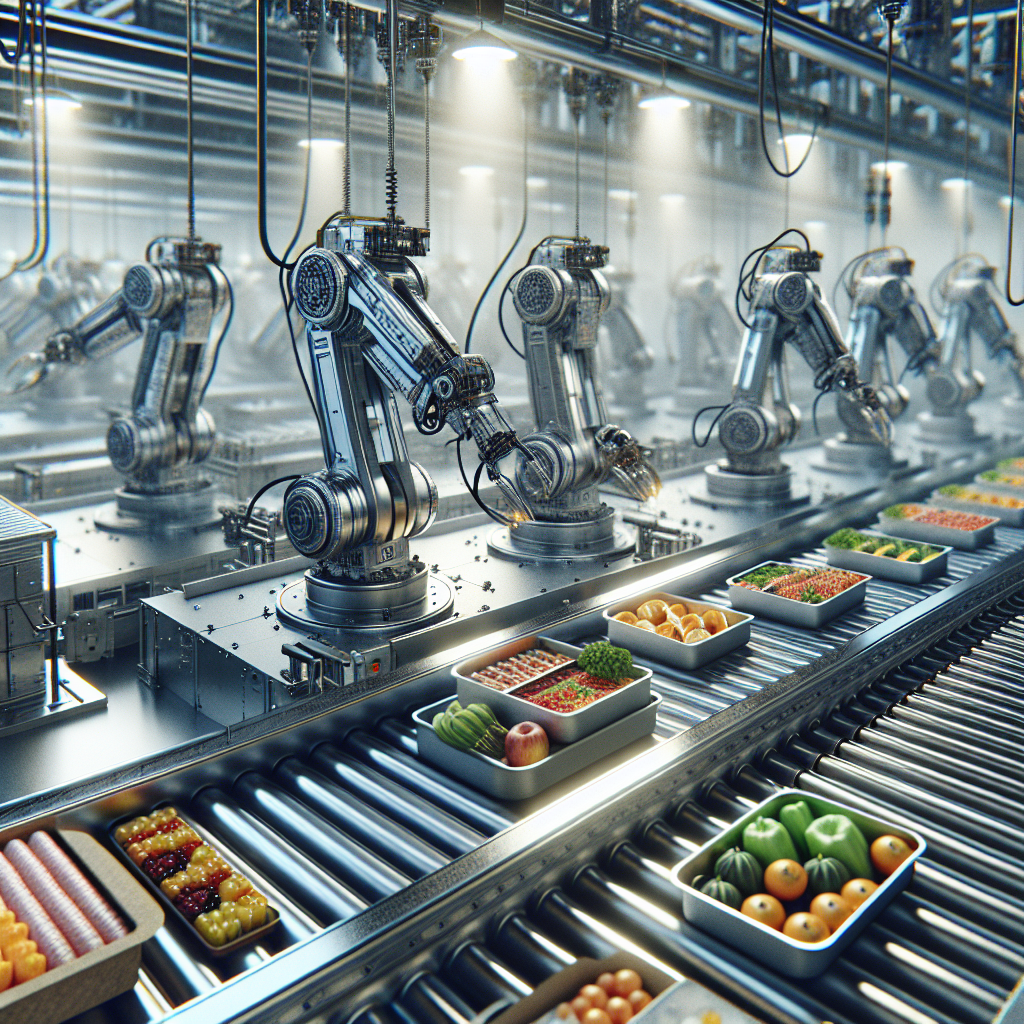
Robotics in the food industry represents a transformative shift in how food is produced, processed, and delivered. This integration of robotics into food production processes is not only enhancing efficiency and productivity but also ensuring higher standards of hygiene and safety. The relevance of robotics in the food industry is underscored by the increasing demand for automation to meet the growing global food requirements. In the field of engineering, this topic is of paramount importance as it combines principles of mechanical, electrical, and software engineering to create sophisticated systems that can handle complex tasks traditionally performed by humans.
Fundamentals
Basic Principles and Concepts
Robotics in the food industry involves the use of automated machines and systems to perform tasks such as sorting, packaging, cooking, and quality control. The fundamental principles include:
- Automation: The use of control systems to operate equipment with minimal or no human intervention.
- Artificial Intelligence (AI): The simulation of human intelligence in machines that are programmed to think and learn.
- Machine Learning: A subset of AI that involves the use of algorithms and statistical models to enable machines to improve their performance on tasks through experience.
- Sensors and Actuators: Devices that detect changes in the environment and perform actions in response, respectively.
- Robotic Manipulators: Mechanical devices used to interact with objects, often mimicking the movements of a human arm.
Key Terms
- End Effector: The component of a robot that interacts with the environment, such as a gripper or a tool.
- Collaborative Robots (Cobots): Robots designed to work alongside humans in a shared workspace.
- Vision Systems: Technology that allows robots to process visual information from cameras to make decisions.
- Automation Control Systems: Systems that manage the operation of machinery and processes in an automated environment.
Historical Development
The journey of robotics in the food industry can be traced back to the early 20th century when the first automated machines were introduced in food processing plants. However, significant advancements began in the latter half of the century with the advent of computer technology and AI.
Key Milestones
- 1961: The introduction of the first industrial robot, Unimate, which was used in a General Motors assembly line.
- 1980s: The development of more sophisticated robotic systems capable of performing complex tasks such as packaging and palletizing.
- 1990s: The integration of vision systems and AI, allowing robots to perform tasks with greater precision and adaptability.
- 2000s: The rise of collaborative robots (cobots) that can safely work alongside human workers.
- 2010s: The proliferation of machine learning and AI, leading to smarter and more autonomous robotic systems.
Notable Figures
- George Devol: Inventor of the first industrial robot, Unimate.
- Joseph Engelberger: Known as the “Father of Robotics,” he played a crucial role in the development and commercialization of industrial robots.
- Rodney Brooks: A pioneer in the field of robotics and AI, known for his work on behavior-based robotics.
Applications
Robotics in the food industry has a wide range of applications, from food production to packaging and distribution. Here are some key areas where robotics is making a significant impact:
Food Production
Robots are used in various stages of food production, including:
- Sorting and Grading: Vision systems and AI algorithms are used to sort and grade fruits, vegetables, and other food items based on size, color, and quality.
- Processing: Robots are employed in tasks such as cutting, slicing, and dicing, ensuring uniformity and precision.
- Cooking: Automated cooking systems can prepare meals with consistent quality and taste, reducing the need for human intervention.
Packaging and Palletizing
Robotic systems are extensively used in packaging and palletizing operations:
- Packaging: Robots can handle delicate items, ensuring they are packaged without damage. They can also perform tasks such as labeling and sealing.
- Palletizing: Automated palletizing systems can stack products onto pallets efficiently, optimizing space and reducing labor costs.
Quality Control
Robots equipped with advanced sensors and vision systems are used for quality control:
- Inspection: Robots can inspect products for defects, ensuring only high-quality items reach consumers.
- Hygiene: Automated systems can perform cleaning and sanitation tasks, maintaining high standards of hygiene in food processing plants.
Case Studies
Several companies have successfully implemented robotics in their operations:
- Fanuc Robotics: Fanuc’s robotic systems are used in various food processing plants for tasks such as packaging and palletizing.
- ABB Robotics: ABB’s robots are employed in chocolate production, where they handle delicate tasks such as molding and packaging.
- Soft Robotics: This company has developed robotic grippers that can handle soft and delicate food items without causing damage.
Advanced Topics
Recent Research and Innovations
Recent advancements in robotics and AI are driving innovation in the food industry:
- Machine Learning Algorithms: These algorithms are being used to improve the accuracy and efficiency of robotic systems in tasks such as sorting and grading.
- Collaborative Robots (Cobots): Cobots are becoming more prevalent in food processing plants, working alongside human workers to enhance productivity.
- 3D Printing: 3D printing technology is being explored for creating customized food items, such as intricate chocolate designs and personalized nutrition solutions.
Future Trends
The future of robotics in the food industry looks promising, with several trends emerging:
- Increased Automation: As technology advances, more tasks in the food industry will be automated, reducing the need for human labor.
- AI and Machine Learning: The integration of AI and machine learning will lead to smarter and more adaptive robotic systems.
- Sustainability: Robotics will play a crucial role in creating sustainable food production processes, reducing waste and optimizing resource use.
Challenges and Considerations
Despite the numerous benefits, there are several challenges and considerations associated with the use of robotics in the food industry:
Technical Challenges
- Complexity: Designing and implementing robotic systems for food processing can be complex and require significant expertise.
- Integration: Integrating robotic systems with existing processes and equipment can be challenging and may require substantial modifications.
Economic Considerations
- Cost: The initial investment in robotic systems can be high, which may be a barrier for small and medium-sized enterprises.
- Return on Investment (ROI): Companies need to carefully evaluate the ROI of implementing robotic systems to ensure they are cost-effective.
Regulatory and Safety Issues
- Regulations: Compliance with food safety regulations is critical, and robotic systems must be designed to meet these standards.
- Safety: Ensuring the safety of human workers when working alongside robots is a key consideration, particularly with collaborative robots.
Potential Solutions
- Research and Development: Continued research and development can address technical challenges and lead to more efficient and cost-effective solutions.
- Training and Education: Providing training and education for workers can help them adapt to new technologies and work effectively with robotic systems.
- Collaboration: Collaboration between industry, academia, and regulatory bodies can ensure that robotic systems are designed and implemented in a safe and compliant manner.
Conclusion
Robotics in the food industry is a rapidly evolving field that holds immense potential for transforming food production, processing, and distribution. By leveraging advanced technologies such as AI, machine learning, and vision systems, robotic systems can enhance efficiency, improve quality, and ensure higher standards of hygiene and safety. While there are challenges and considerations to address, the benefits of robotics in the food industry are undeniable. As research and development continue to drive innovation, the future of robotics in the food industry looks promising, with the potential to create more sustainable and efficient food production processes. The importance of this topic in the field of Robotics in Engineering cannot be overstated, as it represents a critical intersection of technology and industry that will shape the future of food production.