Robotics in Manufacturing
Introduction

Robotics in manufacturing represents a transformative force in the field of engineering, revolutionizing how products are designed, produced, and delivered. The integration of robotics into manufacturing processes has led to significant improvements in efficiency, precision, and safety. This article delves into the importance and relevance of robotics in manufacturing, exploring its fundamental principles, historical development, practical applications, advanced topics, challenges, and future trends.
Fundamentals
Basic Principles and Concepts
Robotics in manufacturing involves the use of automated machines, known as robots, to perform tasks traditionally carried out by human workers. These tasks can range from simple repetitive actions to complex operations requiring high precision. The key components of a robotic system include:
- Actuators: Devices that convert energy into motion, enabling the robot to move and interact with its environment.
- Sensors: Instruments that gather data about the robot’s surroundings, allowing it to make informed decisions.
- Controllers: Systems that process sensor data and send commands to the actuators, coordinating the robot’s actions.
- End Effectors: Tools or devices attached to the robot’s arm, designed to interact with objects (e.g., grippers, welding torches).
Key Terms
- Automation: The use of technology to perform tasks with minimal human intervention.
- Industrial Robot: A programmable machine capable of performing a variety of tasks in a manufacturing setting.
- Collaborative Robot (Cobot): A robot designed to work alongside human workers, enhancing productivity and safety.
- Machine Vision: Technology that enables robots to interpret visual information from the environment.
Historical Development
The history of robotics in manufacturing dates back to the mid-20th century. Key milestones include:
- 1954: George Devol invents the first programmable robot, Unimate, which later becomes the first industrial robot used in a General Motors assembly line in 1961.
- 1970s: The development of microprocessors and advancements in computer technology lead to more sophisticated and versatile robots.
- 1980s: The introduction of machine vision systems allows robots to perform more complex tasks with greater accuracy.
- 1990s: The rise of collaborative robots (cobots) designed to work safely alongside humans.
- 2000s: The integration of artificial intelligence (AI) and machine learning enhances the capabilities of robots, enabling them to adapt to changing environments and tasks.
Notable figures in the field include Joseph Engelberger, often referred to as the “father of robotics,” who played a crucial role in the commercialization of industrial robots.
Applications
Robotics in manufacturing has a wide range of applications across various industries. Some notable examples include:
Automotive Industry
Robots are extensively used in the automotive industry for tasks such as welding, painting, assembly, and quality inspection. For instance, Tesla’s Gigafactory employs a fleet of robots to streamline the production of electric vehicles, enhancing efficiency and reducing production costs.
Electronics Manufacturing
In the electronics industry, robots are used for tasks such as soldering, component placement, and testing. Foxconn, a major electronics manufacturer, utilizes robots to assemble smartphones and other electronic devices, ensuring high precision and consistency.
Food and Beverage Industry
Robots are increasingly being used in the food and beverage industry for packaging, sorting, and quality control. For example, ABB’s FlexPicker robot is designed for high-speed picking and packing of food products, improving productivity and hygiene standards.
Pharmaceutical Industry
In the pharmaceutical industry, robots are employed for tasks such as drug dispensing, packaging, and laboratory automation. The use of robots in this sector helps maintain high levels of accuracy and sterility, reducing the risk of contamination.
Advanced Topics
Artificial Intelligence and Machine Learning
The integration of AI and machine learning into robotics has led to significant advancements in manufacturing. AI-powered robots can analyze vast amounts of data, learn from their experiences, and make autonomous decisions. This capability enables them to adapt to changing conditions and optimize their performance over time.
Internet of Things (IoT)
The IoT connects robots and other manufacturing equipment to a network, allowing for real-time monitoring and control. This connectivity enhances the efficiency and flexibility of manufacturing processes, enabling predictive maintenance and reducing downtime.
3D Printing
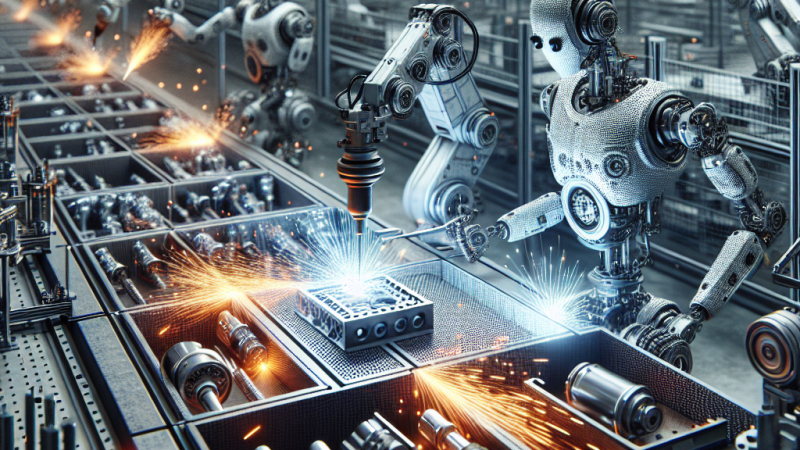
3D printing, also known as additive manufacturing, is another advanced technology that complements robotics in manufacturing. Robots equipped with 3D printing capabilities can create complex parts and prototypes with high precision, reducing the need for traditional manufacturing methods.
Human-Robot Collaboration
Collaborative robots (cobots) are designed to work alongside human workers, enhancing productivity and safety. Cobots are equipped with advanced sensors and safety features that allow them to operate in close proximity to humans without posing a risk. This collaboration enables the automation of tasks that require both human dexterity and robotic precision.
Challenges and Considerations
Despite the numerous benefits of robotics in manufacturing, there are several challenges and considerations to address:
High Initial Costs
The initial investment required for implementing robotic systems can be substantial. This includes the cost of purchasing robots, integrating them into existing processes, and training personnel. However, the long-term benefits often outweigh the initial costs, as robots can significantly improve efficiency and reduce labor costs.
Technical Complexity
The integration of robotics into manufacturing processes requires specialized knowledge and expertise. Companies must invest in training and development to ensure their workforce can effectively operate and maintain robotic systems.
Job Displacement
The automation of tasks traditionally performed by human workers can lead to job displacement. However, it also creates new opportunities for skilled workers in areas such as robot programming, maintenance, and system integration. Companies must focus on reskilling and upskilling their workforce to adapt to the changing landscape.
Safety Concerns
While robots can enhance safety by performing hazardous tasks, they also pose potential risks if not properly managed. Ensuring the safe operation of robots requires robust safety protocols, regular maintenance, and continuous monitoring.
Conclusion
Robotics in manufacturing is a dynamic and rapidly evolving field that holds immense potential for transforming the way products are made. By enhancing efficiency, precision, and safety, robots are driving significant advancements in manufacturing processes. As technology continues to advance, the integration of AI, IoT, and other innovations will further expand the capabilities of robotic systems. However, addressing challenges such as high initial costs, technical complexity, job displacement, and safety concerns is crucial for realizing the full potential of robotics in manufacturing. Ultimately, the continued development and adoption of robotics will play a pivotal role in shaping the future of manufacturing processes in engineering.