
Robotics in Healthcare
Introduction
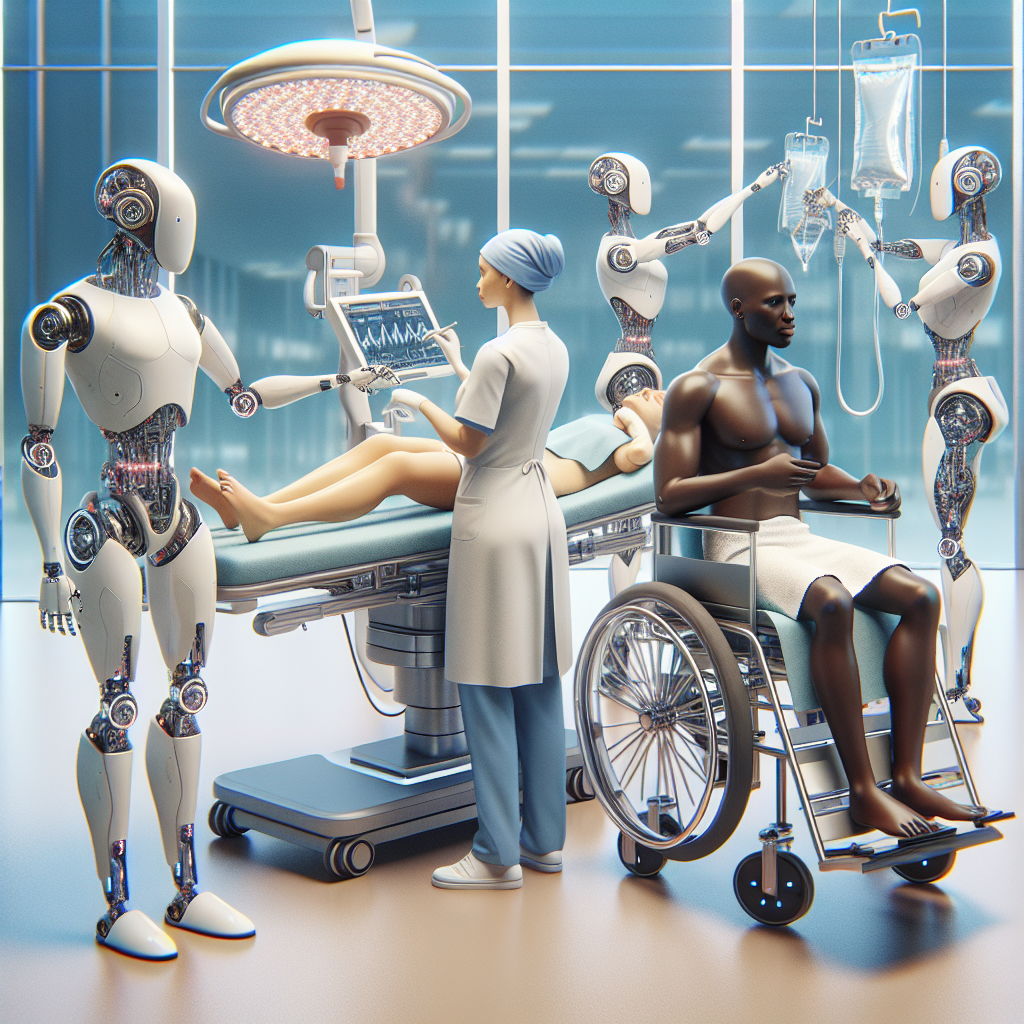
Robotics in healthcare represents a transformative frontier in the field of engineering, merging advanced technology with medical science to enhance patient care, improve surgical precision, and streamline hospital operations. The integration of robotics into healthcare is not just a futuristic concept but a present-day reality that is reshaping the landscape of medical treatment and patient management. This article delves into the multifaceted world of healthcare robotics, exploring its fundamental principles, historical development, practical applications, advanced topics, and the challenges it faces.
Fundamentals
Basic Principles and Concepts
At its core, robotics in healthcare involves the design, construction, and use of robots to perform tasks traditionally carried out by human medical professionals. These tasks range from surgical procedures to patient rehabilitation and administrative functions. The fundamental principles of healthcare robotics include:
- Automation: The use of robots to perform repetitive or complex tasks with minimal human intervention.
- Precision: Robots can execute tasks with a high degree of accuracy, reducing the margin of error in medical procedures.
- Teleoperation: The ability for medical professionals to control robots remotely, allowing for procedures to be performed from a distance.
- Artificial Intelligence (AI): The integration of AI to enable robots to learn from data, make decisions, and improve their performance over time.
Key Terms
- Robotic Surgery: Surgical procedures performed using robotic systems, often controlled by a surgeon from a console.
- Telemedicine: The use of telecommunications technology to provide medical care from a distance.
- Rehabilitation Robotics: Robots designed to assist in the recovery of patients with physical impairments.
- Medical Imaging: The use of robots to enhance the accuracy and efficiency of imaging techniques such as MRI and CT scans.
Historical Development
Early Innovations
The journey of robotics in healthcare began in the late 20th century with the advent of robotic-assisted surgery. One of the earliest milestones was the development of the PUMA 560 robotic arm, which was used in 1985 to perform a neurosurgical biopsy under computed tomography (CT) guidance. This marked the first documented use of a robot in a surgical procedure.
Key Milestones
- 1990s: The introduction of the da Vinci Surgical System revolutionized minimally invasive surgery, allowing surgeons to perform complex procedures with enhanced precision and control.
- 2000s: The development of telemedicine and telerobotics enabled remote surgeries, with notable examples including the Operation Lindbergh in 2001, where a surgeon in New York remotely performed a cholecystectomy on a patient in France.
- 2010s: Advances in AI and machine learning began to be integrated into healthcare robotics, leading to the creation of robots capable of autonomous decision-making and personalized patient care.
Notable Figures
Several pioneers have made significant contributions to the field of healthcare robotics:
- Dr. Frederic Moll: Co-founder of Intuitive Surgical, the company behind the da Vinci Surgical System.
- Dr. Russell Taylor: A key figure in the development of computer-integrated surgery and medical robotics.
- Dr. Catherine Mohr: A leading expert in robotic surgery and medical technology innovation.
Applications
Surgical Robotics
One of the most prominent applications of robotics in healthcare is in the field of surgery. Robotic surgical systems, such as the da Vinci Surgical System, allow surgeons to perform minimally invasive procedures with enhanced precision, reduced blood loss, and faster recovery times for patients. These systems are used in a variety of surgeries, including:
- Cardiac Surgery: Procedures such as coronary artery bypass and valve repair.
- Gynecological Surgery: Hysterectomies and myomectomies.
- Urological Surgery: Prostatectomies and kidney surgeries.
Rehabilitation Robotics
Rehabilitation robots are designed to assist patients in recovering from physical impairments caused by stroke, injury, or surgery. These robots provide repetitive, task-specific training that is crucial for neuroplasticity and functional recovery. Examples include:
- Lokomat: A robotic exoskeleton used for gait training in patients with spinal cord injuries or stroke.
- Armeo: A robotic arm exoskeleton that aids in upper limb rehabilitation.
Telemedicine and Telerobotics
Telemedicine leverages robotics to provide medical care from a distance, making healthcare more accessible, especially in remote or underserved areas. Telerobotic systems enable surgeons to perform operations remotely, breaking geographical barriers and providing specialized care to patients worldwide.
Medical Imaging and Diagnostics
Robots are increasingly being used to enhance the accuracy and efficiency of medical imaging techniques. For instance, robotic systems can assist in positioning patients for MRI or CT scans, ensuring optimal imaging angles and reducing the need for repeat scans.
Advanced Topics
Artificial Intelligence and Machine Learning
The integration of AI and machine learning into healthcare robotics is a rapidly advancing field. AI algorithms can analyze vast amounts of medical data to assist robots in making informed decisions, predicting patient outcomes, and personalizing treatment plans. Recent innovations include:
- AI-Assisted Surgery: Robots equipped with AI can provide real-time feedback to surgeons, enhancing precision and reducing the risk of complications.
- Predictive Analytics: Machine learning models can predict patient recovery trajectories and optimize rehabilitation protocols.
Soft Robotics
Soft robotics is an emerging field that focuses on creating robots with flexible, adaptable structures. These robots are particularly useful in healthcare due to their ability to interact safely with human tissues. Applications include:
- Soft Exoskeletons: Wearable devices that assist patients with mobility impairments.
- Soft Surgical Robots: Flexible robots that can navigate through delicate anatomical structures with minimal damage.
Nanorobotics
Nanorobotics involves the use of microscopic robots to perform tasks at the cellular or molecular level. In healthcare, nanorobots hold the potential to revolutionize drug delivery, cancer treatment, and precision medicine. For example, nanorobots can be designed to target and destroy cancer cells without harming surrounding healthy tissues.
Challenges and Considerations
Technical Challenges
Despite the significant advancements, several technical challenges remain in the field of healthcare robotics:
- Complexity: Designing robots that can perform intricate medical procedures requires advanced engineering and precise control mechanisms.
- Integration: Ensuring seamless integration of robotic systems with existing medical infrastructure and electronic health records.
- Reliability: Ensuring the reliability and safety of robotic systems in critical medical applications.
Ethical and Regulatory Considerations
The use of robotics in healthcare also raises important ethical and regulatory considerations:
- Patient Safety: Ensuring that robotic systems do not compromise patient safety and adhere to stringent regulatory standards.
- Data Privacy: Protecting patient data and ensuring compliance with privacy regulations such as HIPAA.
- Equity: Addressing disparities in access to advanced robotic technologies, ensuring that all patients benefit from these innovations.
Economic Considerations
The cost of developing and implementing robotic systems in healthcare can be significant. Hospitals and healthcare providers must weigh the benefits of these technologies against their financial constraints. Potential solutions include:
- Cost-Benefit Analysis: Conducting thorough analyses to determine the long-term cost savings and improved patient outcomes associated with robotic systems.
- Funding and Grants: Seeking funding from government agencies, private investors, and research grants to support the development and implementation of healthcare robotics.
Conclusion
Robotics in healthcare is a dynamic and rapidly evolving field that holds immense potential to revolutionize medical practice. From enhancing surgical precision to improving patient rehabilitation and expanding access to care through telemedicine, the applications of healthcare robotics are vast and varied. While significant challenges remain, ongoing research and innovation continue to push the boundaries of what is possible. As we look to the future, the integration of advanced technologies such as AI, soft robotics, and nanorobotics promises to further transform healthcare, making it more efficient, effective, and accessible. The importance of robotics in healthcare cannot be overstated, as it represents a critical intersection of engineering and medicine that is poised to shape the future of patient care.