Robotics in Agriculture
Introduction
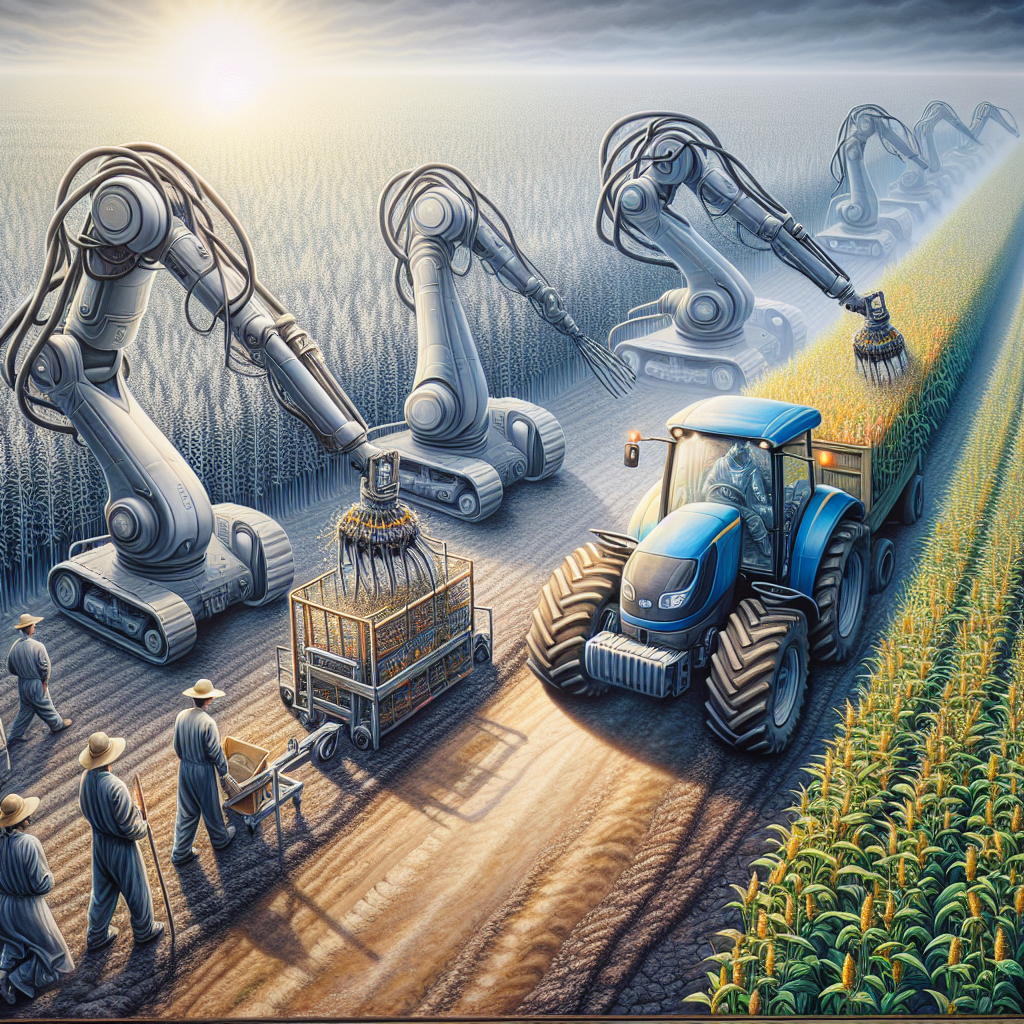
Robotics in agriculture represents a transformative intersection of technology and farming, promising to revolutionize the way we produce food. As the global population continues to grow, the demand for efficient, sustainable, and high-yield agricultural practices becomes increasingly critical. Robotics in agriculture addresses these needs by automating labor-intensive tasks, enhancing precision, and optimizing resource use. This article delves into the importance and relevance of robotics in agriculture within the field of engineering, exploring its fundamentals, historical development, applications, advanced topics, challenges, and future prospects.
Fundamentals
Basic Principles and Concepts
Robotics in agriculture involves the integration of robotic systems and automation technologies to perform various farming tasks. These systems are designed to operate in diverse agricultural environments, from open fields to controlled indoor settings. Key principles include:
- Automation: The use of machines to perform tasks without human intervention.
- Precision Agriculture: The application of technology to monitor and manage field variability in crops.
- Artificial Intelligence (AI): The simulation of human intelligence in machines to enable decision-making and problem-solving.
- Machine Learning (ML): A subset of AI that allows systems to learn from data and improve over time.
- Sensor Technology: Devices that detect and measure physical properties, providing data for analysis and decision-making.
Key Terms
- Autonomous Vehicles: Self-driving machines used for tasks such as planting, harvesting, and monitoring crops.
- Unmanned Aerial Vehicles (UAVs): Drones used for aerial surveillance, crop spraying, and data collection.
- Robotic Harvesters: Machines designed to pick fruits and vegetables with minimal human intervention.
- Field Robots: Robots that operate in open fields to perform tasks like weeding, planting, and soil analysis.
Historical Development
Early Innovations
The concept of mechanizing agriculture dates back to the early 20th century with the advent of tractors and other farm machinery. However, the integration of robotics into agriculture began to take shape in the late 20th century. Early innovations included automated milking systems and basic robotic arms for greenhouse operations.
Key Milestones
- 1980s: Introduction of the first automated milking systems, revolutionizing dairy farming.
- 1990s: Development of GPS technology for precision farming, enabling more accurate field mapping and resource management.
- 2000s: Emergence of UAVs for crop monitoring and data collection.
- 2010s: Advancements in AI and ML leading to more sophisticated autonomous vehicles and robotic harvesters.
Notable Figures
Several pioneers have contributed to the development of robotics in agriculture:
- John Deere: A key figure in agricultural machinery, whose company has been at the forefront of integrating robotics and automation into farming equipment.
- George Devol: An inventor known for creating the first industrial robot, which laid the groundwork for agricultural robotics.
- Dr. Simon Blackmore: A leading researcher in precision agriculture and robotic farming systems.
Applications
Crop Monitoring and Management
Robotics plays a crucial role in crop monitoring and management. UAVs equipped with multispectral cameras and sensors can capture detailed images of fields, providing data on crop health, soil conditions, and pest infestations. This information enables farmers to make informed decisions about irrigation, fertilization, and pest control, optimizing resource use and improving yields.
Planting and Seeding
Autonomous planting systems use GPS and sensor technology to plant seeds with high precision. These systems ensure uniform seed distribution and optimal planting depth, leading to better crop establishment and growth. Examples include the PlantTape system, which automates the transplanting process for various crops.
Weeding and Pest Control
Robotic weeding systems use computer vision and AI to identify and remove weeds without harming crops. These systems reduce the need for chemical herbicides, promoting sustainable farming practices. Additionally, UAVs can be used for targeted pest control, applying pesticides only where needed to minimize environmental impact.
Harvesting
Robotic harvesters are designed to pick fruits and vegetables with precision and care, reducing labor costs and minimizing crop damage. For instance, the FFRobotics system uses robotic arms equipped with sensors to identify and pick ripe fruits. These systems are particularly valuable for labor-intensive crops like strawberries and apples.
Case Studies
- Case Study 1: Blue River Technology developed the See & Spray system, which uses computer vision and machine learning to identify and target weeds with herbicide, reducing chemical use by up to 90%.
- Case Study 2: Iron Ox, a company specializing in autonomous greenhouses, uses robotic systems to manage planting, watering, and harvesting, optimizing resource use and increasing productivity.
Advanced Topics
Recent Research and Innovations
Recent research in robotics in agriculture focuses on enhancing the capabilities of autonomous systems through AI and ML. Innovations include:
- Swarm Robotics: The use of multiple robots working collaboratively to perform tasks such as planting and harvesting, increasing efficiency and scalability.
- Robotic Vision Systems: Advanced computer vision algorithms that enable robots to identify and classify crops, pests, and diseases with high accuracy.
- Soft Robotics: The development of flexible, adaptive robotic systems that can handle delicate crops without causing damage.
Future Trends
The future of robotics in agriculture is promising, with several trends expected to shape the industry:
- Integration of IoT: The Internet of Things (IoT) will enable seamless communication between robotic systems and other farm equipment, enhancing data collection and decision-making.
- Increased Automation: Continued advancements in AI and ML will lead to more autonomous systems capable of performing complex tasks with minimal human intervention.
- Sustainable Farming Practices: Robotics will play a key role in promoting sustainable agriculture by reducing chemical use, optimizing resource management, and minimizing environmental impact.
Challenges and Considerations
Technical Challenges
Despite the advancements, several technical challenges remain:
- Complex Environments: Agricultural environments are highly variable, with changing weather conditions, soil types, and crop varieties posing challenges for robotic systems.
- Data Management: The vast amount of data generated by sensors and UAVs requires efficient storage, processing, and analysis to be useful.
- Energy Efficiency: Ensuring that robotic systems are energy-efficient and can operate for extended periods without frequent recharging is crucial.
Economic and Social Considerations
There are also economic and social considerations to address:
- Cost: The initial investment in robotic systems can be high, posing a barrier for small-scale farmers.
- Job Displacement: The automation of labor-intensive tasks may lead to job displacement for farmworkers, necessitating retraining and education programs.
- Regulatory Issues: The deployment of UAVs and autonomous vehicles in agriculture requires compliance with regulatory frameworks, which can vary by region.
Potential Solutions
Addressing these challenges requires a multifaceted approach:
- Research and Development: Continued investment in R&D to develop more robust, adaptable, and cost-effective robotic systems.
- Collaboration: Collaboration between industry, academia, and government to create supportive policies and frameworks for the adoption of robotics in agriculture.
- Education and Training: Implementing education and training programs to equip the workforce with the skills needed to operate and maintain robotic systems.
Conclusion
Robotics in agriculture is a rapidly evolving field with the potential to significantly enhance the efficiency, sustainability, and productivity of farming practices. By automating labor-intensive tasks, improving precision, and optimizing resource use, robotic systems address the growing demand for food in an increasingly populated world. While there are challenges to overcome, the continued advancement of technology, coupled with collaborative efforts across sectors, will pave the way for a future where robotics plays a central role in agriculture. The importance of this topic in the field of robotics in engineering cannot be overstated, as it holds the key to a more sustainable and prosperous agricultural industry.