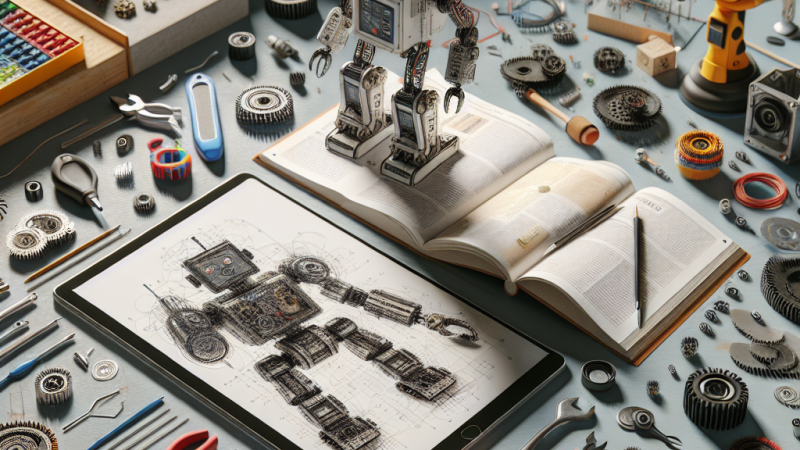
Robot Control Systems
Introduction
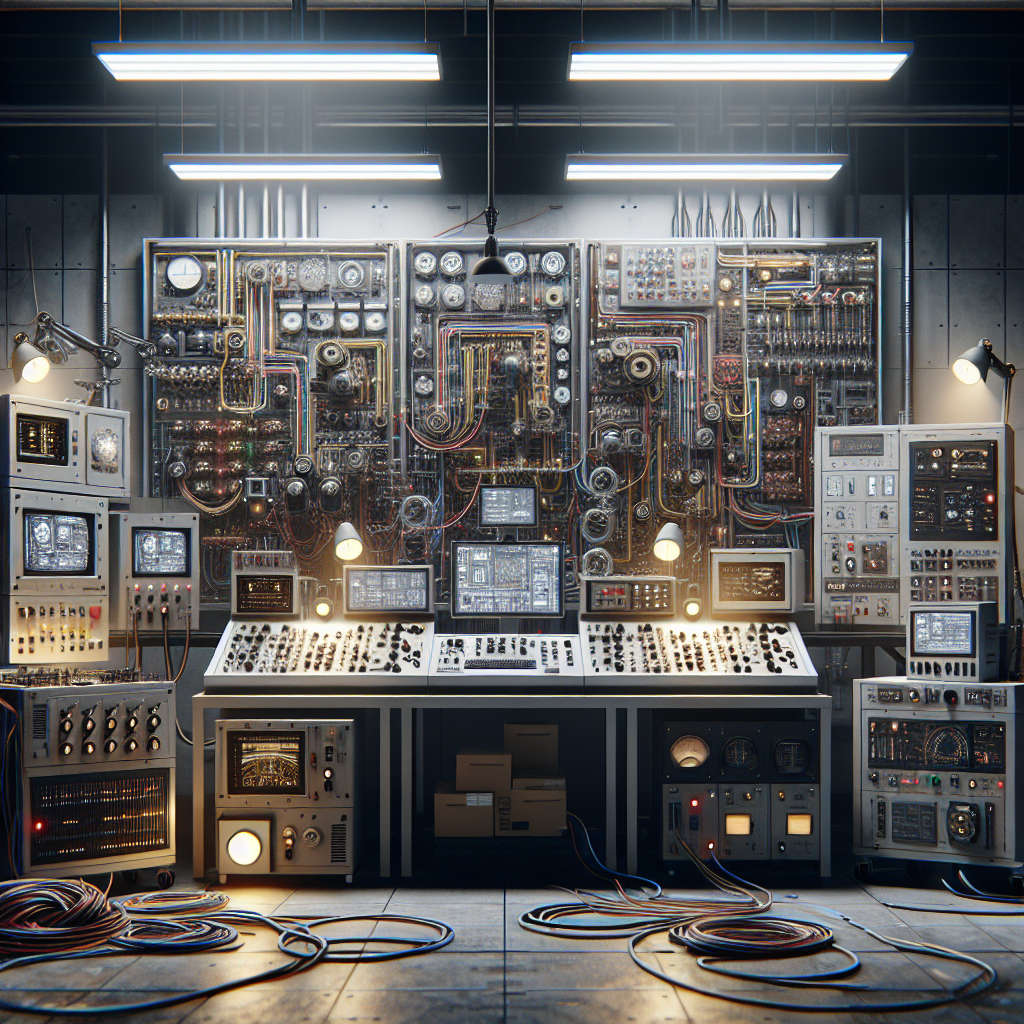
Robot control systems are a cornerstone of modern robotics, playing a crucial role in the functionality and efficiency of robotic systems. These systems are responsible for managing the actions and responses of robots, enabling them to perform tasks with precision and adaptability. In the field of engineering, robot control systems are indispensable, as they bridge the gap between theoretical designs and practical implementations. This article delves into the various aspects of robot control systems, highlighting their importance, fundamental principles, historical development, applications, advanced topics, challenges, and future trends.
Fundamentals
Basic Principles and Concepts
At its core, a robot control system is a framework that governs the behavior of a robot. It involves the use of algorithms and feedback mechanisms to ensure that the robot performs its intended tasks accurately and efficiently. The primary components of a robot control system include:
- Sensors: Devices that collect data from the robot’s environment.
- Actuators: Mechanisms that execute movements or actions based on control signals.
- Controllers: Computational units that process sensor data and generate control signals for actuators.
- Feedback Loops: Systems that continuously monitor and adjust the robot’s actions to achieve desired outcomes.
Key Terms and Definitions
- Proportional-Integral-Derivative (PID) Control: A widely used control algorithm that adjusts the control signal based on the error, its integral, and its derivative.
- State Space Representation: A mathematical model that represents the state of a system using vectors and matrices.
- Trajectory Planning: The process of determining the path a robot should follow to achieve a specific goal.
- Inverse Kinematics: The calculation of joint parameters needed to place the end-effector of a robot at a desired position.
Historical Development
The evolution of robot control systems can be traced back to the early 20th century, with significant advancements occurring in the latter half of the century. Key milestones include:
- 1940s-1950s: The development of early feedback control systems, primarily in the context of industrial automation.
- 1960s: The introduction of the first programmable robots, such as the Unimate, which utilized basic control algorithms.
- 1970s-1980s: The advent of microprocessors revolutionized robot control, enabling more complex and precise control strategies.
- 1990s: The rise of artificial intelligence and machine learning began to influence robot control systems, leading to more adaptive and intelligent robots.
- 2000s-Present: Advances in sensor technology, computational power, and networking have further enhanced the capabilities of robot control systems, paving the way for autonomous and collaborative robots.
Applications
Robot control systems have a wide range of applications across various industries. Some notable examples include:
Manufacturing
In manufacturing, robot control systems are used to automate repetitive tasks, such as assembly, welding, and painting. For instance, automotive manufacturers employ robots with advanced control systems to ensure precision and consistency in production lines.
Healthcare
In the healthcare sector, robot control systems enable surgical robots to perform delicate procedures with high precision. The da Vinci Surgical System is a prime example, allowing surgeons to conduct minimally invasive surgeries with enhanced control and accuracy.
Agriculture
Agricultural robots equipped with sophisticated control systems are used for tasks such as planting, harvesting, and monitoring crop health. These robots help increase efficiency and reduce labor costs in farming operations.
Logistics and Warehousing
In logistics and warehousing, robots with advanced control systems are employed for sorting, packing, and transporting goods. Amazon’s use of Kiva robots in its fulfillment centers is a notable case study, showcasing the efficiency gains achieved through automation.
Advanced Topics
Adaptive Control
Adaptive control involves the use of algorithms that adjust control parameters in real-time based on changes in the robot’s environment or dynamics. This approach enhances the robot’s ability to handle uncertainties and varying conditions.
Machine Learning and AI
Recent advancements in machine learning and artificial intelligence have significantly impacted robot control systems. Techniques such as reinforcement learning enable robots to learn optimal control strategies through trial and error, improving their performance over time.
Collaborative Robots (Cobots)
Collaborative robots, or cobots, are designed to work alongside humans in shared environments. These robots require advanced control systems to ensure safety and seamless interaction with human workers. Innovations in sensor technology and control algorithms have made cobots increasingly viable in various industries.
Swarm Robotics
Swarm robotics involves the coordination of multiple robots to achieve collective behavior. Control systems for swarm robotics focus on decentralized algorithms that enable robots to communicate and collaborate effectively, mimicking the behavior of natural swarms such as ants or bees.
Challenges and Considerations
Despite the advancements in robot control systems, several challenges and considerations remain:
Complexity and Scalability
As robots become more complex, designing and implementing effective control systems becomes increasingly challenging. Ensuring scalability while maintaining performance is a critical consideration for engineers.
Safety and Reliability
Ensuring the safety and reliability of robot control systems is paramount, especially in applications involving human interaction. Robust testing and validation processes are essential to mitigate risks and ensure dependable operation.
Ethical and Societal Implications
The widespread adoption of robots raises ethical and societal questions, such as job displacement and privacy concerns. Addressing these issues requires a multidisciplinary approach, involving engineers, policymakers, and ethicists.
Integration with Existing Systems
Integrating robot control systems with existing infrastructure and technologies can be challenging. Compatibility and interoperability are key considerations to ensure seamless integration and operation.
Conclusion
Robot control systems are a vital component of modern robotics, enabling robots to perform tasks with precision, adaptability, and intelligence. From their historical development to their wide-ranging applications, these systems have significantly impacted various industries and continue to drive innovation in the field of engineering. As technology advances, the future of robot control systems holds exciting possibilities, including more adaptive, intelligent, and collaborative robots. However, addressing the associated challenges and considerations is crucial to fully realizing the potential of these systems. In summary, robot control systems are not only a technical achievement but also a testament to the transformative power of engineering in shaping the future of automation and robotics.