Dynamics of Robots
Introduction
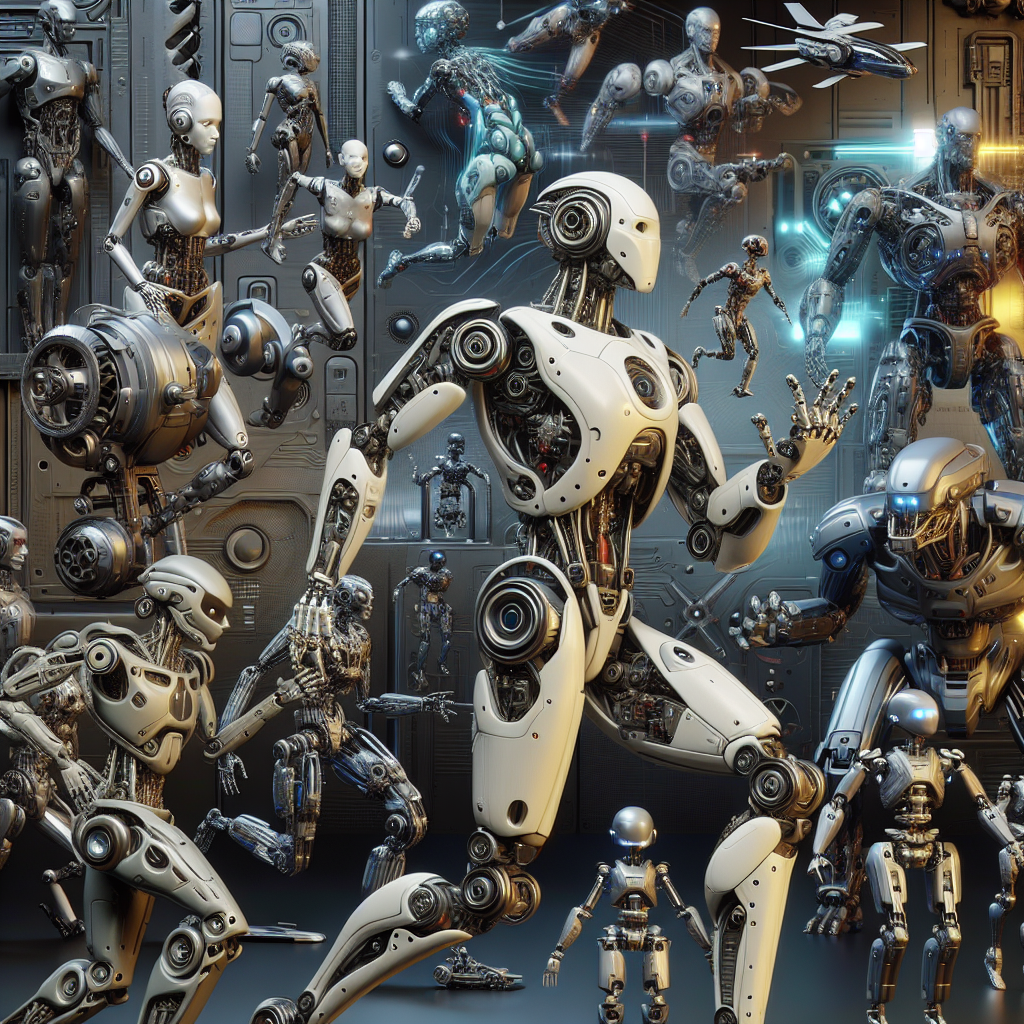
The field of robotics has seen exponential growth over the past few decades, transforming industries and revolutionizing the way we approach engineering problems. One of the critical aspects of robotics is the study of the dynamics of robots, which involves understanding and controlling the motion and forces acting on robotic systems. This topic is of paramount importance in engineering as it directly impacts the efficiency, accuracy, and functionality of robots in various applications. From industrial automation to medical surgery, the dynamics of robots play a crucial role in ensuring that these machines perform their tasks reliably and safely.
Fundamentals
Basic Principles and Concepts
The dynamics of robots encompass the study of forces and torques and their effect on motion. This field is grounded in classical mechanics, particularly Newton’s laws of motion and the principles of kinematics and kinetics.
- Kinematics: This branch deals with the motion of robots without considering the forces that cause the motion. It involves the study of position, velocity, and acceleration of robot components.
- Kinetics: This branch focuses on the forces and torques that cause motion. It involves the study of the relationship between the motion of robots and the forces acting on them.
- Degrees of Freedom (DoF): This term refers to the number of independent movements a robot can perform. For example, a simple robotic arm might have three degrees of freedom, allowing it to move in three different ways.
- Forward and Inverse Dynamics: Forward dynamics involves determining the motion of a robot given the forces and torques, while inverse dynamics involves determining the forces and torques required to achieve a desired motion.
Theories and Key Terms
Several theories and key terms are fundamental to understanding the dynamics of robots:
- Euler-Lagrange Equations: These equations are used to derive the equations of motion for a robotic system. They provide a systematic way to model the dynamics of complex robotic systems.
- Jacobian Matrix: This matrix relates the velocities of the robot’s joints to the velocity of the end-effector. It is crucial for understanding how movements in the robot’s joints translate to movements in its end-effector.
- Control Systems: These systems are used to manage the behavior of robots. They involve feedback loops that help maintain the desired motion and force trajectories.
Historical Development
The study of robot dynamics has a rich history, with contributions from various fields such as mechanical engineering, electrical engineering, and computer science. The development of this field can be traced back to the early 20th century when the first theoretical foundations were laid.
Key Milestones
- 1940s-1950s: The development of cybernetics by Norbert Wiener laid the groundwork for understanding control systems and feedback loops, which are essential for robot dynamics.
- 1960s: The introduction of industrial robots, such as the Unimate, marked the beginning of practical applications of robot dynamics in manufacturing.
- 1970s-1980s: Advances in computer technology and the development of more sophisticated mathematical models led to significant improvements in the control and dynamics of robots.
- 1990s-Present: The integration of artificial intelligence and machine learning with robot dynamics has opened new avenues for research and application, leading to more autonomous and adaptive robotic systems.
Notable Figures
- Norbert Wiener: Known as the father of cybernetics, his work on control systems and feedback loops has been fundamental to the development of robot dynamics.
- Joseph Engelberger: Often referred to as the father of robotics, he played a crucial role in the development and commercialization of industrial robots.
- John Craig: His textbook “Introduction to Robotics: Mechanics and Control” is considered a seminal work in the field of robot dynamics.
Applications
The principles of robot dynamics are applied in various industries and fields, each with its unique set of requirements and challenges. Here are some notable applications:
Industrial Automation
In manufacturing, robots are used for tasks such as welding, painting, assembly, and material handling. The dynamics of these robots must be precisely controlled to ensure high accuracy and repeatability. For example, in automotive manufacturing, robotic arms are used to weld car bodies with high precision, requiring detailed knowledge of their dynamics to avoid errors and ensure safety.
Medical Robotics
Robotic systems are increasingly used in medical applications, such as surgical robots and rehabilitation devices. These robots must operate with high precision and reliability. For instance, the da Vinci Surgical System allows surgeons to perform minimally invasive surgeries with enhanced precision, thanks to advanced control systems that manage the robot’s dynamics.
Aerospace
In the aerospace industry, robots are used for tasks such as satellite assembly, maintenance, and inspection. The dynamics of these robots must be carefully managed to operate in the unique conditions of space, where factors like microgravity and vacuum come into play.
Service Robotics
Service robots, such as autonomous vacuum cleaners and delivery robots, rely on advanced dynamics to navigate and perform tasks in unstructured environments. These robots use sensors and control algorithms to adapt to changing conditions and obstacles.
Advanced Topics
Recent Research and Innovations
Recent advancements in the field of robot dynamics have focused on improving the adaptability and autonomy of robotic systems. Some notable areas of research include:
- Machine Learning and AI: Integrating machine learning algorithms with robot dynamics allows robots to learn from their environment and improve their performance over time. For example, reinforcement learning can be used to optimize the control strategies of robots in real-time.
- Soft Robotics: Unlike traditional rigid robots, soft robots are made from flexible materials that can adapt to their environment. Understanding the dynamics of these robots involves new models and control strategies that account for their deformable nature.
- Human-Robot Interaction: Research in this area focuses on making robots more intuitive and safe for human interaction. This involves developing control systems that can adapt to human movements and intentions.
Future Trends
The future of robot dynamics is likely to be shaped by several emerging trends:
- Collaborative Robots (Cobots): These robots are designed to work alongside humans, requiring advanced dynamics and control systems to ensure safety and efficiency.
- Swarm Robotics: This involves the coordination of multiple robots to perform tasks collectively. Understanding the dynamics of such systems is crucial for their effective operation.
- Bio-inspired Robotics: Drawing inspiration from biological systems, these robots aim to replicate the efficiency and adaptability of living organisms. This requires new models and control strategies to manage their dynamics.
Challenges and Considerations
Despite the advancements in the field, several challenges and considerations remain:
Complexity and Computation
Modeling and controlling the dynamics of robots can be computationally intensive, especially for complex systems with many degrees of freedom. Developing efficient algorithms and computational methods is an ongoing challenge.
Safety and Reliability
Ensuring the safety and reliability of robots, especially in human-centric environments, is a critical concern. This involves rigorous testing and validation of control systems to prevent accidents and failures.
Environmental Adaptability
Robots must be able to adapt to varying environmental conditions, such as changes in terrain, lighting, and obstacles. Developing control systems that can handle such variability is a significant challenge.
Ethical and Social Considerations
The increasing use of robots raises ethical and social questions, such as job displacement and privacy concerns. Addressing these issues requires a multidisciplinary approach involving engineers, ethicists, and policymakers.
Conclusion
The dynamics of robots is a foundational topic in the field of robotics in engineering, encompassing the study of motion, forces, and control systems. Understanding these principles is crucial for designing and operating robots that are efficient, accurate, and safe. From industrial automation to medical applications, the impact of robot dynamics is far-reaching and transformative. As research and technology continue to advance, the field will likely see even more innovative applications and solutions, addressing current challenges and opening new possibilities for the future of robotics.